

Framing of ‘Points for Determination’ Essential Even in Ex Parte Suits; Supreme Court Set Aside Orders for Failure to Frame Issues
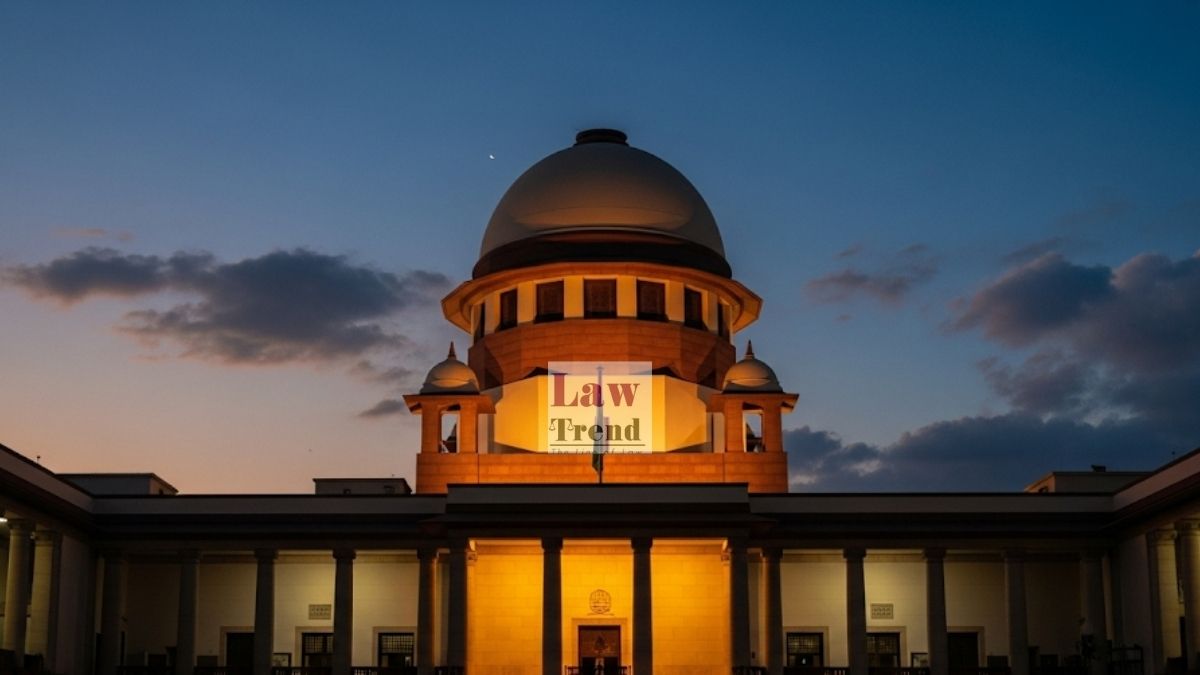
The Supreme Court of India, in a significant judgment concerning civil procedure, has ruled that while the formal framing of issues may not be mandatory in ex parte suits under Order XIV Rule 6 of the Civil Procedure Code (CPC), a court is still legally obligated to determine “points for determination” to ensure a valid and sustainable judgment.

A Bench comprising Justice Sanjay Karol and Justice Augustine George Masih set aside the concurrent findings of a Trial Court and the Calcutta High Court, which had dismissed a suit for specific performance. The Court observed that the omission to frame issues regarding the respondent’s title—a point on which the suit was eventually dismissed—caused material prejudice to the appellant as he was never put to notice to lead evidence on that specific question.

Background of the Case

The dispute originated from an agreement for sale executed on January 27, 1977, between Mohan Singh Chopra (Respondent-Vendor) and Pramod Shroff (Appellant-Vendee) for a flat in “Shalimar Apartments,” Kolkata. The total consideration was ₹95,000, of which ₹90,000 was paid, with the balance of ₹5,000 to be paid upon execution of the Deed of Conveyance. The appellant was put in possession and handed original title documents.

Despite repeated requests, the Respondent failed to execute the Conveyance Deed. Consequently, the Appellant filed a suit for specific performance in 2007. The Respondent did not enter an appearance, and the matter proceeded ex parte.

The City Civil Court at Calcutta dismissed the suit ex parte on October 26, 2017, on the grounds that the Appellant failed to prove the Respondent’s title to the property. This decision was affirmed by the High Court of Calcutta on January 21, 2025.

READ ALSO  Arbitrariness and Malafide Only Ground to Interfere in Decision of Expert Body, Supreme Court Upholds UP Police Recruitment 2016

Arguments of the Parties

The Appellant contended that since the Trial Court failed to frame any issue regarding the Respondent’s title, the onus to prove the same did not fall on him. It was argued that the absence of such an issue meant the Appellant was not put to notice of the facts required to be proved, violating the procedure intended to “narrow down the scope of trial.”

The Respondent remained unrepresented throughout the proceedings despite being served and being contacted by an Amicus Curiae appointed by the Supreme Court.

Court’s Analysis and Legal Observations

The Court examined the interplay between Section 2(9) (definition of judgment), Order XIV (framing of issues), and Order XX (contents of judgment) of the CPC.

On the Requirement of a Valid Judgment: Referring to Balraj Taneja v. Sunil Madan, the Court noted that a judgment under Section 2(9) must state the grounds for a decree. Under Order XX Rule 4(2), a judgment “shall contain a concise statement of the case, the points for determination, the decision thereon, and the reasons for such decision.”

READ ALSO  न्यूज़क्लिक विवाद: यूएपीए मामले में गिरफ्तारी के खिलाफ संस्थापक पुरकायस्थ, एचआर प्रमुख चक्रवर्ती की याचिका पर सुप्रीम कोर्ट 19 अक्टूबर को सुनवाई करेगा

The Court observed:

“It should be a self-contained document from which it should appear as to what were the facts of the case and what was the controversy which was tried to be settled by the court and in what manner.”

On ‘Points for Determination’ in Ex Parte Suits: The Court emphasized that even if a defendant does not file a written statement, the court cannot dispense with identifying legal and factual points. Citing Ramesh Chand Ardawatiya v. Anil Panjwani, the Court highlighted:

“…the trial court should scrutinize the available pleadings and documents, consider the evidence adduced, and would do well to frame the ‘points for determination’ and proceed to construct the ex parte judgment dealing with the points at issue one by one.”

On Prejudice Caused by Omission of Issues: The Bench stated that the test for whether the omission to frame issues vitiates a trial is whether the parties had knowledge of the question in issue and an opportunity to lead evidence.

Regarding the present case, the Court remarked:

“In the absence of any issues, and especially in the absence of any pleading contesting title of the Respondent, the Appellant could not be expected to prove such title in a suit for specific performance of Agreement to sell. Therefore, omission to frame issues has caused prejudice to the Appellant.”

The Court further noted that under Man Kaur v. Hartar Singh Sangha, the key essentials for specific performance are a valid contract, breach by the defendant, and the plaintiff’s readiness and willingness—all of which were present in this case.

READ ALSO  SARFAESI Act | Magistrates Must Decide Section 14 Applications Within Statutory Timelines; Administrative Delay Defeats Legislative Intent: Allahabad High Court

Decision

The Supreme Court concluded that the judgments of the Trial Court and the High Court did not fulfill the legal requirements of a “judgment” under the CPC.

The Court ordered:

  1. The judgments and decrees of both courts below are set aside.
  2. The matter is remanded to the Trial Court for fresh consideration.
  3. The Trial Court must issue notice to the Respondent, allow completion of pleadings, frame formal issues, and provide an opportunity for both parties to lead evidence.
  4. Given the suit dates back to 2007, the Trial Court was directed to decide the matter “at the earliest.”

Case Details Block:

  • Case Title: Pramod Shroff v. Mohan Singh Chopra
  • Case No.: Civil Appeal No. ___ of 2026 (Arising out of SLP (C) No. 20779 of 2025)
  • Bench: Justice Sanjay Karol and Justice Augustine George Masih
  • Date: April 16, 2026

Law Trend
Law Trendhttps://lawtrend.in/
Legal News Website Providing Latest Judgments of Supreme Court and High Court

Related Articles

Latest Articles
