

Common Object Establishes Vicarious Liability Under Section 149 IPC: Supreme Court Dismisses Appeals in 1983 Bihar Mass Violence Case
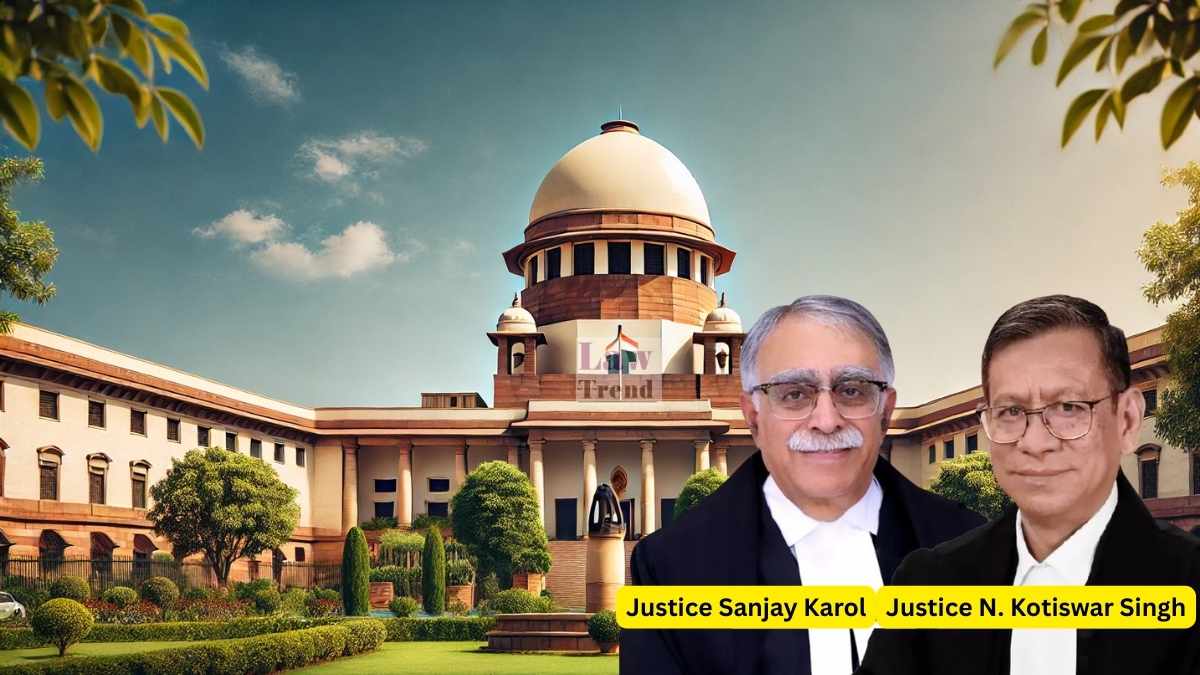

The Supreme Court of India, comprising a bench of Justice Sanjay Karol and Justice Nongmeikapam Kotiswar Singh, has dismissed the appeals of multiple convicts and upheld their life sentences for a 1983 mass violence incident in Bihar, ruling that once a common object of an unlawful assembly is established under Section 149 of the Indian Penal Code, 1860, every member becomes vicariously liable for the collective acts of the mob regardless of individual overt acts. This landmark ruling clarifies that active participation in a rioting mob cannot be shielded by claims of “mere presence” or a “lack of premeditation,” and it affirms the conviction of a local public official who abetted the massacre by disarming the victims.

Background of the Case

The appeals arise from a mass violence incident that took place on March 29, 1983, coinciding with the Holi festival, in Village Jamalpur Kodai, under the Gaighat Police Station in Muzaffarpur District, Bihar. The genesis of the occurrence lay in a long-standing village rivalry, exacerbated by a dispute over a pumping set and the prosecution side’s refusal to withdraw an existing criminal case concerning the alleged looting of a khesari crop.

On the day of the incident, an armed mob of approximately 58 persons carrying deadly weapons—including lathis, bhalas, garasas, and farsas—surrounded the residential house of Chandra Shekhar Choudhary. To defend the occupants of the house, one of the victims, Mahanth Indradeo Jyoti, attempted to use his licensed gun and revolver. However, Jagannath Ravidas, the then Circle Officer, arrived at the scene, forcibly seized the firearms from him, and displayed them to the mob, thereby emboldening the assailants to proceed with their assault.

Immediately after, the mob set the house on fire. The occupants who attempted to flee from the burning house towards the southern field were chased, cornered, and mercilessly assaulted. Five individuals—Mahanth Indradeo Jyoti, Braj Bhushan Choudhary, Dr. Indranand Mishra, Lalan @ Ravi Bhushan Choudhary, and Anil Kumar Jha—succumbed to their homicidal ante-mortem injuries. Numerous others, including women and children, sustained serious injuries.

Following an investigation, the police filed charge-sheets under Sections 147, 148, 436, 302/149, 324/34, 323, and 379 of the Indian Penal Code (IPC). The Circle Officer, Jagannath Ravidas, was separately charged under Sections 302/109, 436/109, 379/109, 324/109, and 323/109 IPC for abetment.

READ ALSO  Can Lok Adalat Dismiss Case Over Non-Appearance Of Parties? Rajasthan High Court Answers

On January 20, 1989, the Trial Court acquitted 18 accused persons under Section 232 of the Code of Criminal Procedure (CrPC) due to insufficient evidence. The remaining accused were convicted under Sections 302/149, 436/149, 147, 148, 379, 323, and 324 IPC, and sentenced to rigorous life imprisonment for the primary charge under Section 302/149 IPC. Jagannath Ravidas was convicted of abetment. On August 3, 2017, the High Court of Judicature at Patna affirmed the Trial Court’s judgment, while accepting the plea of juvenility for certain appellants. The surviving convicts subsequently appealed to the Supreme Court.

Arguments of the Parties

The learned counsel appearing on behalf of the appellants argued before the Supreme Court that the prosecution’s case was built on exaggeration and over-implication. They contended that many of the appellants were merely present at the spot as spectators and did not share any common object with the main attackers, rendering their conviction under Section 149 IPC unsustainable. They further argued that the incident was not premeditated but arose from a sudden altercation regarding a pumping set, meaning the prosecution failed to establish a common object to commit murder.

Conversely, the learned counsel representing the State of Bihar supported the concurrent findings of the Trial Court and the High Court. The State submitted that the consistent and detailed testimonies of the injured eyewitnesses fully established both the active participation of the accused persons and their shared common object in executing the crimes.

Court’s Analysis and Findings

The Supreme Court rejected the appellants’ submissions, finding no merit in the appeals. The Court observed that the Patna High Court had conducted a detailed and reasoned assessment of the evidence. Justice Sanjay Karol, writing the judgment, noted that the eyewitnesses—including multiple injured victims such as PW-2 Ved Narayan Choudhary, PW-4 Usha Mishra, PW-5 Saraswati Devi, PW-34 Murti Devi, PW-35 Uma Devi, PW-37 Rita Devi, PW-38 Maheshwari Devi, and PW-40 Chandra Shekhar Choudhary—consistently narrated the incident. Their testimonies were corroborated by independent witnesses PW-6 Mangat Singh, PW-8 Ram Bahadur Paswan, and PW-41 Uday, who had no personal animus against the accused.

READ ALSO  Have extended tenure of National Commission for Safai Karmachari to March 31, 2025: Centre to SC

The Supreme Court analyzed the comprehensive matrix compiled by the High Court, which identified the specific roles of the surviving accused in setting the house on fire, assembling in the mob, and engaging in direct physical assault. It also noted that the medical evidence, proved through multiple doctors (PW-1, PW-46, PW-43, PW-44, and PW-45), established that the deceased victims died of homicidal ante-mortem injuries caused by sharp-cutting and hard blunt weapons.

Addressing the legal arguments on Section 149 IPC, the Court ruled that once a common object is proved, individual overt acts do not need to be proved separately to establish guilt. The Court held:

“Once the common object of the unlawful assembly stands established, every member thereof becomes vicariously liable for acts committed in prosecution of such common object. The liability contemplated under Section 149 IPC squarely stands attracted in the facts of the present case.”

The Court explicitly rejected the defense’s reliance on precedents including Santosh v. The State of M.P., State of Karnataka v. Chikkahottappa @ Varade Gowda and Ors., State of Assam v. Barga Dewani and Ors., and Anup Lal Yadav v. State of Bihar, noting that the argument of “mere presence” was untenable given the evidence of active participation at various stages of the crime.

Furthermore, the Court dismissed the argument that a sudden dispute over a pumping set could negate the common object, stating that such prior hostility could never justify forming an armed unlawful assembly of this magnitude.

Regarding the former Circle Officer, Jagannath Ravidas, the Court affirmed the concurrent findings of the lower courts, agreeing that he actively facilitated the crime by disarming the victims at a critical juncture, thereby emboldening the violent mob.

READ ALSO  गोपनीयता नीति: सुप्रीम कोर्ट ने व्हाट्सएप से 2021 में केंद्र को दिए गए उपक्रम को सार्वजनिक करने को कहा

The Supreme Court expressed deep dismay over the gravity of the offenses, observing:

“The brutality of the incident, in which five persons belonging to the same family lost their lives and several others including women and children sustained serious injuries, shocks the judicial conscience. The Courts below have rightly observed that the case leaves no room for misplaced sympathy or leniency.”

The Court held that the concurrent findings did not suffer from any perversity that would warrant interference under Article 136 of the Constitution of India.

Decision / Directions Issued by the Court

Ultimately, the Supreme Court dismissed the appeals and upheld the judgment of the Patna High Court.

With respect to the plea of juvenility, the Court noted that Appellant Nos. 21 (Ramadhar Rai), 34 (Vidya Nand Rai), and 38 (Rama Nand Rai) were found to be juveniles on the date of occurrence by the Juvenile Justice Board, Muzaffarpur. Their convictions were maintained, but their sentences were directed to be dealt with by the Juvenile Justice Board under the Juvenile Justice (Care and Protection of Children) Act, 2015. The Court also extended the benefit of juvenility to accused Jugat Lal Rai @ Nirmal Rai in line with its earlier order dated April 29, 2022.

For all other surviving, non-juvenile accused persons, the Court issued the following operative directions:

  1. The appeals are dismissed, and the convictions and sentences are maintained.
  2. The surviving accused persons are directed to surrender forthwith before the concerned Trial Court to serve out the remaining part of their life sentences.
  3. The bail bonds of these surviving accused persons stand cancelled.
  4. All pending applications are disposed of.

Case Details

Case Title: Mahendra Rai @ Harendra Narain Singh and Ors. Etc. Versus The State of Bihar
Case Number: Criminal Appeal No(s). 563-564 of 2020
Bench: Justice Sanjay Karol and Justice Nongmeikapam Kotiswar Singh
Date: May 26, 2026

Law Trend
Law Trendhttps://lawtrend.in/
Legal News Website Providing Latest Judgments of Supreme Court and High Court

Related Articles

Latest Articles

