

Appeals Against Reference Court Decrees Under Section 30 of Land Acquisition Act Maintainable Only Under Section 54, Not Section 96 CPC: Andhra Pradesh High Court
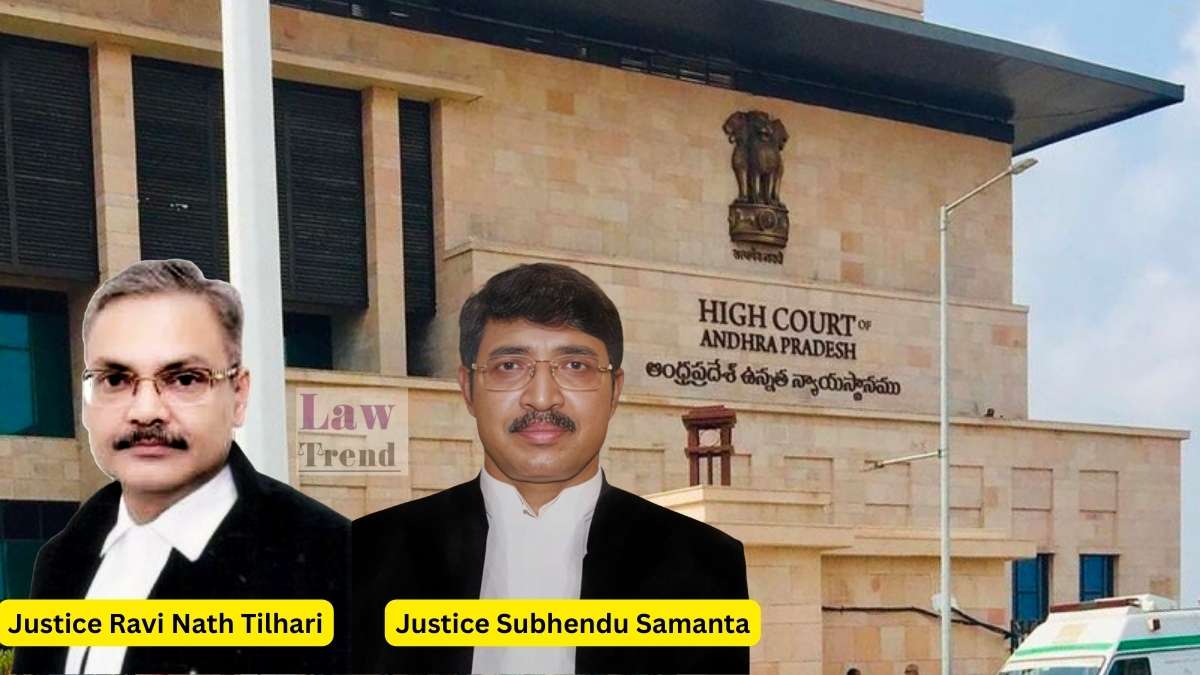

The High Court of Andhra Pradesh has ruled that an appeal challenging a decree passed by a Reference Court on a dispute over the apportionment of compensation under the Land Acquisition Act is maintainable only under the special appellate provisions of Section 54 of the Act, and not under the general civil law provisions of Section 96 of the Code of Civil Procedure (CPC). The division bench of Justice Ravi Nath Tilhari and Justice Subhendu Samanta rejected a preliminary objection regarding the maintainability of such an appeal, declaring that the Land Acquisition Act is a complete code governing its own appellate procedures.

Background of the Case

The ruling arose during the hearing of Land Acquisition Appeal Suit No. 10 of 2026, preferred under Section 54 of the Land Acquisition Act, 1984 (L.A. Act). The appellant, P. Babu, challenged an order and decree dated September 1, 2025, passed by the Principal Senior Civil Judge, Chittoor, in L.A.O.P. No. 79 of 2012. This order was delivered following a reference made by the Special Deputy Collector under Section 30 of the L.A. Act, which deals with disputes regarding the apportionment of compensation or determining the persons to whom it is payable.

Initially, at the stage of numbering the appeal, the High Court Registry raised an objection regarding the maintainability of the appeal under Section 54. A Coordinate Bench of the High Court, on March 23, 2026, directed the Registry to register the appeal while leaving the question of maintainability open for final adjudication. When the matter was taken up for admission, P. Sarojamma (the second respondent) raised a preliminary objection, asserting that the appeal was legally incompetent under Section 54.

Arguments of the Parties

Sri M. Venkata Ramana Reddy, learned counsel appearing for the second respondent, argued that an appeal under Section 54 of the L.A. Act is not maintainable against the challenged order. He submitted that since the order was passed on a Reference under Section 30 of the L.A. Act relating to apportionment, it constitutes a decree of the Court within the meaning of Section 2(2) of the CPC. Therefore, he argued, the appeal would lie only under Section 96 of the CPC. He further contended that Section 54 of the L.A. Act limits the appellate remedy strictly to an “award” or “any part of the award” of the Court. Because the apportionment order is a decree and not an award, Section 54 cannot be invoked, and consequently, the requisite court fee payable for a regular civil appeal under Section 96 had not been paid.

To support his arguments, the counsel relied on the Coordinate Bench judgment of the Andhra Pradesh High Court in Bollineni Srihari Rao v. Competent Authority and Special Collector, National Highway-5, Ongole and the Single Judge judgment of the High Court of Andhra Pradesh at Hyderabad in The Deputy Director of Agriculture, Khammam and another v. Sarvadevabhatla Ramanadham and others.

Conversely, Sri M.K. Raj Kumar, learned counsel appearing for the appellant, submitted that the appeal is maintainable under Section 54 of the L.A. Act. He argued that the proceedings arose directly out of a Reference under the provisions of the L.A. Act itself, leading to a decision by the Reference Court.

The Court’s Analysis and Interpretation

To resolve the maintainability issue, the bench examined the statutory text of Section 54 of the L.A. Act, which provides that an appeal shall lie to the High Court “in any proceedings under this Act from the award, or from any part of the award of the Court.”

READ ALSO  Tendency to Implicate Entire Family in Matrimonial Disputes Must Be Checked: Bombay HC Quashes 498A Case

The Court observed that statutory references under Section 30 (apportionment disputes referred by the Collector) stand on the same footing as references under Section 18 (objections raised at the instance of interested parties). In both cases, the Reference Court adjudicates disputes arising out of the Collector’s initial award under Section 11.

The Court highlighted that under Section 26(2) of the Act, every award made by the Reference Court is deemed to be a decree and its grounds a judgment under the CPC. The bench reasoned that if Section 54 were interpreted to exclude these deemed decrees simply because they are not literally called “awards,” the entire appellate provision of Section 54 would be rendered nugatory.

READ ALSO  In Banking Matters Responsibility on Employee is on Higher Side: Andhra Pradesh HC Upholds Dismissal

Explaining the correct interpretation of the law, the Court observed:

An appeal under Section 54 lies not from the award or part of the award either of the Collector or of the court, but, it provides for an appeal to the High Court ‘in any the proceedings under this Act’ i.e. proceedings under the Land Acquisition Act and those proceedings are from the award or from any part of the award i.e., the award of the Collector under Section 11.

The bench clarified that the correct reading and interpretation is from any proceedings under the Act of the Court from the award or any part of the award.

Addressing the legislative intent, the bench noted that if the legislature had intended for decrees passed by the Reference Court under Section 30 to be appealable under Section 96 of the CPC, there would have been no necessity to enact a special appellate provision under Section 54 of the L.A. Act. The existence of Section 54 demonstrates that appeals arising from adjudications under the Act must be governed exclusively by this special provision.

Distinguishing and Overruling Precedents

The Court then addressed the prior judgments cited by the respondents. Dealing with the Single Judge’s decision in The Deputy Director of Agriculture, which held that Section 30 orders are decrees appealable under Section 96 CPC and not Section 54, the bench noted that the Single Judge had failed to examine the specific language and scope of Section 54. Finding the Single Judge’s interpretation incorrect, the bench ruled:

Consequently, the judgment in the case Deputy Director of Agriculture (supra2) to the extent it holds that an appeal lies under Section 96 of C.P.C. and not under Section 54 of L.A. Act does not lay down the correct law and is overruled on that aspect.

Regarding the Bollineni Srihari Rao case, the bench explained that it was decided in the context of Section 3H(4) of the National Highways Act, 1956. Unlike the L.A. Act, the National Highways Act provides no special appellate remedy against the civil court’s decision, making Section 96 CPC applicable by default. Since the L.A. Act expressly provides a statutory appellate remedy under Section 54, the Bollineni case is clearly distinguishable and does not apply.

Decision of the Court

The Court concluded that while the procedural rules of the CPC governing first appeals apply to the filing and processing of appeals under Section 54, the substantive right of appeal is derived solely from Section 54 of the L.A. Act.

READ ALSO  गार्जियनशिप की कार्यवाही लंबित होने पर बच्चों की कस्टडी के लिए हेबियस कॉर्पस याचिका विचारणीय नहीं: आंध्र प्रदेश हाईकोर्ट

Accordingly, the High Court held that an appeal against a decree passed by a Reference Court in proceedings under Section 18 or Section 30 of the L.A. Act is maintainable exclusively under Section 54 of the L.A. Act. The preliminary objection regarding maintainability was rejected, and the matter was ordered to be listed for further proceedings on July 16, 2026.

Case Details:

Case Title: P.Babu v. The Land Acquisition Officer & Special Deputy Collector, AVR HNSS-Unit-II, Piler and another
Case No.: LAND ACQUISITION APPEAL SUIT No.10 OF 2026
Bench: Justice Ravi Nath Tilhari and Justice Subhendu Samanta
Date: 25.06.2026

Law Trend
Law Trendhttps://lawtrend.in/
Legal News Website Providing Latest Judgments of Supreme Court and High Court

Related Articles

Latest Articles

