

Accused Not Required to Seek Fresh Bail at Stage of Proposed Alteration of Charges Under Section 216 CrPC: Allahabad High Court
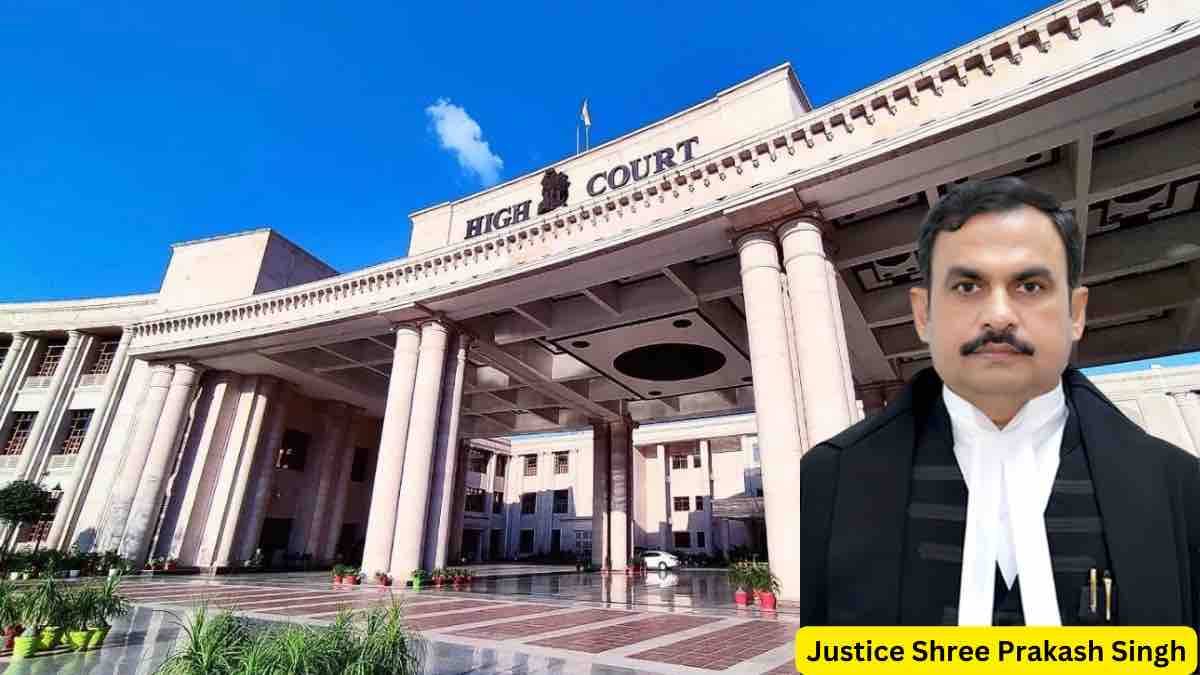

The Lucknow Bench of the Allahabad High Court, presided over by Justice Shree Prakash Singh, has ruled that an accused person cannot be directed to surrender and seek fresh bail at the stage of a proposed alteration of charges under Section 216 of the Code of Criminal Procedure (CrPC) before such charges are finalized, partly allowing the applicants’ application under Section 482 of the CrPC to set aside the trial court’s order directing them to secure fresh bail for proposed graver offenses under the Indian Penal Code (IPC) and the Protection of Children from Sexual Offences (POCSO) Act. This significant ruling clarifies that the procedural requirement for fresh bail is only triggered upon the actual and final alteration of charges, rather than at the preliminary stage where alterations are merely proposed or being debated.

Background of the Case

The matter originated from a First Information Report (FIR No. 0194/2020) lodged on August 2, 2020, by the complainant (opposite party no. 2) under Sections 354(ka) and 506 of the IPC at Police Station Paraspur, District Gonda. The FIR showed the date of the incident as August 2, 2020, and did not contain any allegation of rape against the applicants. Following the lodging of the FIR, the victim’s statement was recorded under Section 161 of the CrPC, where she made no allegations of rape, and on August 5, 2020, she refused to undergo a medical examination.

Subsequently, on August 20, 2020, the victim’s statement was recorded under Section 164 of the CrPC, wherein she alleged that the applicants had committed rape upon her on August 10, 2020. Meanwhile, on August 13, 2020, the father of the victim moved an application under Section 156(3) of the CrPC before the Chief Judicial Magistrate, Gonda, alleging that the applicants had committed rape on August 10, 2020, and praying for directions to register an FIR. The victim was summoned to record her statement under Section 200 of the CrPC but failed to appear, which resulted in the dismissal of the complaint for want of prosecution.

Following the investigation, the police filed a charge sheet on September 14, 2020, under Sections 354(ka) and 506 of the IPC and Sections 7/8 of the POCSO Act. The applicants appeared and were granted bail.

During the trial, the statement of the victim was recorded as PW1 on September 4, 2025. Following this, the special prosecutor moved an application under Section 216 of the CrPC, seeking an alteration of the charges. The trial court considered and rejected this application, but proceeded suo moto to consider the alteration of charges. On February 23, 2026, the trial court passed the impugned order, stating that there were prima facie grounds for charges under Section 376DA of the IPC and Sections 5(g)/6 of the POCSO Act. It called on the applicants to argue their case on the proposed alteration and directed them to appear and obtain bail for these proposed charges.

READ ALSO  Candidate with Tattoo Must Be Given Opportunity to Remove It Before Rejection: Delhi High Court

Arguments of the Parties

The learned counsel for the applicants contended that while the trial court was within its powers to propose the alteration of charges and seek arguments, the direction to surrender and obtain bail was erroneous. He argued that there is no provision in the CrPC or any precedent requiring an accused to obtain bail for charges that have only been proposed but not yet formally added or altered. He conceded that if charges are actually altered by adding serious offenses, fresh bail bonds and sureties would be required based on the gravity of the offenses, but contended that until the charges are finalized, there is no need to get bail.

The learned Additional Government Advocate (A.G.A.) appearing for the State opposed the application. He argued that the trial court’s prima facie conclusion was backed by sufficient evidence, specifically the testimony of PW1. Relying on the Allahabad High Court ruling in Bijendra and Ors v. State of U.P. and Ors and the Supreme Court decision in Hamida v. Rashid and Ors, the State argued that custody is a sine qua non for bail and that fresh bail must be sought when charges are converted to graver offenses.

The learned counsel for the complainant (opposite party no. 2) supported the State’s arguments. He asserted that the victim’s initial statements were not properly recorded by the police, and the trial court correctly proceeded to alter the charges upon hearing her testimony as PW1. He cited the Supreme Court judgments in Pradeep Ram v. State of Jharkhand and Another and Sumit v. State of U.P. and Anr to argue that an accused must apply for fresh bail once graver, non-bailable offenses are added.

Court’s Analysis and Findings

The High Court examined the factual matrix and the applicable law. It noted that under Section 216 of the CrPC, a trial court has the power to alter or add charges at any time before judgment is pronounced. However, in the present case, the process of altering charges was still in its preliminary stage.

READ ALSO  Allahabad HC Intervenes in DRT Lucknow Strike, Ensures Judicial Functioning

Justice Shree Prakash Singh emphasized that the charges under Section 376DA of the IPC and Sections 5(g)/6 of the POCSO Act were merely proposed, and no final decision to frame these charges had been made. The Court observed:

“The order clearly discloses that the trial court has still not reached to the final conclusion that the charges would be altered and added under the aforementioned sections/offenses. Meaning thereby that there is no alteration of charges at this stage and the applicants are still the proposed accused persons, for the charges under sections 376DA of IPC and 5 (g)/6 POCSO Act.”

Distinguishing the precedents cited by the respondents, the High Court held that the rulings in Hamida and Bijendra only apply after the charges have been formally converted into more serious offenses. The Court remarked:

“The ratio is apparent that only those accused persons will apply for bail afresh, once the offenses/sections are converted into higher charges/offenses. It is not the ratio that prior addition or alteration of the charges, such accused are required to get him bailed out, therefore, the ratio of abovenoted judgments would not apply so far as the factual matrix of the present case is concerned.”

Similarly, the Court found that the decisions in Pradeep Ram and Sumit were inapplicable because they dealt with situations where graver, non-bailable offenses had already been added. In the present case, the procedural stage under Section 216 of the CrPC was not completed. The Court observed:

“But the situation is all together different herein, as the procedure undertaken, invoking the provision of section 216 of CrPC, is not matured and is underway, therefore, the law cited by the counsel for the opposite party no. 2 also do not cover the field of the present case.”

The High Court referenced the Supreme Court’s ruling in Government of Karnataka v. Gowramma, highlighting that a slight variation in facts can significantly impact the precedential value of a decision, and judgments should not be applied mechanically.

The Court concluded that since the applicants were only given an opportunity of hearing on whether the charges should be altered, the charges might or might not be changed. Thus, the High Court held:

READ ALSO  Allahabad HC Directs Chief Secretary to Implement the Witness Protection Scheme 2018

“Therefore, at this stage, there seems to be no justiciability or lawfulness for direction to the applicants to surrender and get them bailed out.”

Decision / Directions Issued by the Court

The High Court declared that the trial court’s order directing the applicants to surrender and secure bail at the proposed stage was erroneous, contrary to settled legal principles, and unsustainable.

Consequently, the High Court partly allowed the Section 482 application at the admission stage. The High Court set aside the trial court’s order dated February 23, 2026, solely to the extent of the direction made to the applicants to get themselves bailed out.

The Court clarified that the rest of the trial court’s order—relating to the ongoing proceedings on the proposed alteration of charges—remains intact, and directed the trial court to proceed in accordance with law.

Case Details

Case Title: Nanke @ Sahabuddin And 2 Others Versus State Of U.P. Thru. Prin. Secy. Home Lko. And 2 Others

Case Number: APPLICATION U/S 482 No. 2922 of 2026

Bench: Justice Shree Prakash Singh

Date of Judgment: May 13, 2026

Law Trend
Law Trendhttps://lawtrend.in/
Legal News Website Providing Latest Judgments of Supreme Court and High Court

Related Articles

Latest Articles

