

Section 29A Arbitral Extension Can Be Filed Post-Expiry: AP High Court Sets Aside Rejection Order and Extends Tribunal’s Mandate
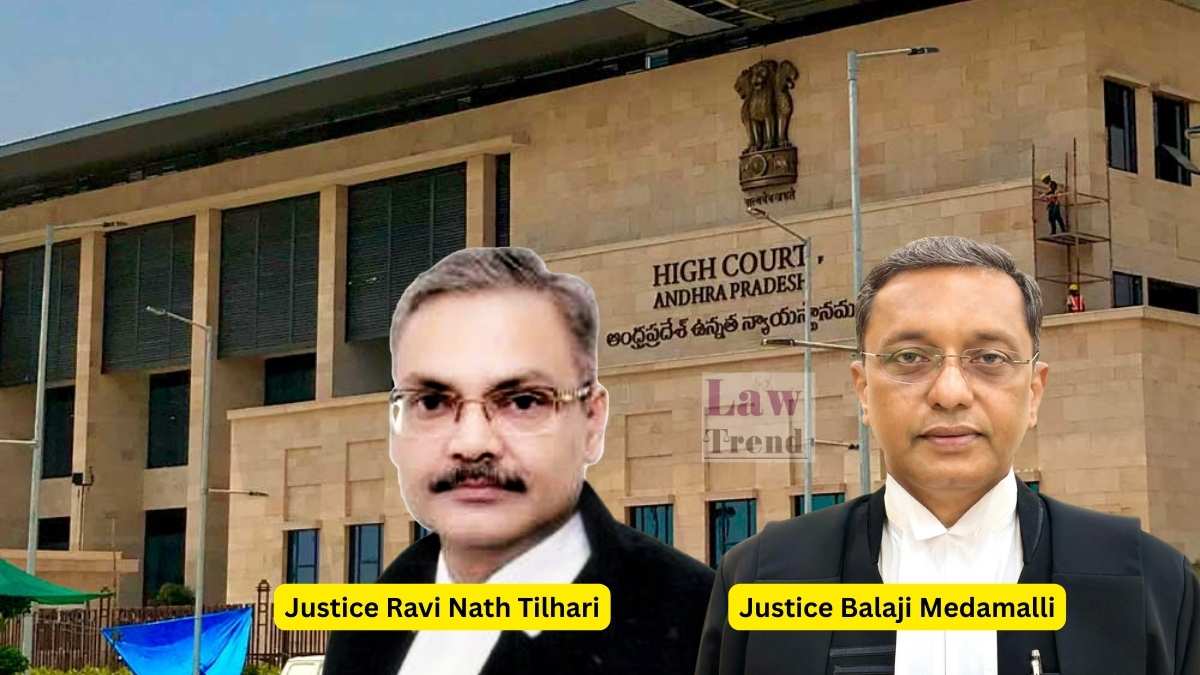
The Andhra Pradesh High Court has ruled that applications seeking an extension of an arbitral tribunal’s mandate under Section 29A of the Arbitration and Conciliation Act, 1996, do not have a prescribed limitation period and can be filed even after the original mandate has expired. A Division Bench comprising Justice Ravi Nath Tilhari and Justice Balaji Medamalli set aside an order by a Special Commercial Court that had rejected an extension plea on hyper-technical grounds, subsequently stepping in to extend the arbitration proceedings by six months.

Background of the Dispute

The matter arose from an arbitration between Gali Radha Bhagya Lakshmi and Sree Constructions concerning flats in a property in Vijayawada. A sole arbitrator was appointed in April 2021 based on a joint memo between the parties. However, the arbitration proceedings faced significant delays due to the Covid-19 pandemic, interim injunction applications, and changes in the claimant’s legal counsel. The tribunal conducted 87 sessions in total up to March 2024.

Despite the parties mutually agreeing to extend the mandate by six months after the initial 12-month period expired, the proceedings could not be concluded. The claimant then filed an application (C.A.O.P.No. 2 of 2025) before the Special Court for Trial and Disposal of Commercial Disputes, Vijayawada, seeking a 12-month extension from September 27, 2023.

On July 31, 2025, the Special Court rejected the application, citing a 15-month delay in filing and noting that the requested 12-month extension period had already elapsed by the time the petition was filed. The claimant subsequently filed a civil revision petition before the High Court.

READ ALSO  High Court Exercising Supervisory Jurisdiction under Article 227 of the Constitution Does not act as a Court of First Appeal to Re-appreciate Evidence: AP HC

Arguments of the Parties

The petitioner argued that sufficient reasons were assigned for why the arbitral proceedings could not be completed within the extended timeframe. The counsel contended that an application for time extension under Section 29A can be filed at any time, even post-expiry, and pointed out that the delay in filing before the Special Court was reasonable because a previous application before the High Court was withdrawn with liberty to approach the competent forum in July 2024.

The respondents countered that the application was rightly rejected because the specific 12-month period the petitioner had prayed for had already expired prior to the filing, rendering the application infructuous.

Court’s Analysis

The High Court heavily criticized the lower court’s approach, noting that the Special Court had taken a hyper-technical stance by rejecting the application merely because the date requested in the affidavit had passed. The bench observed, “The view taken is too technical which does not advance the cause of justice.” The court noted that it was within the Special Court’s discretion to grant an appropriate extension period regardless of the exact time requested, and the applicant should have been allowed to rectify any errors in the pleadings.

Addressing the issue of delay in filing the Section 29A application, the High Court clarified the legal position, stating, “firstly, there is no period of limitation in filing the application under Section 29A(4) of the Act. An application is maintainable even after the expiry of 12 months or 18 months period as the case may be.”

Relying on the Supreme Court’s ruling in Rohan Builders (India) Private Limited Vs Berger Paints India Limited and the High Court’s own precedent in Chidepudi Bhanu Srivastava Vs Kancharla Subrahmanyam, the bench reiterated that courts must evaluate the reasons for the delay in the arbitration itself, rather than the delay in filing the extension application. The bench emphasized, “It is also settled that ‘sufficient cause’ has to be construed liberally so as to enable to give the mandate.”

The High Court found that the Special Judge completely failed to consider the Covid-19 disruptions, the High Court’s previous order granting liberty to file, and crucially, failed to record any finding that there was “no sufficient cause” for the non-completion of the proceedings.

READ ALSO  WhatsApp Chats and Call Recordings Admissible in Divorce Cases; Even if Obtained Without Consent: Chhattisgarh HC

Decision

The High Court allowed the civil revision petition and set aside the July 2025 order of the Special Court. Noting the submissions of both counsels who requested the High Court to grant the extension directly rather than remanding the matter, the bench directed the Arbitral Tribunal to complete the proceedings within an extended period of six months from the date of receipt of the judgment. No order was made as to costs.

READ ALSO  420 IPC| Court Can Quash an FIR If Company is not made Co-accused, Rules AP HC

Case Title: Gali Radha Bhagya Lakshmi vs. Sree Constructions and Anr.

Case No.: Civil Revision Petition No. 84 of 2026

Bench: Justice Ravi Nath Tilhari and Justice Balaji Medamalli

Date: April 28, 2026

Law Trend
Law Trendhttps://lawtrend.in/
Legal News Website Providing Latest Judgments of Supreme Court and High Court

Related Articles

Latest Articles
