

Unilateral Rectification Deed Without Original Vendor’s Consent Cannot Substitute Conveyed Property: Supreme Court
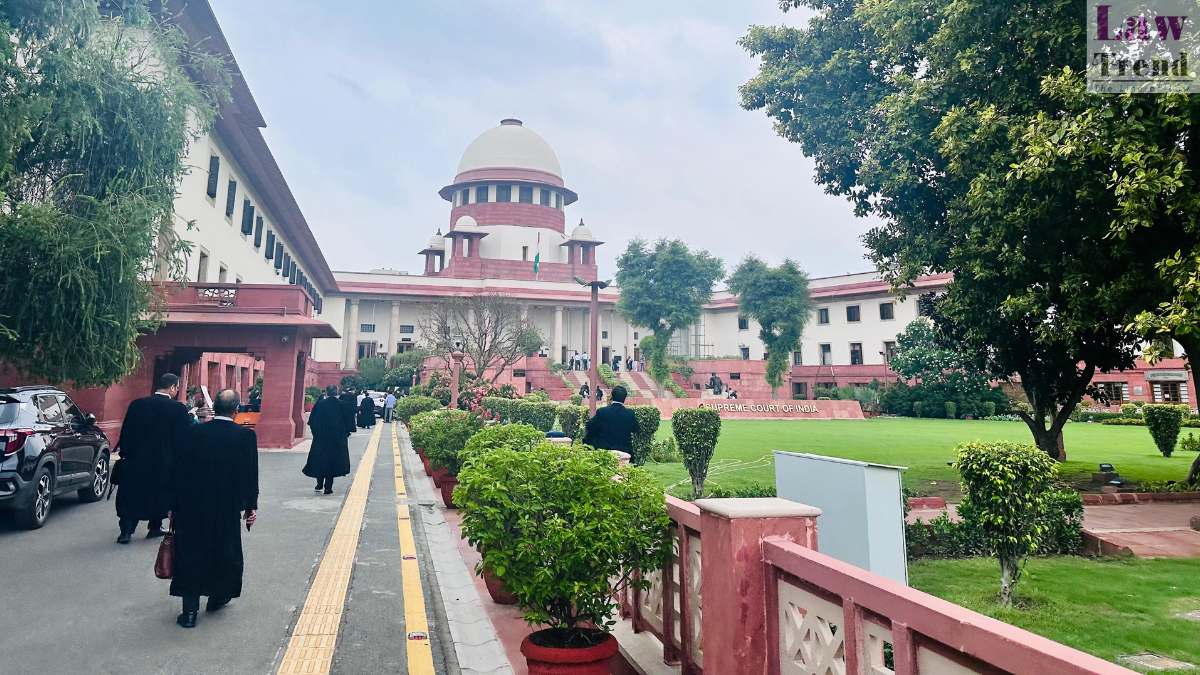

The Supreme Court of India has ruled that a rectification deed cannot unilaterally alter the essential subject matter of a prior sale deed to substitute one property with another without the participation and consent of the original vendor. Restoring a trial court decree that dismissed a property declaration suit, the division bench of Justice Dipankar Datta and Justice Vipul M. Pancholi held that a plaintiff must establish the identity of the disputed property through precise pleadings and clear evidence, rather than relying on conjectural boundary comparisons or unilateral corrections.

The apex court set aside the judgments of the Karnataka High Court and the first appellate court, which had erroneously decreed the suit in favor of the plaintiff by overlooking critical admissions and applying inapplicable legal doctrines.

Background of the Case

The dispute traces back to a property measuring 1 acre and 18.5 guntas in Survey No. 1/4, situated in Bodhigere Village, Channarayapatna Hobli, Devanahalli Taluk, Bangalore District, which originally belonged to Thimmadasappa. On May 17, 1971, Thimmadasappa sold this property to Venkatappa (Defendant No. 3) through a registered sale deed. Subsequently, on March 24, 1972, Venkatappa sold the property to Govindappa (Defendant No. 4). On May 31, 1973, Govindappa conveyed the property to the plaintiff, K.M. Venkatamuniyappa (now represented by his legal representatives), through a third registered sale deed. All three historical sale deeds consistently described the property as Survey No. 1/4.

Separately, a different parcel of land measuring 1 acre and 18.25 guntas in Survey No. 162—originally belonging to the Lord Desha Narayanaswamy Temple—was re-granted to Thimmadasappa on August 5, 1982, following the abolition of the Inam.

Nearly fifteen years later, on March 13, 1997, a rectification deed was executed exclusively between Govindappa (Defendant No. 4) and the plaintiff. This deed sought to correct the survey number in the 1973 sale deed from Survey No. 1/4 to Survey No. 162. Crucially, the original owner, Thimmadasappa, was not a party to this rectification.

In October 2005, Thimmadasappa executed a registered partition deed, partitioning the re-granted property in Survey No. 162 between his two sons (the appellants). Aggrieved by this, the plaintiff filed a civil suit in 2007 seeking a declaration of absolute ownership over Survey No. 162 and a declaration that the partition deed was null, void, and not binding on him.

Arguments of the Parties

The plaintiff contended that the 1997 rectification deed was executed solely to correct a clerical error in the 1973 sale deed, substituting Survey No. 1/4 with Survey No. 162. He argued that the boundaries in all the sale deeds corresponded to Survey No. 162 and that Thimmadasappa and his sons had illegally partitioned the property by taking advantage of the revenue authorities’ failure to mutate the plaintiff’s name in the records.

READ ALSO  SCAORA ने वरिष्ठ वकील को ईडी द्वारा भेजे गए समन पर जताई गंभीर चिंता, सुप्रीम कोर्ट से स्वत: संज्ञान लेने की मांग

Conversely, the appellants argued that Survey No. 162 was an Inam land re-granted to their father only in 1982, and that he had remained in lawful possession of it until partitioning it. They asserted that the three sale deeds executed in the 1970s pertained exclusively to Survey No. 1/4 and not to Survey No. 162. They maintained that the two survey numbers represented completely distinct properties, a fact that the plaintiff himself admitted during his cross-examination.

Lower Courts’ Findings

The Trial Court dismissed the plaintiff’s suit, noting that the plaintiff had failed to establish his ownership or possession of Survey No. 162, or prove that it was the same property as Survey No. 1/4. It specifically highlighted the plaintiff’s clear admission during cross-examination that the two survey numbers referred to distinct properties.

However, the First Appellate Court reversed this dismissal. By comparing the boundaries of the 1971 sale deed with the 2005 partition deed, the appellate court concluded that the boundaries were identical and assumed that there had been an “interchange” of the northern and southern boundaries.

The High Court of Karnataka subsequently dismissed the appellants’ second appeal, affirming the first appellate court’s decree. The High Court went a step further by independently invoking Section 43 of the Transfer of Property Act, 1882, to hold that the 1982 re-grant of the Inam land to Thimmadasappa would enure to the benefit of the plaintiff as a prior purchaser.

The Supreme Court’s Analysis

Upon hearing both sides, the Supreme Court identified several fundamental legal and jurisdictional errors in the judgments of the High Court and the first appellate court.

1. Departure from Pleadings and Material Admissions

The Supreme Court emphasized that the plaintiff had failed to plead in his plaint that Survey No. 1/4 and Survey No. 162 denoted the same property, or that there was a mutual mistake regarding the boundaries. Citing the landmark judgments in Trojan & Co. Ltd. v. Nagappa Chettiar and Bachhaj Nahar v. Nilima Mandal, the Court reiterated that no relief can be granted on a case that has not been pleaded.

READ ALSO  Supreme Court: Impossible for Spouses to Claim Independence in Marriage

The Court quoted the instructive passage from Bachhaj Nahar:

“Thus it is said that no amount of evidence, on a plea that is not put forward in the pleadings, can be looked into to grant any relief.”

Furthermore, the Supreme Court pointed out that during his cross-examination, the plaintiff explicitly admitted that the lands in Survey No. 1/4 and Survey No. 162 were “totally different from each other.” The Court held that the first appellate court erred by discarding this significant admission without assigning any cogent reasons.

2. Scope and Validity of the Rectification Deed

The Bench analyzed the legal competence of the 1997 rectification deed under Section 26 of the Specific Relief Act, 1963. The Court observed that rectification is meant to correct the expression of a concluded bargain, not to substitute the subject matter of the transaction itself.

The Court observed:

“A rectification deed cannot, in the guise of correcting an error, substitute the very subject matter of a prior conveyance without participation of the original transferor.”

It further added:

“The provision is intended to remove an error in recording the transaction and not to alter the essential subject matter of the transaction itself.”

Since Thimmadasappa, the original owner who executed the 1971 sale deed, was not a party to the 1997 rectification deed, the subsequent purchasers could not unilaterally alter the identity of the property conveyed.

Applying the legal maxim nemo dat quod non habet (no one can give what they do not have), the Court noted:

“A derivative title cannot outvalue the title from which it is derived.”

Because Thimmadasappa never conveyed Survey No. 162 in the original 1971 deed, subsequent purchasers could not acquire or pass on any title to it.

READ ALSO  Can a Customer in a Brothel be Hauled in a Prosecution Under the Immoral Traffic (Prevention) Act, 1956? Kerala High Court Answers

3. Misapplication of Section 43 of the Transfer of Property Act

The Supreme Court found that the High Court erred by invoking Section 43 of the Transfer of Property Act (feeding the grant by estoppel) on its own accord. The Court distinguished the precedent N. Venkateshappa v. Munemma, pointing out that the doctrine applies only when the identity of the transferred property and the re-granted property is established as being the same. Since the identity of the property remained unproven in this case, the High Court had “placed the legal cart before the factual horse.”

The Court also highlighted that the plaintiff failed to show any revenue mutation in his name for nearly a decade after the 1997 rectification deed, while the revenue entries consistently stood in the names of Thimmadasappa and his sons.

Concluding on the burden of proof, the Supreme Court stated:

“A plaintiff seeking declaration of title must succeed on the strength of his own case and not on the perceived weakness of the defence.”

Decision of the Court

Finding the judgments of both the High Court and the first appellate court to be suffering from manifest errors of law and perversity, the Supreme Court allowed the appeal. The judgment and decree of the High Court dated July 6, 2023, and the first appellate court dated February 22, 2014, were set aside. The Supreme Court restored the Trial Court’s decree dated October 15, 2011, dismissing the plaintiff’s suit. No order was made as to costs.

Case Details

Case Title: Venkatesha and Anr. vs. K.M. Venkatamuniyappa (D) Thr. LRS. & Ors.
Case No.: Civil Appeal No. of 2026 (Arising out of SLP (Civil) No. 23330 of 2023)
Bench: Justice Dipankar Datta, Justice Vipul M. Pancholi
Date: July 14, 2026

Law Trend
Law Trendhttps://lawtrend.in/
Legal News Website Providing Latest Judgments of Supreme Court and High Court

Related Articles

Latest Articles

