

Challenge to Rejection of Section 16 Jurisdictional Objection Lies Under Section 34, Not Article 227: Supreme Court
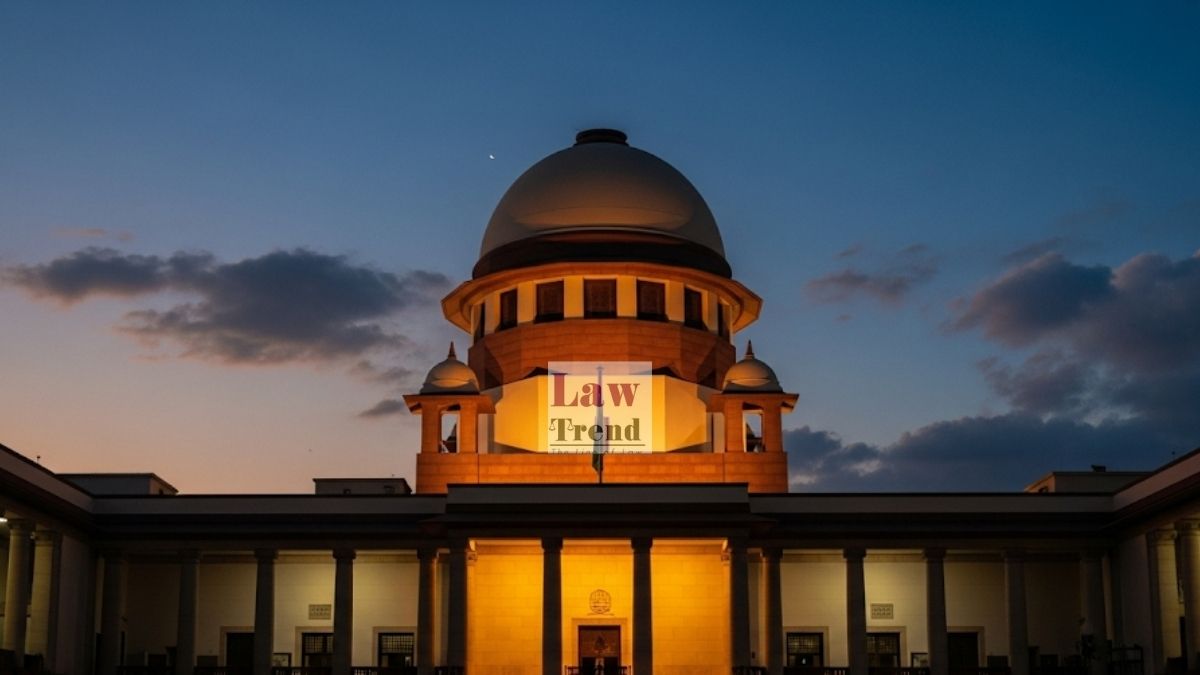

The Supreme Court of India, through a bench of Justice K.V. Viswanathan and Justice Vijay Bishnoi, has set aside orders of the Gauhati High Court that stayed arbitral proceedings against non-signatory companies. The apex court ruled that a revision petition under Article 227 of the Constitution of India is not maintainable against an Arbitral Tribunal’s rejection of a jurisdictional challenge under Section 16 of the Arbitration and Conciliation Act, 1996, unless there is a patent lack of inherent jurisdiction. The court emphasized that the statutory remedy against such a jurisdictional decision must await the final award and be pursued under Section 34 of the Act.

Background of the Case

The dispute traces back to September 19, 1948, when M/s Boloma Tea Company (Respondent No. 5) was constituted as a partnership firm by Late Ram Kamal Bezboruah, Late Dr. Nil Kamal Bezboruah, Late Indra Kamal Bezboruah, and Shri Dhirendra Nath Bezboruah, each holding a 25% share. After several adjustments to the partnership over the decades, including the demise of Late Indra Kamal Bezboruah in April 1967, a fresh partnership deed was executed on November 16, 1976. Under this deed, the Appellant, Manash Kamal Bezboruah (an IAS Officer who obtained government permission to become a sleeping partner), was allotted a 25% share. Clause 5 of this partnership deed contained an arbitration clause for resolving disputes.

During this period, several corporate entities were incorporated, including M/s Bokahola Tea Company Pvt. Ltd. (Respondent No. 1), M/s Kasojan Tea Company Pvt. Ltd. (Respondent No. 2), and M/s Bokahola Investment Pvt. Ltd. (Respondent No. 3).

In July 2012, the Appellant instituted Title Suit No. 38 of 2012 before the Civil Judge (Senior Division), Jorhat, seeking rendition of accounts and alleging mismanagement and financial irregularities in the companies. Respondent No. 7 subsequently filed an application under Section 8 of the Arbitration and Conciliation Act, 1996, seeking to refer the disputes to arbitration. On August 7, 2014, the Trial Court rejected this application, noting that several defendants (including Respondent Nos. 1 to 3) were non-signatories to the partnership deed and, relying on Sukanya Holdings (P) Ltd. v. Jayesh H. Pandya, held that the suit could not be split up.

The Gauhati High Court upheld this rejection on November 1, 2021. However, on appeal, the Supreme Court, through a consent order dated November 21, 2024, referred the disputes to arbitration and appointed Justice (Retd.) B.P. Katakey as the Sole Arbitrator. Although Respondent Nos. 1 to 3 were parties to this appeal and were served notices, they did not contest the proceedings.

READ ALSO  Rajasthan HC Upholds Life Imprisonment for Father Convicted of Raping Minor Daughter; Terms Act "Complete Betrayal of Sacred Relationship"

During the arbitral proceedings, Respondent Nos. 1 to 3 filed applications before the Tribunal seeking the deletion of their names from the array of parties. The Arbitral Tribunal treated these as jurisdictional challenges under Section 16 of the Act. On August 4, 2025, the Tribunal rejected the applications, holding that the Supreme Court’s consent order left no scope for the Tribunal to reconsider whether non-signatories could be subjected to the arbitration.

Aggrieved by this rejection, Respondent Nos. 1 to 3 filed a Civil Revision Petition under Article 227 of the Constitution before the Gauhati High Court. The High Court, via an interim order dated September 2, 2025, stayed the notices issued to them. Subsequently, on January 28, 2026, the High Court rejected the Appellant’s preliminary objections regarding the maintainability of the revision petition, holding that the Arbitral Tribunal’s order suffered from a “patent lack of inherent jurisdiction.” The Appellant then approached the Supreme Court.

Arguments of the Parties

Appellant’s Submissions: Represented by advocate Mr. Abir Phukan, the Appellant contended that Respondent Nos. 1 to 3 are veritable parties to the dispute due to their close inter-party relations, commonality in subject matter, and the fact that their incorporation involved borrowing funds from the partnership firm. Relying on the Constitution Bench judgment in Cox and Kings Ltd. v. SAP India Pvt. Ltd., the counsel argued that non-signatories can be bound by arbitration where composite transactions and conduct demonstrate such an intention.

Furthermore, the Appellant argued that Respondent Nos. 1 to 3 were estopped from challenging the reference since they chose not to object to the Supreme Court’s consent order dated November 21, 2024, despite being served. The Appellant submitted that the High Court’s interference under Article 227 was an abuse of process, as the proper statutory remedy against the rejection of a Section 16 application is to challenge the final award under Section 34.

Respondents’ Submissions: Appearing for Respondent Nos. 1 to 3, Senior Counsel Mrs. Madhavi Diwan argued that the Appellant was taking a contradictory stand, having previously argued in civil court that these respondents were not parties to the arbitration agreement. Having secured favorable orders on that premise, the Appellant could not now “approbate and reprobate.”

The respondents maintained that they did not satisfy the “veritable party” test laid down in Cox and Kings and never intended to be bound. They argued that the Supreme Court’s consent order only bound the appearing parties who consented, and Respondent No. 7 had no authority to consent on behalf of Respondent Nos. 1 to 3. They supported the High Court’s intervention, arguing that the Arbitral Tribunal’s assumption of jurisdiction fell within the “narrow band of perversity” and suffered from a patent lack of inherent jurisdiction.

READ ALSO  पंजाब सरकार ने बीएसएफ के क्षेत्राधिकार का विस्तार करने पर सुप्रीम कोर्ट में केंद्र के खिलाफ मुकदमा दायर किया

Court’s Analysis

The Supreme Court identified the core legal issue as whether the High Court was justified in holding that a revision petition under Article 227 is maintainable against the Arbitral Tribunal’s jurisdictional order.

The Court began by outlining the statutory scheme of the Arbitration and Conciliation Act, 1996, describing it as a self-contained code. It noted that Section 5 of the Act restricts judicial intervention to ensure the expeditious resolution of disputes, while Section 16 incorporates the doctrine of kompetenz-kompetenz, giving the tribunal the authority to rule on its own jurisdiction.

The Bench highlighted the landmark Constitution Bench ruling in SBP & Co. v. Patel Engineering Ltd., which explicitly disapproved of High Courts correcting tribunal orders under Article 226 or 227 during the pendency of proceedings:

We, therefore, disapprove of the stand adopted by some of the High Courts that any order passed by the Arbitral Tribunal is capable of being corrected by the High Court under Article 226 or 227 of the Constitution. Such an intervention by the High Courts is not permissible.

The Court further cited SBP & Co. to emphasize:

The object of minimising judicial intervention while the matter is in the process of being arbitrated upon, will certainly be defeated if the High Court could be approached under Article 227 or under Article 226 of the Constitution against every order made by the Arbitral Tribunal.

Addressing the narrow exception of “patent lack of inherent jurisdiction,” the Court referenced Deep Industries Ltd. v. Oil and Natural Gas Corporation Ltd., noting that supervisory interference under Article 227 must be highly restricted:

…interference is restricted to orders that are passed which are patently lacking in inherent jurisdiction.

Clarifying what constitutes a patent lack of jurisdiction, the Court referenced Punjab State Power Corpn. Ltd. v. Emta Coal Limited:

We are of the view that a foray to the writ court from a Section 16 application being dismissed by the arbitrator can only be if the order passed is so perverse that the only possible conclusion is that there is a patent lack in inherent jurisdiction. A patent lack of inherent jurisdiction requires no argument whatsoever – it must be the perversity of the order that must stare one in the face.

Additionally, the Court referenced M/s Tarini Prasad Mohanty v. M/s Sunflag Iron and Steel Company Limited, reiterating that writ courts must respect the statutory expectation of minimal interference prior to the culmination of arbitral proceedings.

Applying these precedents, the Supreme Court observed that the Gauhati High Court had failed to record any specific finding of perversity or patent lack of inherent jurisdiction in the Arbitral Tribunal’s order dated August 4, 2025.

READ ALSO  Supreme Court Sets New Standards for Arbitrator Appointments in Public Contracts

On the issue of non-signatories, the Court noted that under the Cox and Kings framework, the referral court only makes a prima facie determination regarding the existence of an arbitration agreement, leaving the detailed evaluation of whether a non-signatory is bound to the Arbitral Tribunal. Therefore, the Arbitral Tribunal in this case possessed the absolute competence to decide this jurisdictional issue under Section 16.

The Court also criticized the practice of Respondent Nos. 1 to 3 failing to contest the initial Civil Appeal before the Supreme Court, only to initiate a fresh round of litigation later, stating that multiple judicial interventions create unnecessary delays and undermine the very purpose of the Act.

Decision

The Supreme Court concluded that the Gauhati High Court was not justified in entertaining the challenge under Article 227 and staying the arbitral proceedings. It ruled that the proper remedy against the rejection of a Section 16 application strictly lies under Section 34 of the Act after the final award is pronounced.

Accordingly, the Court set aside both the interim order dated September 2, 2025, and the order dated January 28, 2026, passed by the Gauhati High Court, and dismissed the revision petition.

However, since the Arbitral Tribunal had already framed issues concerning the jurisdictional objections raised by Respondent Nos. 1 to 3, the Supreme Court directed the Tribunal to decide their status independently, uninfluenced by the observations of the Court, and to complete the arbitration proceedings expeditiously.

Case Details

Case Title: Manash Kamal Bezboruah v. M/s Bokahola Tea Company Private Limited & Ors.
Case No.: Civil Appeal Nos. of 2026 (Arising out of SLP (Civil) Nos. 7233-7234 of 2026)
Bench: Justice K.V. Viswanathan, Justice Vijay Bishnoi
Date: July 14, 2026

Law Trend
Law Trendhttps://lawtrend.in/
Legal News Website Providing Latest Judgments of Supreme Court and High Court

Related Articles

Latest Articles

