

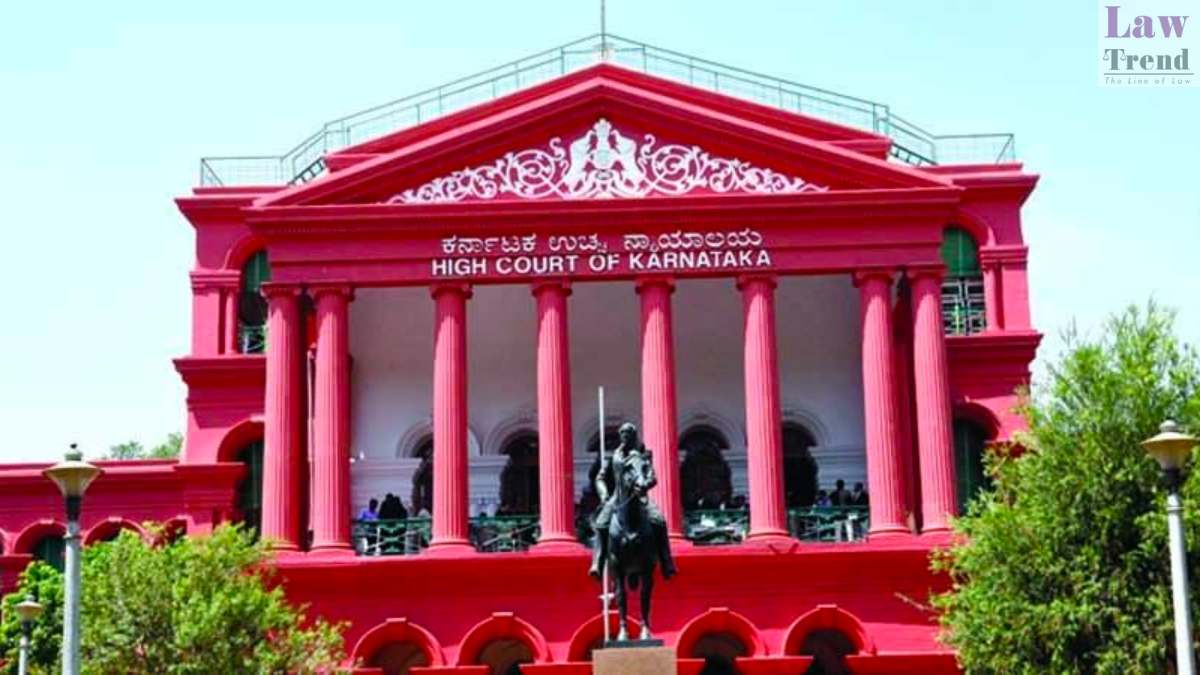
The Karnataka High Court has canceled criminal proceedings against three individuals accused of causing the death of a toddler by negligence, following a commitment by the accused to establish a structured 5 lakh rupee compensation package for the victim’s family.
Justice M Nagaprasanna, presiding over a single-judge bench, allowed the petition in an order dated July 9. The court directed that the 5 lakh rupees be placed in an interest-bearing fixed deposit. This arrangement aims to protect the principal sum to secure the future of the family’s two surviving daughters, while the regular interest payments and an additional payment of 10,000 rupees per month for one year will help cover the family’s immediate living expenses.
Details Of The Settlement
The criminal case originated from an incident on May 27, when a two-and-a-half-year-old child wandered onto a construction site in Bengaluru’s Rajarejeshwari Nagar. The site, managed by the petitioners—Velu, also known as Velmayil Somu, and two others—contained an open water tank kept for construction purposes. The child accidentally fell into the tank and drowned, leading to a First Information Report being filed at the Rajarejeshwari Nagar police station.
Background Of The Incident
During the court proceedings, the petitioners initially offered a lump sum of 2 lakh rupees to the child’s father, who works as a mason. Justice Nagaprasanna rejected this initial proposal, noting that the value of a child’s life cannot be reduced to a sum that fails to reflect the gravity of the tragedy, and urged the petitioners to submit a revised offer. On July 1, the petitioners returned with the enhanced 5 lakh rupee proposal along with the monthly payouts.
Judicial Intervention And Restitution
In the final order, the court observed that besides resolving disputes, judicial bodies act as silent custodians of equity when legal matters intersect with human suffering. The bench noted that while the legal process cannot bring back a lost life or ease parental grief, courts have a duty to ensure that mutual settlements result in genuine restitution rather than a basic commercial transaction.
The court also highlighted that a large lump sum given directly to an impoverished family struggling for daily survival can easily be consumed by immediate needs, which prompted the decision to structure the payout to preserve the funds for the long-term welfare of the surviving children.




