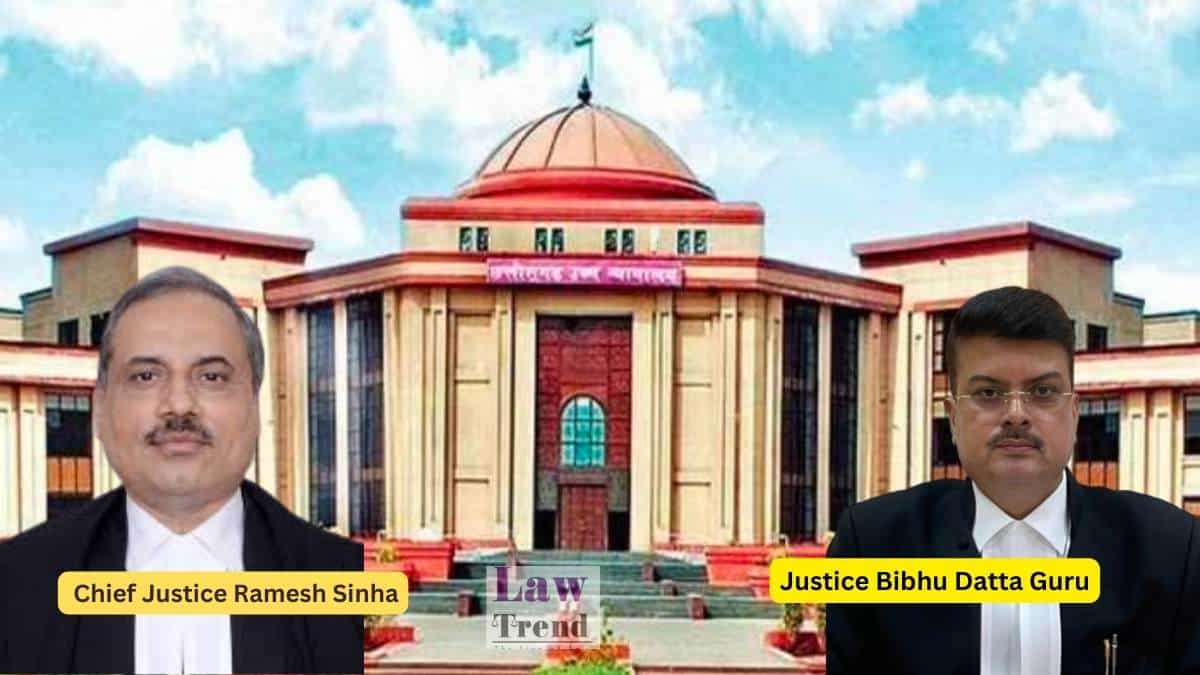
The Chhattisgarh High Court has ruled that an ineffective hearing at the initial stage vitiates the entire decision-making process, which can lead to a series of flawed orders at subsequent stages. In a major relief to Jindal Steel Limited, a Division Bench comprising Chief Justice Ramesh Sinha and Justice Bibhu Datta Guru stayed a Rs 153.55 crore refund demand issued by the state power distribution company, holding that the company was condemned unheard in violation of the principles of natural justice.
The Court set aside a Single Judge’s order that had previously dismissed Jindal Steel’s writ petition. The Division Bench directed the Chhattisgarh State Electricity Regulatory Commission (CSERC) to grant the company a full opportunity to be heard and to decide the tariff dispute afresh.
Background of the Case
The dispute originated from Power Purchase Agreements (PPAs) signed in 2011 between Jindal Steel Limited (JSPL) and the Chhattisgarh State Power Distribution Company Limited (CSPDCL) for the short-term supply of electricity from JSPL’s captive power plant in Raigarh. JSPL supplied power during the financial years 2011-12 and 2012-13, raising invoices based on a load factor mechanism agreed upon in the contracts. CSPDCL accepted the power and cleared the payments at average rates of Rs 2.42 and Rs 2.66 per unit without any protest.
In 2014, during a tariff true-up petition filed by CSPDCL, the CSERC observed that the power supplied by JSPL had wide variations and classified it as “unstable/non-firm power.” As a result, the Commission approved a minimum base rate of Rs 1.50 per unit. CSPDCL subsequently challenged the tariff order before the Appellate Tribunal for Electricity (APTEL), which upheld the CSERC’s findings in May 2016.
Relying on the APTEL judgment, CSPDCL issued a demand notice in July 2016, seeking a refund of Rs 153.55 crore from JSPL for alleged overcharging. Simultaneously, the state transmission utility, CSPTCL, denied JSPL a No Objection Certificate (NoC) for Short Term Open Access to sell its power on the energy exchange, citing the unpaid recovery demand. JSPL challenged these actions through a writ petition, which a Single Judge dismissed in March 2026, leading to the present appeal.
Arguments by the Parties
Senior Advocates Gopal Jain, Abhimanyu Bhandari, and Ashish Shrivastava, representing JSPL, argued that the company was never made a party to the CSERC tariff proceedings, the subsequent review, or the APTEL appeal. They contended that the orders were void ab initio against JSPL as it was denied an opportunity to be heard. The appellants emphasized that they supplied power strictly in accordance with the PPAs, which contained no provisions for retrospective refunds, and that denying Open Access based on an unadjudicated claim violated their right to carry on trade.
Conversely, the respondent authorities argued that tariff determination is a quasi-legislative process governed by public notices, which were widely circulated. They pointed out that a JSPL representative had even attended a review hearing. Relying on Section 62(6) of the Electricity Act, 2003, the respondents argued that the law mandates the recovery of any excess tariff recovered by a generating company.
The Court’s Analysis
The Division Bench rejected the respondents’ argument that public notices negated the need for an individual hearing. The Court noted that while tariff determination may have a legislative flavor, the moment proceedings culminate in specific findings that fasten adverse financial consequences upon an identifiable generating company, the proceedings assume a quasi-judicial character.
The Court observed that CSPDCL had willingly accepted the power and cleared invoices as per the contract. The Bench highlighted that neither the CSERC nor APTEL had explicitly directed a recovery from JSPL; the regulatory disallowance was merely aimed at CSPDCL’s ability to pass purchase costs onto consumers. Clarifying the law, the Court stated that Section 62(6) of the Electricity Act does not dispense with the requirement of proper adjudication before executing a recovery.
Relying on the Supreme Court precedent in Krishnadatt Awasthy v. State of M.P. & Others, the High Court emphasized the foundational importance of fair procedure. Quoting the Supreme Court, the Bench noted: “An ineffective hearing at the initial stage therefore taints the entire decision-making process leading to a cascade of flawed orders at subsequent stages.”
The Court further highlighted the essence of natural justice, quoting: “The principle of audi alteram partem is the cornerstone of justice, ensuring that no person is condemned unheard.”
The Bench concluded that the Single Judge erred in dismissing the writ petition despite acknowledging that the principles of natural justice were violated. The Court also held that the refusal to grant Open Access was founded solely on a disputed claim and could not be sustained in law.
The Decision
The High Court set aside the Single Judge’s order and kept the APTEL judgment, the Rs 153.55 crore demand notice, and the letters denying Open Access in abeyance.
The Court directed the CSERC to afford JSPL a full opportunity of hearing and decide the matter afresh regarding the tariff order and final true-up. The Commission was instructed to conclude this exercise preferably within two months. The Court strictly ordered that until the liability is duly determined through proper adjudication, JSPL cannot be denied an NoC or Open Access solely based on the disputed demand.
Case Title: Jindal Steel Limited & Another v. Chhattisgarh State Electricity Regulatory Commission & Others
Case No.: WA No. 379 of 2026
Bench: Chief Justice Ramesh Sinha and Justice Bibhu Datta Guru
Date: 02/06/2026