

Marital Status Cannot Be Ground to Deny Fair Price Shop Dealership to Dependent Daughter: Supreme Court
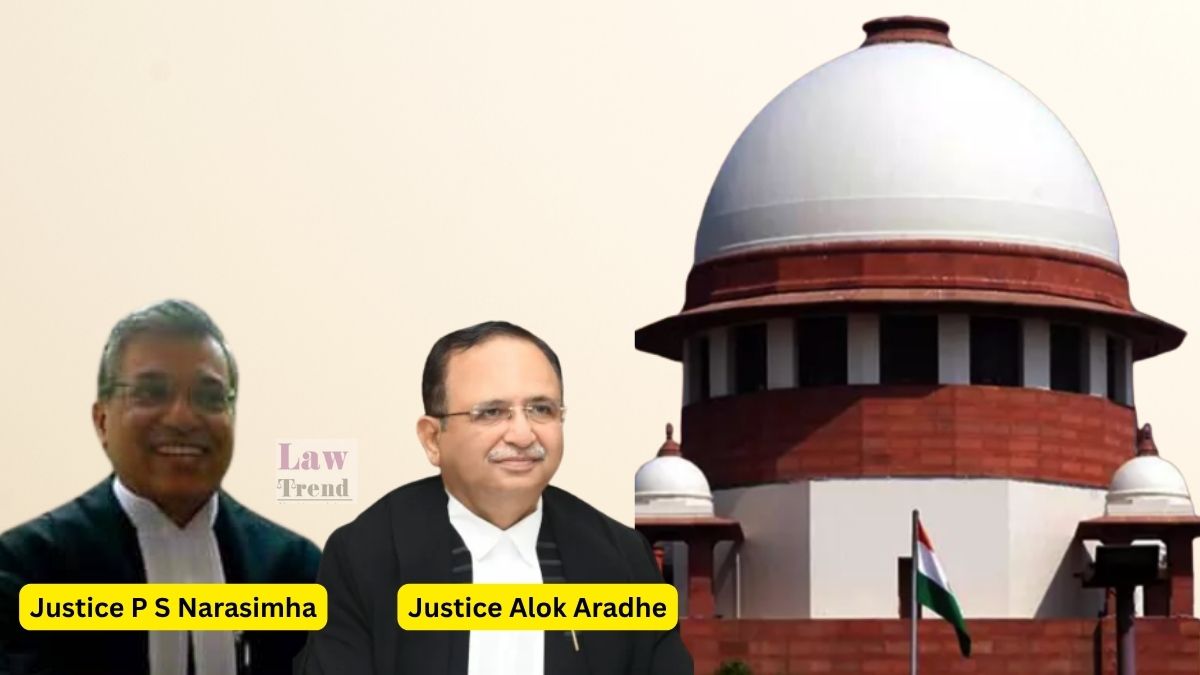
In a significant ruling addressing gender inequality in public welfare schemes, the Supreme Court of India held that excluding a married daughter from the definition of “family” for compassionate appointment as a fair price shop dealer is arbitrary and unconstitutional. A Division Bench of Justice Pamidighantam Sri Narasimha and Justice Alok Aradhe quashed the orders of the High Court and administrative authorities, ruling that the competent authority must issue an allotment order to the appellant within four weeks.

Background of the Case

Smt. Badrun Nisha was allotted a fair price shop in the village panchayat of Aariyawan, District Amethi, Uttar Pradesh, in October 2012. After she passed away on March 4, 2024, her married daughter, Kulsum Nisha, applied for the allotment of the shop under the dependent quota. Kulsum was the sole earning member of the household, continuing to reside with her mother even after marriage, and took responsibility for her four sisters, including one who is visually impaired.

The Sub-Divisional Magistrate (SDM) of Tiloi rejected Kulsum’s application in July 2024, stating she was a married daughter and thus excluded from the definition of “family” under the Uttar Pradesh Essential Commodities (Regulation of Sale and Distribution Control) Order, 2016, and a 2019 Government Order. This rejection was upheld by the Deputy Commissioner and subsequently by the Allahabad High Court (Lucknow Bench). The High Court noted it was bound by precedents in Smt. Kusumlata and Saida Begum, but granted a certificate to appeal before the Supreme Court recognizing the importance of the issue.

Arguments by the Parties

Counsel for the appellant argued that excluding married daughters lacks any rational nexus with the objective of the scheme, violating fundamental rights under Articles 14, 15(1), 19(1)(g), and 21 of the Constitution.

Conversely, the State of Uttar Pradesh defended the classification, arguing that a married daughter typically shifts to her in-laws’ house and thus fails the essential qualification of being a “local resident” required for running a rural fair price shop.

READ ALSO  Ossification test done at the age of 55 cannot be relied upon to determine juvenility at the time of the crime: SC

Amicus Curiae Rukhmini Bobde submitted that compassionate appointment aims to provide immediate financial relief and that dependency is purely a factual question, making marital status an irrelevant consideration.

The Court’s Analysis

Justice Alok Aradhe, authoring the judgment, systematically evaluated the State’s rationale against constitutional guarantees. The Court observed that the scheme’s object is to mitigate immediate hardship for the deceased dealer’s family and ensure the continuity of the public distribution system.

Addressing the State’s assumption that marriage severs a daughter’s ties to her natal family, the Court stated: “Marriage neither extinguishes the bond between a daughter and her parental family nor furnishes a valid basis to presume absence of dependency.” The Court emphasized that “Dependency is a question of fact and cannot be conclusively determined by reference to marital status alone.”

Highlighting the discriminatory nature of the rule, the Bench noted that married sons are not excluded from the scheme. “A son continues to remain within the fold of the family irrespective of his martial status, whereas a daughter is excluded solely because she is married,” the Court observed. Condemning this disparity, the judgment noted: “The distinction is founded upon a gender-based stereotype that a daughter, upon marriage, becomes a member of another family and loses all ties with her natal family. Such a presumption is incompatible with the constitutional guarantee of equality and perpetuates historical notions of gender inequality which the Constitution seeks to eradicate.”

The Court also dismissed the State’s argument regarding local residence, noting that a “blanket exclusion of all married daughters on such a speculative presumption is unjustified and is constitutionally untenable.” It held that local residence is a factual inquiry to be made in every specific case.

Concluding that the policy was manifestly arbitrary, the Court stated: “Once dependency is accepted as the governing criterion, exclusion of a married daughter solely on account of her marital status becomes wholly irrational and self-defeating.”

To resolve the constitutional infirmity, the Court invoked the doctrine of purposive construction, declaring that the words “unmarried, legally separated and widowed daughters” in the 2016 Order must be read to include a married daughter, provided she establishes dependency and satisfies other eligibility conditions like local residence.

The Decision

The Supreme Court found that the appellant’s continued residence in the village, her assistance in the shop, and her responsibility for her sisters were undisputed facts. Since her marital status was the sole ground for rejection, the Court quashed the orders of the High Court, Deputy Commissioner, and SDM.

READ ALSO  Supreme Court Expresses Frustration Over Delays in Issuing Ration Cards to Migrants

Agreeing with the progressive view of the Allahabad High Court in Vimla Srivastava, the Supreme Court overruled the contrary judgments in Saida Begum and Smt. Kusumlata. The competent authority was directed to issue the allotment order in favor of the appellant within four weeks.

Case Title: Kulsum Nisha v. State of U.P. & Ors.
Case No.: Civil Appeal No. 7667 of 2025
Bench: Justice Pamidighantam Sri Narasimha and Justice Alok Aradhe
Date: June 02, 2026

READ ALSO  If Death Occurs inside the Privacy of House, the Residents Should Have a Plausible Explanation: SC
Ad 20- WhatsApp Banner

Law Trend
Law Trendhttps://lawtrend.in/
Legal News Website Providing Latest Judgments of Supreme Court and High Court

Related Articles

Latest Articles
