

Prior Judicial Leave Mandatory for Further Investigation Under Section 173(8) CrPC: Supreme Court Quashes Chargesheet in Commercial Dispute
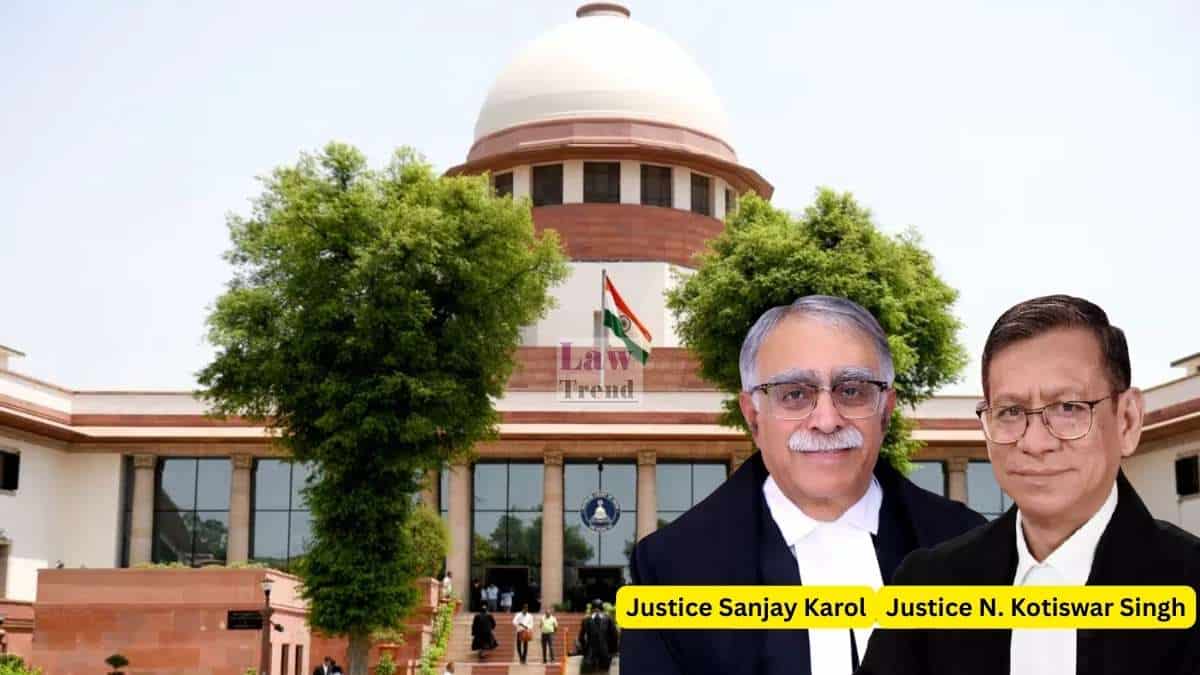

In a significant ruling on criminal procedure, a division bench of the Supreme Court of India, comprising Justice Sanjay Karol and Justice N. Kotiswar Singh, has held that seeking the prior leave of the concerned Magistrate is a mandatory requirement for police to conduct further investigation under Section 173(8) of the Code of Criminal Procedure, 1973. Deciding an appeal filed by Paliniswamy Veeraraja and others, the Court quashed a decade-old cheating and forgery case pending before the 10th Additional Chief Metropolitan Magistrate in Bangalore City. The Court found that the police had initiated a third round of investigation without obtaining express judicial permission after twice submitting closure reports, and concluded that the underlying dispute between the business partners was entirely civil in nature.

Background of the Case

The dispute arose between the four appellants—Paliniswamy Veeraraja, K. Paliniswamy, Ammani, and R. Kavitha—who are partners in M/s Kay Pee Exporters, and the private complainant (Respondent No. 2), who operated similar textile businesses in the United States of America and Canada.

The complainant alleged that he entered into a mutually beneficial business relationship with the managing partners (Accused Nos. 1 and 2) to aid their expansion into North American markets in exchange for a one-third share of the venture’s profits. While the complainant asserted that he made periodic investments and established a company named M/s Associated Textile Inc. in Illinois, the appellants maintained that no joint venture existed, arguing that they had rejected the complainant’s proposal for exclusive supply terms.

In 2001, the complainant filed a lawsuit in the Northern District Court of Illinois, which granted an ex-parte final judgment on February 2, 2004, awarding him total damages of $2,268,222.46. Following this, the complainant initiated criminal proceedings by filing a private complaint under Section 200 of the CrPC before the City Civil and Sessions Court in Bangalore, leading to the registration of Crime No. 209 of 2006 at the Indiranagar Police Station.

The ensuing investigative history reveals a protracted series of proceedings:

  • August 9, 2006: Investigation commenced.
  • November 17, 2006: The police filed a closure report concluding that the dispute was entirely civil in nature.
  • October 8, 2007: The Magistrate dismissed the complainant’s application for further investigation under Section 173(8) CrPC.
  • May 31, 2010: A criminal miscellaneous petition to restore the complaint and order further investigation was allowed by the Sessions Court.
  • November 22, 2011: The police filed a second closure report.
  • February 25, 2012: The Indiranagar Police Inspector applied under Section 173(8) CrPC to continue the investigation for a third time.
  • September 25, 2013: A chargesheet was filed, though the appellants claimed they remained unaware of these developments until May 2022.
  • November 5, 2014: The complainant’s civil recovery suit in Bangalore, based on the foreign ex-parte decree, was dismissed by the Additional City Civil and Sessions Judge.
READ ALSO  Female Officer Accused of Bribery Granted Conditional Bail by Allahabad High Court

Upon learning of the pending criminal charges in 2022, the appellants petitioned the High Court of Karnataka to quash the case. The High Court rejected their petition, prompting the present appeal before the Supreme Court.

Arguments of the Parties

The Senior Counsel for the appellants, Ms. V. Mohana, strongly challenged the High Court’s ruling on the following grounds:

  1. Two closure reports had already been filed establishing the civil nature of the dispute, and the third round of investigation was launched without permission from the competent judicial authority.
  2. The core ingredients of cheating or forgery were not satisfied.
  3. The High Court erred by limiting its review to Section 195(1)(b)(ii) of the CrPC while overlooking other vital aspects.
  4. The Illinois District Court did not make any findings of forgery regarding the documents submitted before it.
  5. A substantial, unexplained delay existed, as the alleged transactions took place between 1996 and 2000, while the complaint was only filed in 2004.
  6. No specific roles were attributed to Appellants Nos. 3 and 4 (Ammani and R. Kavitha).

Opposing the appeal, the Additional Advocate General for Karnataka, Mr. Prateek Chadha, and Senior Advocate Mr. Gaurav Agrawal, representing the complainant, argued:

  1. The remittance of funds by the complainant was an admitted fact, yet the appellants failed to share the agreed profits.
  2. The Illinois District Court had validated the complainant’s claims on accounts of breach of joint venture, fraudulent inducement, tortious interference, and unjust enrichment.
  3. A handwriting expert engaged by the complainant verified that 28 out of 119 documents submitted by the appellants carried forged signatures of the complainant, establishing fraudulent intent.
  4. Section 173(8) of the CrPC does not bar investigating agencies from conducting further investigations upon discovering fresh material.
READ ALSO  UP Excise Act | License Cannot be Cancelled on Mere Suspicion, Rules Allahabad HC

The Court’s Analysis and Observations

The Supreme Court framed two primary questions: whether investigating authorities could initiate further investigation after two closure reports without express judicial permission, and whether the dispute was fundamentally civil in nature.

Addressing the first question, the Court observed that while the literal text of Section 173(8) CrPC (and the corresponding Section 193(9) of the Bharatiya Nagarik Suraksha Sanhita, 2023) does not explicitly dictate seeking the Magistrate’s leave before the commencement of trial, judicial precedents have firmly established this requirement. Referencing the landmark case of Vinay Tyagi v. Irshad Ali, the bench observed:

“The requirement of seeking prior leave of the court to conduct “further investigation” and/or to file a “supplementary report” will have to be read into, and is a necessary implication of the provisions of Section 173(8) of the Code.”

The Court also emphasized the principles of accountability and timely investigation by citing its recent ruling in Robert Lalchungnunga Chongthu v. State of Bihar, noting:

“Reasons are indispensable to the proper functioning of the machinery of criminal law. They form the bedrock of fairness, transparency, and accountability in the justice system.”

The bench further warned against indefinite investigations, stating:

“If investigation into a particular offence has continued for a period that appears to be unduly long, that too without adequate justification, such as in this case, the accused or the complainant both, shall be at liberty to approach the High Court under Section 528 BNSS/482 CrPC, seeking an update on the investigation or, if the doors of the High Court have been knocked by the accused, quashing.”

Upon reviewing the record, the Supreme Court verified that although the police had applied for a third round of investigation, no order granting permission by the Magistrate was on record. The bench consequently rejected the complainant’s argument that such permission was unnecessary.

Turning to the second issue, the Court examined the commercial relationship between the parties. The bench observed:

READ ALSO  सुप्रीम कोर्ट तारीख पर तारीख देने से बेहद नाराज कहा, कोर्ट द्वारा टालमटोल से हम पर अनावश्यक बोझ

“the dispute between the parties concerns the business relationship or in other words concerning whether or not a joint venture stood established between them and if yes, the distribution of profits arising therefrom. That clearly is in the nature of civil dispute.”

The Court also raised critical questions regarding the late allegations of forgery, noting that no such claims were raised during the US proceedings where the disputed documents were originally filed. Pointing out that the handwriting expert’s report was dated September 1, 2009, whereas the Illinois court’s judgment was delivered on February 2, 2004, the Court remarked:

“It is only the timing or the sequence of events that renders the reliance placed thereon, suspect, in our considered view.”

The Decision

Holding that the continuation of criminal proceedings in this matter constituted an abuse of judicial process, the Supreme Court concluded:

“In the cumulative view of circumstances prevailing in this case, criminal action against the appellants would be contrary to the authority of law and therefore an abuse of process of law for the reason that the third round of further investigation as a consequence of which the chargesheet was filed, did not have the concerned Magistrate’s approval.”

Invoking the established parameters for quashing criminal proceedings laid down in State of Haryana v. Bhajan Lal, the Supreme Court allowed the appeal, quashed the First Information Report (FIR), and set aside all subsequent criminal proceedings pending against the appellants.

Case Details:

Case Title: Paliniswamy Veeraraja & Ors. Versus The State of Karnataka & Anr.
Case No.: Criminal Appeal No. of 2026 (Arising out of Special Leave Petition (Crl.) No. 16149 of 2024)
Bench: Justice Sanjay Karol and Justice N. Kotiswar Singh
Date: May 26, 2026

Law Trend
Law Trendhttps://lawtrend.in/
Legal News Website Providing Latest Judgments of Supreme Court and High Court

Related Articles

Latest Articles

