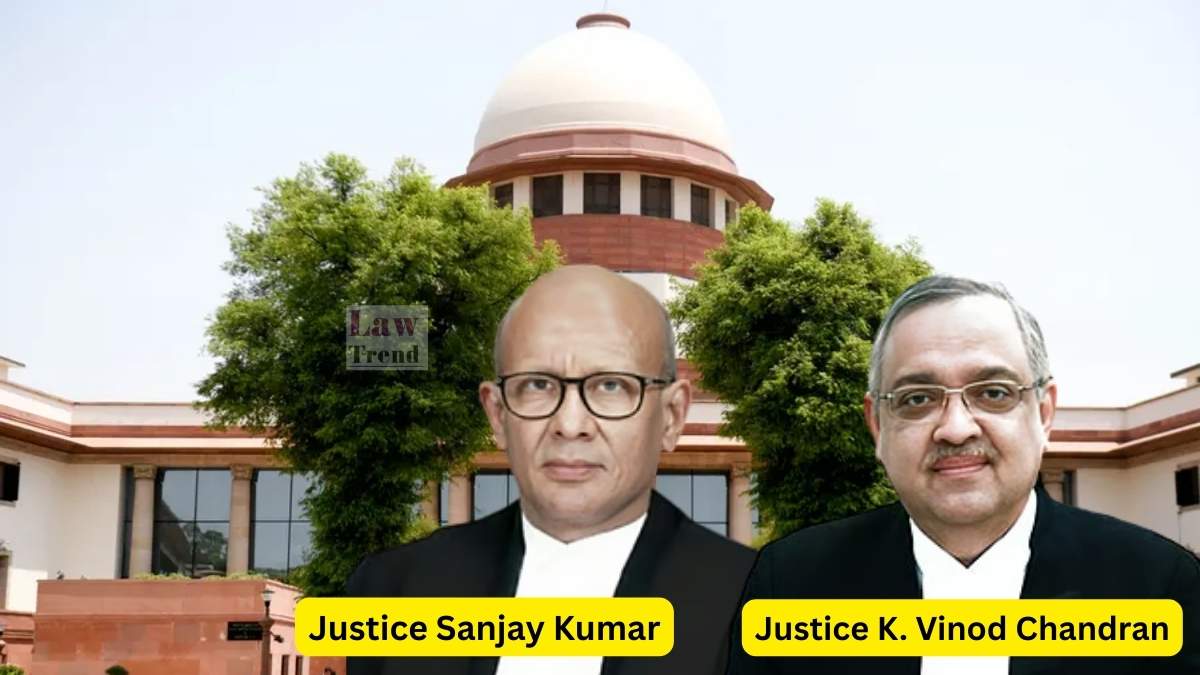
The Supreme Court of India has held that a husband cannot seek the registration of a First Information Report (FIR) against his wife and her family for “giving dowry” based solely on their own complaints or statements made during an investigation. The Court clarified that Section 7(3) of the Dowry Prohibition Act, 1961, provides statutory immunity to the “person aggrieved,” ensuring they are not subjected to prosecution for statements made against the person taking the dowry.
Background
The case arose from a matrimonial dispute between Rahul Gupta (the petitioner) and Radhika Gupta (respondent No. 7). The couple married on November 24, 2007, and have three children. Following the breakdown of the marriage, the wife filed FIR No. 03 of 2023 at Mahila Thana, Ambikapur, alleging offences under Section 498A of the IPC and Section 3 of the Dowry Prohibition (DP) Act.
In her statement recorded under Section 161 of the CrPC, the wife and her family members detailed the payment of dowry before the marriage. Relying on these statements, the husband filed a complaint on December 25, 2023, seeking a separate FIR against the wife’s family for the offence of “giving” dowry under Section 3 of the DP Act. After his applications were rejected by a Judicial Magistrate, a Sessions Judge, and the High Court of Chhattisgarh, he approached the Supreme Court.
Legal Issues
The primary question before the Court was whether the statements of a wife and her family members, admitting to giving dowry while pursuing a case against the husband for taking it, could be used as the sole foundation for a criminal case against them.
Court’s Analysis
A Bench comprising Justice Sanjay Kumar and Justice K. Vinod Chandran analyzed the legislative intent of the DP Act. The Court noted that Section 3 originally penalized both giving and taking dowry equally. However, following a 1982 Joint Parliamentary Committee Report, significant amendments were made. The Committee had observed that givers of dowry are often “victims rather than criminals” and are compelled by societal norms.
The Court placed “utmost significance” on Section 7(3) of the DP Act, which states:
“Notwithstanding anything contained in any law for the time being in force a statement made by the person aggrieved by the offence shall not subject such person to a prosecution under this Act.”
The Bench observed:
“In essence, Section 7(3) provides that statements made by the wife and her family members, being the persons aggrieved… cannot be the substratum for launching prosecution against the wife and her family members for the offence of ‘giving dowry’ under Section 3 of the DP Act.”
The Court also addressed the 2007 Delhi High Court decision in Neera Singh vs. State, which the petitioner relied upon. The Bench termed the observations in Neera Singh—which suggested action against those who give dowry—as a “blunder” and “obiter dicta,” noting that the decision was made in ignorance of Section 7(3).
Regarding the possibility of a second FIR, the Court referred to Upkar Singh vs. Ved Prakash and State of Rajasthan vs. Surendra Singh Rathore, acknowledging that a counter-complaint is permissible if independent evidence exists. However, it held:
“If in a given case all that is projected to establish the offence of ‘giving’ dowry… is the complaint and/or the statements made by the wife and her family members, it would invariably mean that they… would be fully covered by the shield of immunity raised under Section 7(3) of the DP Act.”
Decision
The Supreme Court dismissed the Special Leave Petition, finding no merit in the husband’s grievance. The Court concluded that since the petitioner’s attack was based only on the wife’s complaint and statements under Section 161 CrPC, the statutory protection applied.
The Court also recorded its “earnest gratitude and appreciation” for the assistance provided by Amicus Curiae, Mr. Dhananjaya Mishra.
Case Details:
- Case Title: Rahul Gupta vs. Station House Officer and others
- Case No.: Special Leave Petition (Crl.) No. 13755 of 2025
- Bench: Justice Sanjay Kumar and Justice K. Vinod Chandran
- Date: April 16, 2026