

Order II Rule 2 CPC Not Ground for Rejection of Plaint Under Order VII Rule 11(d): Supreme Court Restores Suit
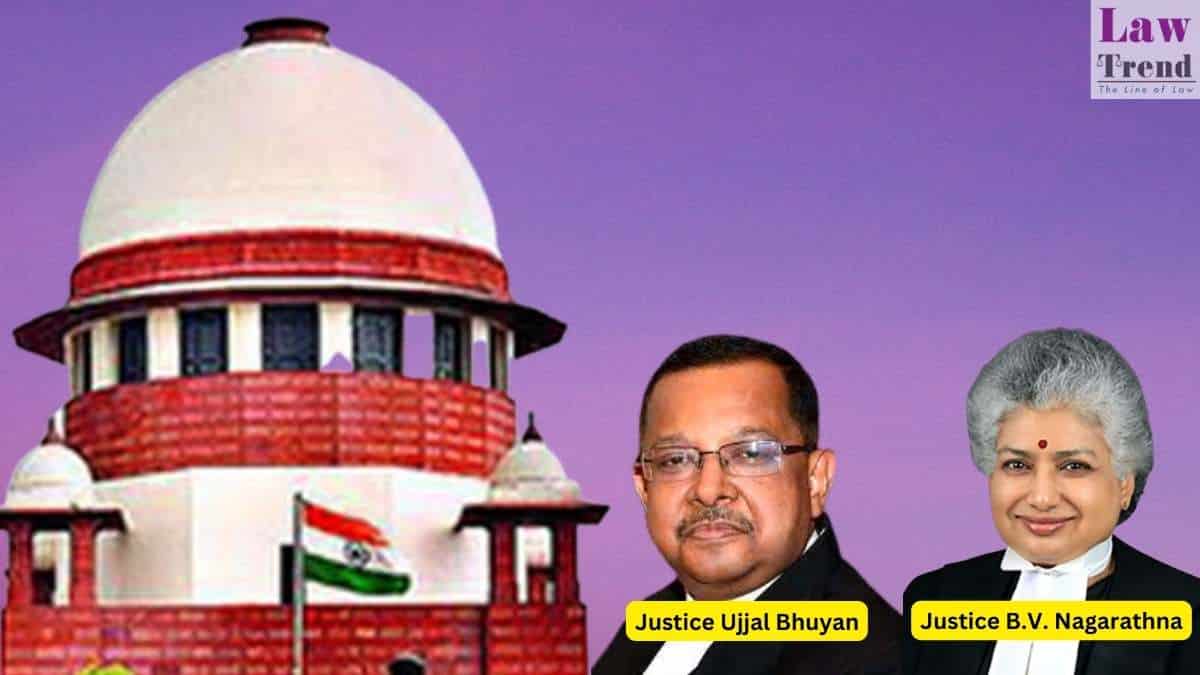
The Supreme Court of India has held that a plea under Order II Rule 2 of the Code of Civil Procedure (CPC) cannot serve as a basis for the rejection of a plaint under Order VII Rule 11(d). A Bench comprising Justice B.V. Nagarathna and Justice Ujjal Bhuyan clarified that while Order VII Rule 11(d) applies to suits “barred by any law,” Order II Rule 2 concerns the “right to sue” regarding relinquished claims or omitted reliefs, which requires a comparison of evidence and causes of action.

The Court allowed the appeal filed by S. Valliammai and others, setting aside a Madras High Court order that had rejected their plaint.

Background of the Case

The dispute originated from an oral family settlement dated November 1, 2011, involving Late Shri M. Sokkalingam, his wife S. Valliammai (Plaintiff No. 1), and their children. Following the settlement, the daughters (Plaintiffs No. 2 and 3) received ₹9 crore each and relinquished their shares in favor of their brother, S. Ramanathan (Defendant No. 1).

On November 4, 2011, Sokkalingam executed a registered Power of Attorney (PoA) in favor of E.J. Ayyappan (Defendant No. 2) for properties in Ooty and Pudukottai. Subsequently, Sokkalingam and his wife filed the first suit (O.S. No. 4722 of 2012) seeking a permanent injunction regarding a Chennai property and bank accounts, alleging that Defendant No. 1 had used intimidating tactics.

After Sokkalingam’s demise on March 13, 2013, his widow and daughters filed a second suit (O.S. No. 2320 of 2013) seeking to declare the 2011 PoA illegal, null, and void, alleging it was obtained through fraud and coercion while Sokkalingam was in a semi-conscious state.

READ ALSO  सुप्रीम कोर्ट ने पूछा: ऑनलाइन टिकट वालों को ही दुर्घटना बीमा क्यों, ऑफलाइन टिकट खरीदने वाले बाहर क्यों?

Arguments and Lower Court Proceedings

The defendants moved an application under Order VII Rule 11(d) of the CPC, seeking rejection of the second suit’s plaint on the ground that it was barred under Order II Rule 2, as the PoA could have been challenged in the first suit.

The Trial Court rejected this application, holding that the causes of action and properties were distinct. However, the Madras High Court reversed this decision, observing that the plaintiffs were aware of the PoA during the first suit and that “the cause of action for both the suits was one and the same.” The High Court consequently rejected the plaint.

Supreme Court’s Analysis

The Supreme Court scrutinized the distinction between “rejection of a plaint” and a “bar to sue.” Justice Nagarathna, writing for the Bench, noted that for Order VII Rule 11(d) to apply, the suit must appear “from the statement in the plaint to be barred by any law.”

Distinction between Order II Rule 2 and Order VII Rule 11(d): The Court observed that Order II Rule 2 does not bar the filing of a suit but forbids “suing for certain claims which have been relinquished or certain reliefs which have been omitted.” The Court stated:

“The application of Order II Rule 2 of the Code to a case can result in rejection of reliefs being granted to a plaintiff which may, in certain cases, also result in dismissal of the suit itself. But it does not result in rejection of the plaint under Order VII Rule 11 (d) of the Code.”

Evidence Requirement: The Bench emphasized that determining whether Order II Rule 2 applies requires evidence to compare the causes of action.

READ ALSO  Electricity is no Longer a Luxury, State Responsible for Ensure Adequate Availability of Electricity: Meghalaya HC

“In a case where Order II Rule 2 of the Code applies, there is no legal bar to filing a suit but the reliefs sought for or the claims made therein cannot be granted if the conditions mentioned therein apply. For arriving at such a conclusion, there has to be evidence let in…”

Critique of High Court’s Approach: The Supreme Court found that the High Court erred by analyzing the averments of the second suit “as if it is evidence” at the preliminary stage. The Bench held that the High Court was not justified in allowing the revision petition by performing a “conjoint reading” of two plaints to find a bar that was not apparent on the face of the second plaint itself.

READ ALSO  [Motor Accident Claim] Rash and Negligent driving does not always Equate to Over-Speeding: Allahabad HC

The judgment cited Mohammad Khalil Khan vs. Mahbub Ali Mian (1948) to define ’cause of action’ as “every fact which would be necessary for the plaintiff to prove, if traversed, in order to support his right to the judgment.”

Decision

The Supreme Court set aside the Madras High Court’s order dated July 11, 2019, and restored the Trial Court’s order and the plaint in O.S. No. 2320 of 2013. The Court clarified that its observations were limited to the disposal of the appeal and would not bear on the merits of the trial.

Case Details

  • Case Title: S. Valliammai & Others vs. S. Ramanathan & Another
  • Case No.: Civil Appeal No. 3624 of 2024
  • Bench: Justice B.V. Nagarathna and Justice Ujjal Bhuyan
  • Date: April 16, 2026

Law Trend
Law Trendhttps://lawtrend.in/
Legal News Website Providing Latest Judgments of Supreme Court and High Court

Related Articles

Latest Articles
