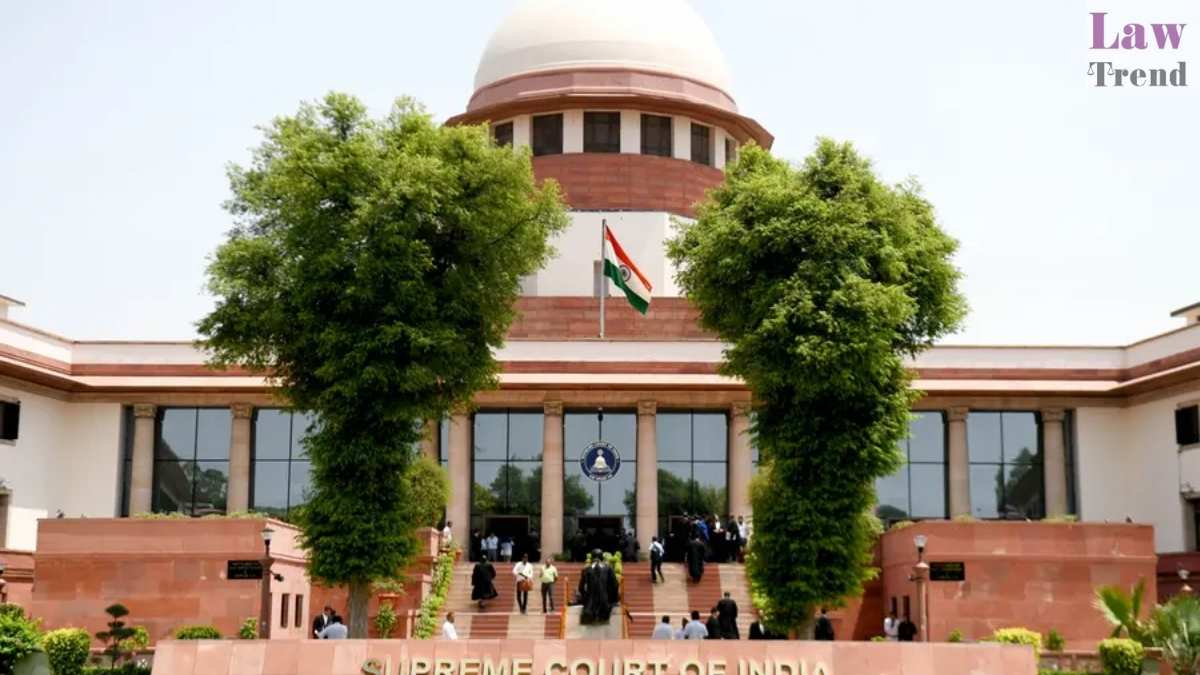
The Supreme Court of India, comprising Justice Sanjay Karol and Justice Augustine George Masih, has ruled that a judicial decision rendered on an erroneous factual premise operates as res judicata in subsequent stages of the same proceeding if it was decided on merits and attained finality. However, the court partially allowed an appeal by permitting subsequent purchasers (transferees pendente lite) to be impleaded in cross-objections to defend their interests after the original sellers abandoned the litigation.
Background of the Case
The suit property originally belonged to Girdhari Lal. Following his death, his widow Bhagwan Dai filed a suit seeking a decree of declaration of exclusive ownership over a portion of property bearing No. 4677 measuring 22 by 22 feet along with a store measuring 11 by 11 feet, occupied by tenants. She further sought a declaration of half-share ownership in the remaining portions of property No. 4677 and property No. 4674, alongside Girdhari Lal’s other widow, Shakuntla Devi (Respondent No. 1).
The trial court dismissed the suit, holding that Bhagwan Dai died without leaving legal representatives and that Sanjiv Kumar failed to prove he was her adopted son. On appeal, the First Appellate Court partly reversed this finding, recognizing Sanjiv Kumar as the validly adopted son of Bhagwan Dai. It also recognized Bhagwan Dai as the full owner of the tenant-occupied portion of property No. 4677 under Section 14(1) of the Hindu Succession Act, 1956, and passed an injunction restraining Shakuntla Devi and her son Varinder Kumar (Respondent No. 2) from alienating that specific property.
Aggrieved, Shakuntla Devi and Varinder Kumar filed a second appeal (RSA No. 1795 of 1990) before the High Court of Punjab and Haryana. In response, Sanjiv Kumar filed cross-objections (XOBJS-20-C-1990) praying that the entire suit be decreed in his favor.
During the pendency of the litigation, Santosh Rani and Mohan Lal (Respondent Nos. 3 and 4) purchased property No. 4677/A from Shakuntla Devi via a registered sale deed dated June 28, 1990.
In 1999, these subsequent purchasers filed an application (CM No. 6306-C of 1999) under Order I Rule 10 of the Code of Civil Procedure, 1908 (CPC) to be impleaded in the main appeal. On May 19, 2000, the High Court dismissed the application on the ground that the purchase was made in violation of an injunction order. However, no impleadment application was filed by the purchasers in the cross-objections at that time.
Procedural Turn and High Court Decision
On February 2, 2018, both the main appeal and the cross-objections were dismissed for non-prosecution. Sanjiv Kumar successfully sought restoration of his cross-objections in July 2019, but the original sellers took no steps to restore the main appeal.
Fearing collusion between the original sellers and Sanjiv Kumar, the subsequent purchasers filed fresh applications in 2023 under Order XXII Rule 10 of the CPC, seeking condonation of a 2,109-day delay, restoration of the main appeal, and impleadment in both the main appeal and the cross-objections.
By an interim order dated November 13, 2024, the High Court allowed the applications filed by the subsequent purchasers. The High Court observed that its previous May 19, 2000 order was factually mistaken, as the injunction was only on the tenant-occupied property No. 4677, whereas the purchasers had bought property No. 4677/A. Relying on Allahabad Development Authority v. Nasiruzzaman and Others, the High Court held that an erroneous decision does not operate as res judicata on interlocutory applications, restored the main appeal, and allowed impleadment in both the appeal and cross-objections.
Arguments Before the Supreme Court
Appellant Sanjiv Kumar contended before the Supreme Court that the earlier order dated May 19, 2000, dismissing the impleadment application under Order I Rule 10 CPC, had attained finality and operated as res judicata against the subsequent application under Order XXII Rule 10 CPC. Relying on State of West Bengal v. Hemant Kumar Bhattacharjee and Others, Mohanlal Goenka v. Benoy Kishna Mukherjee and Others, and Daryao and Others v. State of Uttar Pradesh and Others, he submitted that even an erroneous decision operates as res judicata unless challenged or affected by lack of jurisdiction.
Conversely, counsel for the subsequent purchasers argued that Order XXII Rule 10 CPC and Section 146 CPC protect transferees pendente lite when a transferor loses interest or colludes with the opposing party. They submitted that a fresh cause of action arose when the main appeal was abandoned by the original sellers while the cross-objections were restored, justifying their impleadment to protect their property rights. They relied on Raj Kumar v. Sardari Lal and Others, Amit Kumar Shaw and Another v. Farida Khatoon and Another, Smt. Saila Bala Dassi v. Smt. Nirmala Sundari Dassi and Another, and Thomson Press (India) Limited v. Nanak Builders and Investors Private Limited and Others.
Supreme Court’s Analysis and Observations
The Supreme Court examined the applicability of res judicata to interlocutory orders based on factual errors and analyzed the distinct scopes of Order I Rule 10 and Order XXII Rule 10 of the CPC.
On the binding nature of judicial decisions, the Court observed:
“It is, by now, a settled position that the doctrine of res judicata is applicable on subsequent stage(s) of same proceedings if, the question or issue involved has been decided at an earlier stage of same litigation…”
“Further, it is also well settled, as laid down in several decisions, that a judicial decision binds whether it is right or wrong. An error of law or fact, committed by a judicial or quasi-judicial body cannot be impeached otherwise than in appeal, unless it relates to a matter of jurisdiction.”
Addressing the distinction between Order I Rule 10 and Order XXII Rule 10 CPC, the Court stated:
“Order XXII Rule 10 of the CPC is a specific enabling provision governing devolution of interest during the pendency of a suit or appeal. Its operation is distinct from the general joinder of party power under Order I Rule 10.”
The bench noted that while both provisions are distinct, where an application under Order I Rule 10 CPC seeking impleadment on the basis of a specific transfer is evaluated and rejected on merits, a subsequent application under Order XXII Rule 10 CPC seeking the exact same relief on the same facts is barred by res judicata. Switching procedural provisions does not grant a litigant a fresh right to re-agitate settled issues, as held in Sulthan Said Ibrahim v. Prakasan and Others and B.S. Lalitha and Others v. Bhuvanesh and Others.
Consequently, the Supreme Court held that the High Court erred in reversing its earlier order regarding the main appeal, as the 2000 order had attained finality. Furthermore, the subsequent purchasers claimed no interest in the specific property under dispute in the main appeal.
However, the Supreme Court drew a sharp distinction regarding the cross-objections. Since the initial 1999 impleadment application was confined solely to the main appeal, no prior adjudication existed regarding the cross-objections. The Court observed that when the sellers abandoned the litigation and allowed the main appeal to remain dismissed while the cross-objections were restored, a new cause of action arose for the purchasers due to the risk of prejudice or collusion.
Final Decision
The Supreme Court partly allowed the appeal. It set aside the High Court’s order to the extent that it had restored the main appeal and impleaded the subsequent purchasers therein. Simultaneously, the Supreme Court upheld the High Court’s direction permitting the subsequent purchasers (Respondent Nos. 3 and 4) to be impleaded as respondents in the cross-objections. No order as to costs was issued.
Case Details:
Case Title: Sanjiv Kumar v. Shakuntla Devi and Others
Case No.: Civil Appeal No. ___ of 2026 (Arising out of SLP (C) No. 1052 of 2025)
Bench: Justice Sanjay Karol and Justice Augustine George Masih
Date: July 27, 2026