

Unsealed Forensic Recoveries and Weak Circumstantial Chain Fatal to Prosecution: Supreme Court Upholds Acquittal in Murder Case
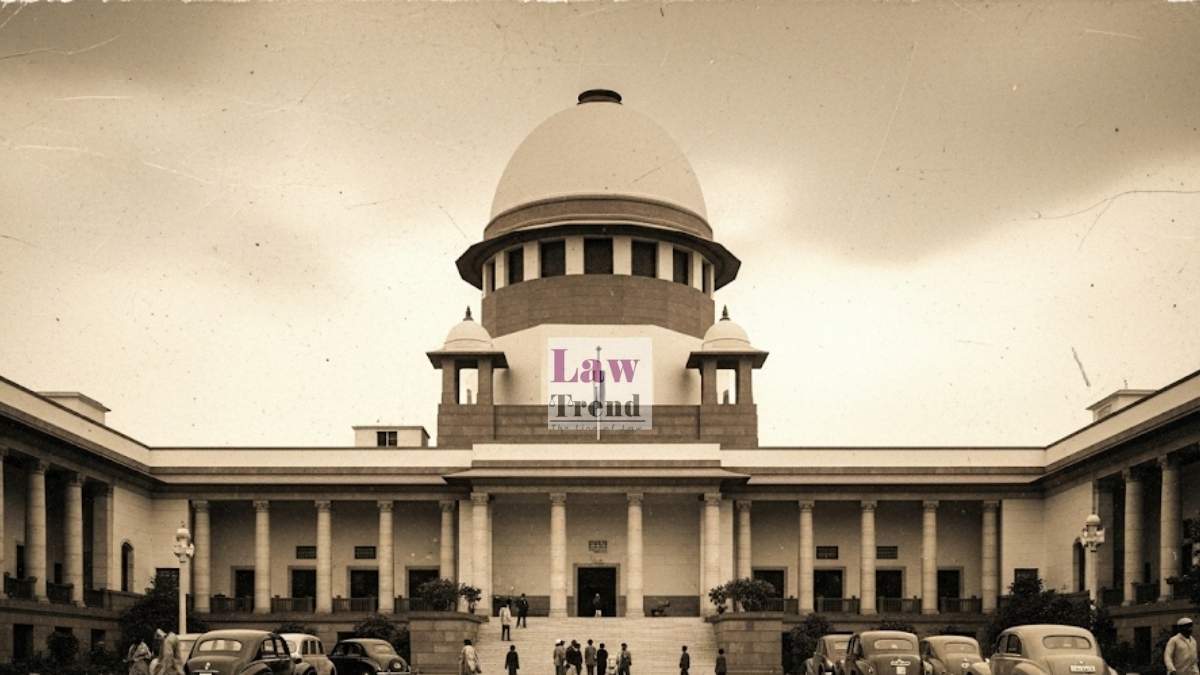

The Supreme Court of India, in a bench comprising Justice Sanjay Karol and Justice Prasanna B. Varale, has dismissed the appeals filed by the State of Maharashtra and upheld the acquittal of three individuals accused of murder and criminal conspiracy. The case, which centered on the death of an ICICI Bank employee in 2007, highlighted critical standards for circumstantial evidence, with the court ruling that unsealed forensic recoveries and a broken chain of circumstances cannot support a conviction. While the principal accused were acquitted of murder, the court sustained the conviction of two co-accused for causing the disappearance of evidence under Section 201 of the Indian Penal Code (IPC) as they were caught red-handed transporting the victim’s body.

Background of the Case

The victim, Kiran Suryawanshi, was employed at ICICI Bank and had married Monika Kiran Suryawanshi (Accused No. 1) in 2001. The couple resided at Shramsafalya Colony in Deopur with their daughter. According to the prosecution, Prakash Nagraj Patil (Accused No. 2), a neighbor, harbored a love affair with Monika. Dnyaneshwar Gangaram Mahale (Accused No. 3) and Deepak Ramesh Patil (Accused No. 4) were friends of Prakash.

The prosecution alleged that a conspiracy was hatched by the accused to eliminate Kiran. On the night of February 14, 2007, Monika allegedly administered sedative tablets and injections to her husband and subsequently smashed his head with a grinding stone. The body was then wrapped in a plastic bag and a bedsheet.

On the morning of February 15, 2007, Prakash and Dnyaneshwar were allegedly transporting the body on a hired motorcycle to bury it near Nakane Dam. At approximately 5:00 a.m., Police Constable Rajendra Mohite intercepted them. Upon noticing a human foot protruding from the bundle carried on the motorcycle, he alerted patrol officers, including PSI Sharad Kulkarni, who secured the scene and took the suspects into custody.

Following subsequent investigations, Monika was arrested, and several items—including a blood-stained grinding stone, syringes, and clothes—were recovered. The Trial Court convicted Monika, Prakash, and Dnyaneshwar, sentencing them to life imprisonment. However, the Bombay High Court overturned the convictions for murder and conspiracy, citing vital gaps in the circumstantial evidence. The High Court, however, upheld the one-year sentence of Prakash and Dnyaneshwar under Section 201/34 of the IPC for attempting to dispose of the body. The State of Maharashtra and the victim’s mother appealed this decision to the Supreme Court.

READ ALSO  पूर्व मुख्य न्यायाधीश चंद्रचूड़ को मासिक धर्म पर टिप्पणी को लेकर कानूनी नोटिस, माफी और स्पष्टीकरण की मांग

Arguments of the Parties

For the Appellants (State of Maharashtra)

Senior Counsel Mr. Sanjay Kharde argued that the extramarital affair between Monika and Prakash established a clear motive for the crime. He submitted that medical evidence confirmed the deceased suffered a homicidal death with injection marks and a smashed skull.

Furthermore, the state relied on the recovery of the grinding stone at Monika’s behest, the fact that Prakash and Dnyaneshwar were caught red-handed transporting the dead body, and Chemical Analyzer (CA) reports confirming that blood found on the motorcycle’s silencer plate matched the deceased’s blood group ‘A’.

For the Respondents (Accused)

Senior Counsel Mr. Vinay Navare, representing Monika, urged that the prosecution’s case rested entirely on circumstantial evidence. He contended that there was no positive legal evidence establishing a reciprocal love affair between Monika and Prakash, arguing that the evidence at best suggested a one-sided infatuation by Prakash.

The defense also asserted that the deceased had met with an accident and succumbed to his injuries, and that the accused were not caught at the spot as claimed. Additionally, they highlighted that call logs showed no outgoing calls from Monika to Prakash on the night of the incident, and that the house search panchanama was fabricated, with signatures taken on blank papers.

The Court’s Analysis

The Supreme Court examined the appeal under the established legal standard for cases resting entirely on circumstantial evidence, as detailed in the landmark ruling of Sharad Birdhichand Sarda v. State of Maharashtra (1984). The bench noted that the prosecution must establish an unbroken chain of circumstances that points unerringly to the guilt of the accused.

1. Failure to Establish Motive and the ‘Last Seen’ Theory

The Supreme Court observed that the testimonies of witnesses regarding the alleged love affair only showed a one-sided infatuation by Prakash. It held that telephone records could not substitute for substantive proof of an illicit affair leading to murder.

READ ALSO  Developers Must Refund with Interest for Delay, But Not Liable for Homebuyers’ Loan Interest: Supreme Court

The “last seen” theory propounded by a colleague of the deceased was also dismissed. The bench pointed out the colleague’s unnatural conduct in waiting outside the house and noted that the prosecution failed to establish the exact time of death. Monika’s defense—that her husband left the house to party with friends against her wishes—remained highly probable.

2. Digital and Telephonic Discrepancies

The digital evidence contradicted the prosecution’s narrative that Monika had called Prakash to her house. Call logs revealed a total absence of outgoing calls from Monika’s phone to Prakash’s phone on the fateful night. Instead, incoming calls suggested that the deceased might have been using Prakash’s phone to call his own home, supporting the defense theory that the victim left his phone behind.

3. Procedural Lapses in Forensic Recoveries

The Court identified fatal investigative lapses by the police. The physical evidence, including the grinding stone and clothing recovered from Monika’s residence and a nearby public dump, was not sealed at the spot of recovery.

Referring to Ashraf Hussain Shah v. State of Maharashtra (1996), Tulshiram Bhanudas Kambale v. State of Maharashtra (1999), and Salim Akhtar alias Mota v. State of Uttar Pradesh (2003), the Court emphasized that: a recovery made under Section 27 of the Indian Evidence Act, 1872 without affixing lac seals holds absolutely no evidentiary value

The lack of sealing raised grave doubts about the authenticity of the recoveries, rendering the CA reports unreliable. Additionally, despite the prosecution’s claim that the victim was brutally bludgeoned in his bed, no bloodstains were found on the mattresses, bedsheets, or pillows, creating a major physical contradiction.

4. Failure to Prove Conspiracy

Regarding the charge of conspiracy under Section 120B of the IPC, the Court cited State (NCT of Delhi) v. Navjot Sandhu (2005) and Maghavendra Pratap Singh Alias Pankaj Singh v. State of Chhattisgarh (2024), stating: To prove the offence of criminal conspiracy, it is imperative to show a meeting of the minds between the conspirators for the intended common object.

Since the motive failed, the last-seen theory collapsed, and the forensic evidence was compromised, the chain of circumstances to prove a conspiracy remained broken. The Court noted that in such cases, it should not allow suspicion to take the place of legal proof.

5. Conviction Under Section 201 IPC Upheld

While the murder and conspiracy charges failed, the Supreme Court found sufficient, distinct evidence to sustain the conviction of Prakash and Dnyaneshwar for disposing of the body. They were intercepted at 5:00 a.m. carrying a wrapped bundle with a protruding human foot, and the motorcycle silencer bore blood of the deceased’s group. This established that they knowingly attempted to cause evidence of the crime to disappear to screen the offenders.

READ ALSO  तीन हत्याओं के मामले में समयपूर्व रिहाई से सुप्रीम कोर्ट का इनकार, आतंक से जुड़े उद्देश्य का हवाला

The Decision

The Supreme Court found no error in the Bombay High Court’s judgment. It upheld the acquittal of Monika Kiran Suryawanshi, Prakash Nagraj Patil, and Dnyaneshwar Gangaram Mahale from charges of murder (Section 302/34 IPC) and criminal conspiracy (Section 120B IPC).

The Court confirmed the conviction and one-year sentence of Prakash and Dnyaneshwar under Section 201 read with Section 34 of the IPC. Since both had already undergone their one-year prison term, the Court ordered no interference with their release. The appeals filed by the State of Maharashtra were dismissed.

Case Details

Case Title: State of Maharashtra Versus Monika Kiran Suryawanshi & Ors.
Case No.: Criminal Appeal No(s). 2282-2284 of 2011 (with Criminal Appeal No(s). 2286-2288 of 2011)
Bench: Justice Sanjay Karol, Justice Prasanna B. Varale
Date: July 13, 2026

Law Trend
Law Trendhttps://lawtrend.in/
Legal News Website Providing Latest Judgments of Supreme Court and High Court

Related Articles

Latest Articles

