

Police Cannot Issue ‘Injunction’ Under Section 168 BNSS: Allahabad High Court Stays Notice Restricting Entry to Company Premises
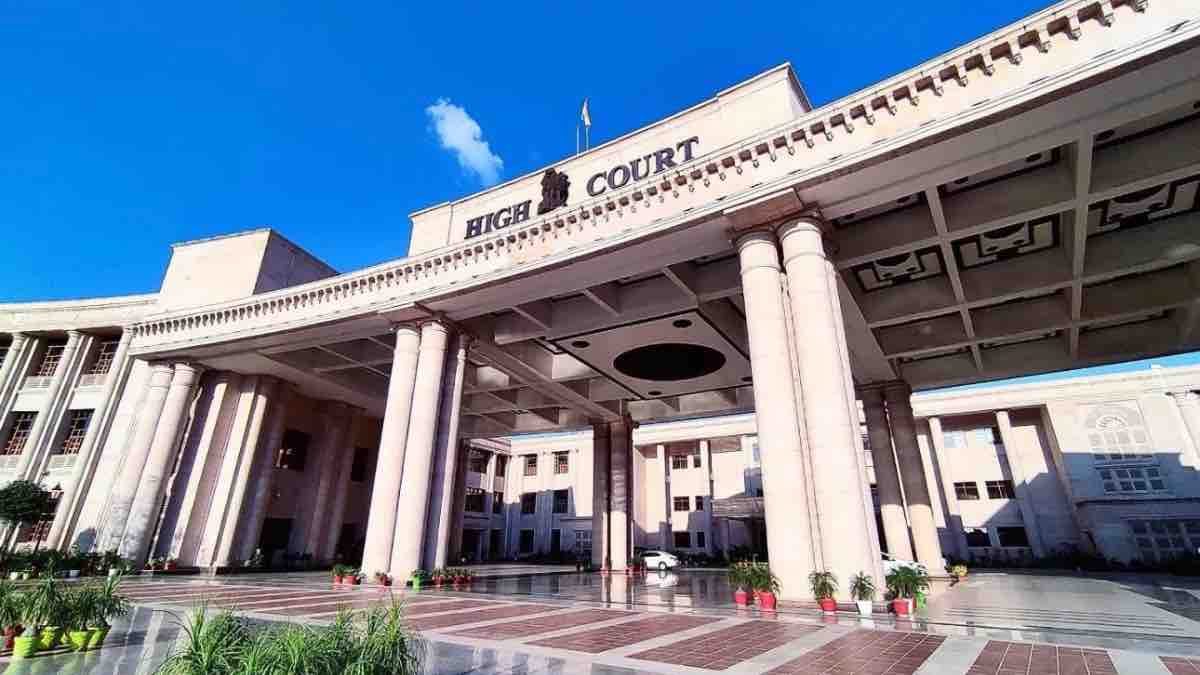

The High Court of Judicature at Allahabad (Lucknow Bench) has stayed the operation of a notice issued by an Inspector-In-charge under Section 168 of the Bharatiya Nagarik Suraksha Sanhita (BNSS), 2023. The Court observed that the matter requires consideration regarding whether police authorities can issue orders that are “tantamount to injunction” under the garb of preventing cognizable offences.

Background

The petitioners, Som Shankar and another, approached the High Court seeking the quashing of a notice dated April 18, 2026, issued by the Inspector-In-charge of Police Station Sushant Golf City, Lucknow. The notice, purportedly issued under Section 168 of the BNSS, restricted entry into the premises of AAIL (the petitioners’ company) situated in Sector-D, Sushant Golf City, Sultanpur Road, Lucknow. The petitioners further sought a mandamus to prevent respondents from interfering with the peaceful possession and day-to-day functioning of the company.

Arguments of the Petitioners

Sri Gaurav Mehrotra, learned Senior Advocate, assisted by Sri Akber Ahmad and Sri Nadeem Murtaza, appeared for the petitioners. Other counsels for the petitioners included Ms. Maria Fatima and Sri Wali Nawaz Khan.

The petitioners assailed the impugned notice on two primary grounds:

  1. Lack of Prescribed Format: It was pointed out that the Second Schedule of the BNSS contains 58 prescribed forms for various notices and orders. While Form No. 27 relates to Section 166 and Form No. 28 relates to Section 189, there is no format prescribed for a notice under Section 168. They argued that since the legislature specifically omitted a format for Section 168, the Inspector-In-charge acted beyond his jurisdiction.
  2. Exceeding Statutory Power: It was argued that Section 168 BNSS authorizes police to “interpose” to prevent cognizable offences, but it does not empower them to issue injunctions. The impugned notice directed that only employees of APIL and AAIL would be permitted to enter the premises, while “unauthorized persons” would be barred. Counsel contended that this effectively made the Inspector-In-charge the arbiter of who is “authorized,” thereby interfering with civil rights.
READ ALSO  Allahabad HC Acquits 3 Persons in a 30-year-old Murder Case- Know More

The petitioners relied on the Bombay High Court decisions in Shashikant Bhurya Kokani vs. State of Maharashtra (2015) and Dharmsingh Ramsingh Bayas vs. State of Maharashtra (2024), which dealt with Section 149 of the Cr.P.C. (the pari-materia provision to Section 168 BNSS).

Respondents’ Submission

The respondents were represented by Sri V.K. Shahi, learned Additional Advocate General, assisted by Sri S.N. Tilhari, learned AGA.

Sri S.N. Tilhari attempted to justify the notice by stating that specific reasons were indicated for its issuance to prevent potential issues. He clarified that the notice did not restrain employees but only targeted unauthorized persons. However, he requested time to seek instructions on whether the jurisdictional Assistant/Deputy Commissioner of Police was apprised of the situation before the notice was issued.

READ ALSO  Allahabad High Court Criticizes State Authorities and Lawyers for Filing Affidavits in 'Casual and Lethargic Manner' Without Proper Review

Court’s Analysis and Key Observations

The Division Bench comprising Justice Rajesh Singh Chauhan and Justice Zafeer Ahmad, noted that the matter involves significant legal questions regarding the scope of police powers under the new BNSS framework.

The Court referred to the definition of “interpose” as discussed in cited precedents, noting it means “to intervene or step in” to prevent a crime, not to issue blanket restraint orders. The Court noted the petitioner’s argument that:

“…in the garb of the aforesaid provision such police authority may not issue any order which is tantamount to injunction inasmuch as the power of injunction is vested with the competent court of law / authority.”

The Court also highlighted the observation from the Shashikant Bhurya Kokani case:

READ ALSO  Neglect of Elderly Parents is a Violation of Right to Life with Dignity, Allahabad HC Orders Release of ₹21.17 Lakh Compensation to Senior Citizen

“Section 149 of Criminal Procedure Code empowers every police officer to interpose for the purpose of preventing… prevent the commission of any cognizable offence. Otherwise also, according to us, section 149 Cr.P. Code does not vest Police Officer… to issue blanket order of injunction…”

Decision

The Court held that the matter requires further consideration and directed the respondents to file a counter affidavit within two weeks.

Granting interim relief, the Court ordered:

“Till the next date of listing the effect and implementation of the impugned notice dated 18.4.2026 (Annexure no. 1) shall remain stayed.”

The case is scheduled to be listed again in the week commencing May 18, 2026.

Case Details

  • Case Title: Som Shankar And Another vs. State Of U.P. Thru. Prin. Secy. Deptt. Of Home Lko. And Others
  • Case No.: CRIMINAL MISC. WRIT PETITION No. – 3996 of 2026
  • Bench: Justice Rajesh Singh Chauhan, Justice Zafeer Ahmad
  • Date: April 29, 2026

Law Trend
Law Trendhttps://lawtrend.in/
Legal News Website Providing Latest Judgments of Supreme Court and High Court

Related Articles

Latest Articles

