

Frivolous and Motivated Petitions Filed Under Guise of Public Interest Liable to be Discouraged: Chhattisgarh High Court Imposes ₹50,000 Cost for Misusing Process
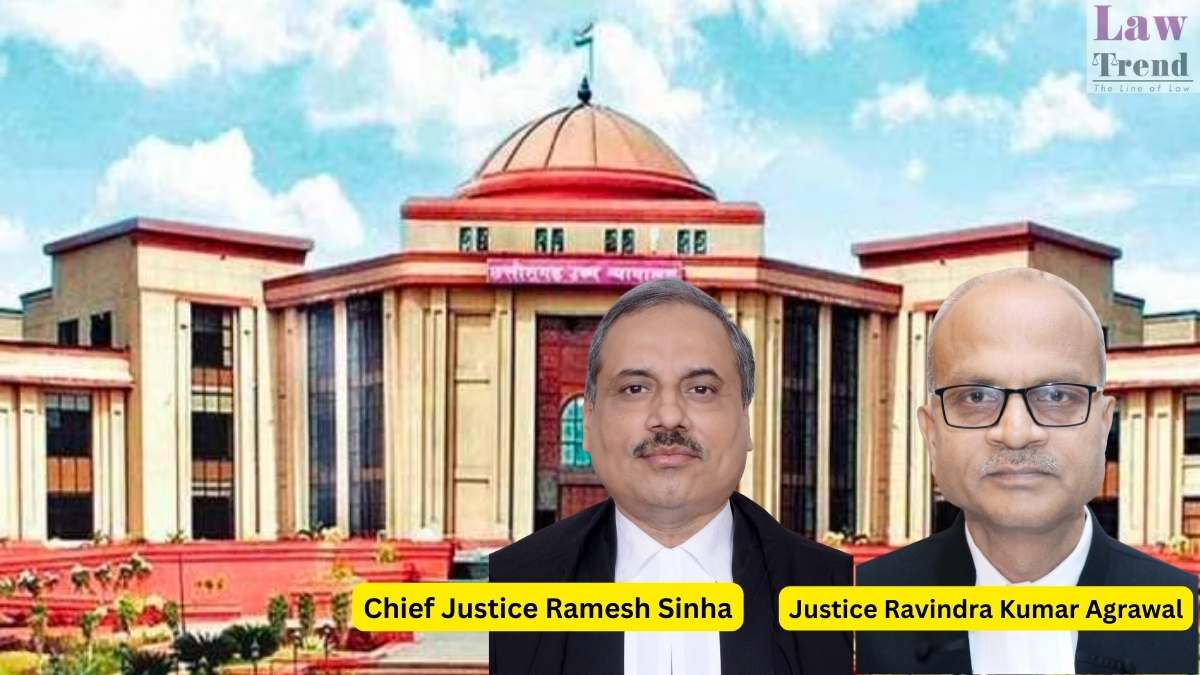

The High Court of Chhattisgarh has dismissed a Public Interest Litigation (PIL) seeking to stop the discharge of untreated sewage into Lemehai Talab in Raipur, terming the petition “frivolous and motivated.” A Division Bench comprising Chief Justice Ramesh Sinha and Justice Ravindra Kumar Agrawal held that the petitioner had suppressed material facts regarding his personal business interests in the pond and imposed a cost of ₹50,000 for abusing the judicial process.

The core legal issue involved the invocation of the High Court’s extraordinary writ jurisdiction under Article 226 of the Constitution of India via a PIL. The petitioner alleged environmental degradation of a public water body due to untreated sewage. However, the court’s scrutiny focused on whether the petitioner approached the court with “clean hands” or was using the PIL to settle a private grievance arising from a failed commercial tender process.

Background of the Case

The petitioner, Ajay Kumar Nishad, moved the High Court seeking urgent intervention to prevent the continuous discharge of untreated sewage water into Lemehai Talab, situated at Raipura, Ward No. 79, Raipur. According to the petition, the pond is a public water body used for religious and community purposes but is being polluted by drainage from adjoining residential colonies.

The petitioner claimed that despite representations to the Municipal Corporation, Raipur, and proceedings before the District Legal Services Authority/Lok Adalat (Case No. 1959/2025), no remedial steps were taken. He sought directions for the immediate cessation of sewage discharge, diversion of drainage, and desilting and restoration of the pond.

Arguments of the Parties

Mr. Akhilesh Mishra, counsel for the petitioner, argued that the inaction of the authorities was a violation of the fundamental right to a clean environment under Article 21 of the Constitution. He contended that the Municipal Corporation had failed in its statutory duty to protect public water bodies.

READ ALSO  दिल्ली हाईकोर्ट को सूचित किया गया: एलजी ने सीएजी रिपोर्ट पर चर्चा के लिए विधानसभा का विशेष सत्र बुलाया

Mr. Praveen Das, Additional Advocate General for the State, and Mr. Animesh Tiwari for the Chhattisgarh Environment Conservation Board (CECB), submitted that the authorities were already seized of the matter. The CECB noted that while the primary responsibility for sewage management lay with the Municipal Corporation, it was monitoring water quality and regulatory compliance.

The most critical opposition came from Mr. Pankaj Agrawal, representing the Municipal Corporation, Raipur (Respondent No. 4). He argued that the petition was misconceived and motivated. He revealed that in a previous tender process concerning fishing rights for the same pond, the petitioner was declared the ‘L-1’ bidder but failed to deposit the required lease amount. He argued the petitioner was projecting a personal grievance as a public interest issue.

READ ALSO  SC: Application under Section 11 of Arbitration not maintainable in view of Section 3G(5) of the National Highways Act, 1956 [READ JUDGMENT]

Court’s Analysis and Observations

Upon reviewing the records, the court found that the petitioner had failed to disclose his participation in the tender process for fishing rights in the pond. The Bench observed:

“From the record, it transpires that the petitioner had participated in the tender process for allotment of the pond for fishing purposes and was declared L-1… However, despite repeated communications, he failed to deposit the requisite lease amount in terms of the tender conditions.”

The Court held that the petitioner, having a “direct and subsisting personal interest,” could not be permitted to invoke PIL jurisdiction. The Bench remarked that the petition was an attempt to “espouse a private cause under the colour of public interest.”

Referring to established precedents, the Court cited State of Uttaranchal vs. Balwant Singh Chaufal (2010), Kalyaneshwari vs. Union of India (2011), and Tehseen Poonawalla vs. Union of India (2018). The Bench noted that:

“A litigant invoking PIL jurisdiction must approach the Court with clean hands, clean heart and clean objective, failing which such petitions are liable to be dismissed with costs.”

The Court concluded that the petitioner’s conduct amounted to an abuse of the process of law and resulted in the wastage of precious judicial time.

READ ALSO  Section 374 CrPC | While Adjudicating an Appeal Against Conviction Appellate Court is Required to Consider All the Points Dealt by Trial Court: SC

The Decision

The High Court dismissed the writ petition (PIL) and issued the following directions:

  1. The petitioner was ordered to pay a cost of ₹50,000 within one month.
  2. The cost is to be deposited in the Registry and transmitted to the Government Home for Mentally Underdeveloped Children, Mana Camp, Raipur.
  3. If the petitioner fails to deposit the amount, it shall be recovered as arrears of land revenue.
  4. The security deposit of ₹15,000 made by the petitioner at the time of filing was ordered to be forfeited.

Case Details:

  • Case Title: Ajay Kumar Nishad vs. State Of Chhattisgarh & Others
  • Case No.: WPPIL No. 20 of 2026
  • Bench: Chief Justice Ramesh Sinha and Justice Ravindra Kumar Agrawal
  • Date: April 20, 2026

Law Trend
Law Trendhttps://lawtrend.in/
Legal News Website Providing Latest Judgments of Supreme Court and High Court

Related Articles

Latest Articles

