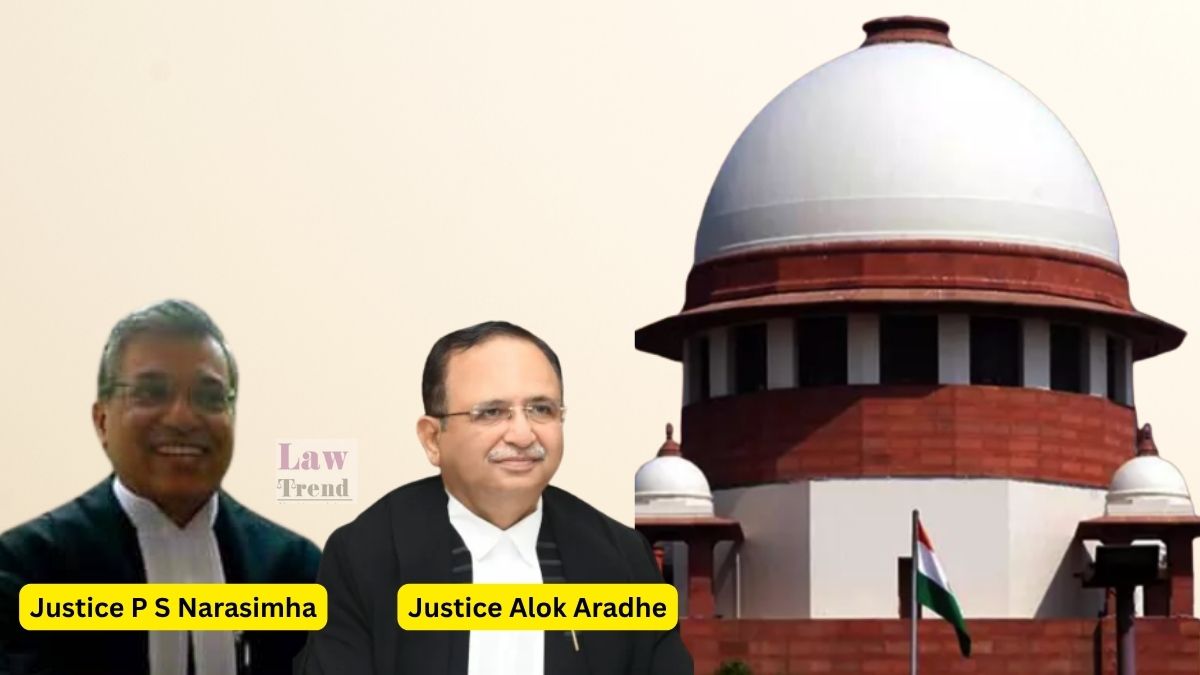
The Supreme Court of India has set aside an order of the National Company Law Appellate Tribunal (NCLAT) that directed the initiation of insolvency proceedings against a solvent company based on a civil court decree. The Court held that the Insolvency and Bankruptcy Code, 2016 (IBC) is intended for the “reorganisation and insolvency resolution of corporate persons” and not to be used as a “money recovery mechanism” or a “substitute for ordinary execution or recovery proceedings.”
Background
The dispute originated from two loans advanced by the respondent, Shubh Gautam (a money lender), to the appellant, Anjani Technoplast Ltd., in 2010. Following defaults and the dishonour of security cheques, a summary suit was filed in the Delhi High Court. On January 11, 2018, the High Court passed a decree in favour of the respondent for ₹4,38,00,617 with 24% annual interest. This decree attained finality after the Supreme Court dismissed the appellant’s Special Leave Petition in October 2021.
Instead of executing the decree through civil courts, the respondent filed a petition under Section 7 of the IBC. The National Company Law Tribunal (NCLT) dismissed the petition, observing that the IBC is not a recovery mechanism and that the respondent was misusing the process against a solvent company. However, the NCLAT reversed this decision, placing reliance on the Dena Bank ratio, and directed the admission of the insolvency petition.
Arguments of the Parties
The appellant, represented by Senior Advocate Mukul Rohatgi, contended that the company is solvent, with annual revenues of approximately ₹35 crores and profits of ₹8 crores. They argued that the respondent was attempting to use the IBC for recovery and that there was a serious dispute regarding the actual quantum of debt, citing inconsistent calculations provided by the respondent to Income Tax authorities and the High Court.
The respondent maintained that the decretal amount constituted a “financial debt” and that a judgment or decree gives rise to a fresh cause of action for initiating proceedings under Section 7 of the IBC.
Court’s Analysis and Observations
A Bench comprising Justices Pamidighantam Sri Narasimha and Alok Aradhe examined whether the initiation of the Corporate Insolvency Resolution Process (CIRP) was justified. The Court emphasised that the primary focus of the IBC is the “rescue and revival of the corporate debtor as a going concern,” quoting Swiss Ribbons (P) Ltd. v. Union of India:
“The Code is thus a beneficial legislation which puts the corporate debtor back on its feet, not being a mere recovery legislation for creditors.”
The Court further referred to GLAS Trust Co. LLC v. BYJU Raveendran, noting that improper use of the IBC includes “using insolvency as a substitute for debt enforcement or attempting to obtain preferential payments by coercing the debtor.”
On the facts of the case, the Bench noted significant discrepancies in the respondent’s claims. While the respondent claimed over ₹12 crores in the insolvency proceedings, his own submissions before the Income Tax Appellate Tribunal (ITAT) in 2022 showed an outstanding of only ₹96,48,480 as of 2012. The Court observed:
“The NCLT and NCLAT are not the appropriate fora for this exercise, and the insolvency jurisdiction under the IBC was not designed to resolve disputes about the quantum of a decretal amount.”
Regarding the reliance on Dena Bank (Now Bank of Baroda) v. C. Shivakumar Reddy, the Court clarified that while a decree can give rise to a fresh cause of action, it “does not mean that every decree holder… is entitled, as a matter of right, to invoke the insolvency process in preference to execution.”
The Decision
The Supreme Court concluded that the initiation of CIRP against the appellant was an “abuse of the process.” It noted that the appellant had already deposited approximately ₹3.6 crores with the Delhi High Court and expressed a willingness to pay the lawfully due amount.
The Court restored the NCLT’s order dismissing the Section 7 application and set aside the NCLAT’s order. The respondent was granted liberty to pursue the execution of the decree in accordance with civil law. The Court also awarded costs of ₹5,00,000 to the appellant, to be paid by the respondent within five weeks.
“The insolvency process is a remedy with far-reaching consequences and must be reserved for cases of genuine insolvency or financial distress, not for the enforcement of money decrees.”
Case Details Block:
- Case Title: Anjani Technoplast Ltd. v. Shubh Gautam
- Case No.: Civil Appeal No. 8247 of 2022
- Bench: Justice Pamidighantam Sri Narasimha, Justice Alok Aradhe
- Date: April 23, 2026