

Properties Acquired Before Offence Not Immune From PMLA Attachment: Chhattisgarh High Court
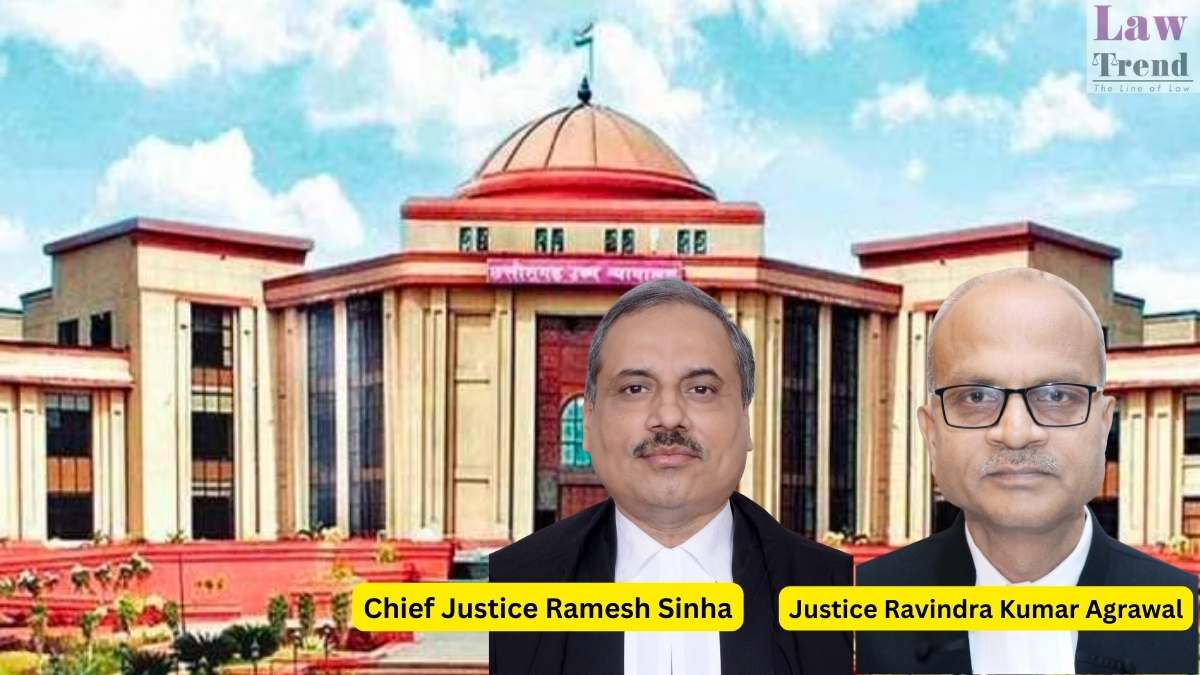
The High Court of Chhattisgarh has held that properties acquired prior to the commission of a scheduled offence are not automatically immune from attachment under the Prevention of Money Laundering Act, 2002 (PMLA). A Division Bench comprising Chief Justice Ramesh Sinha and Justice Ravindra Kumar Agrawal observed that the definition of “proceeds of crime” includes the “value of any such property,” allowing authorities to attach untainted assets of equivalent value if the direct proceeds are siphoned off or unavailable.

The court dismissed a batch of nine appeals filed by former IAS officer Ranu Sahu and her family members challenging the confirmation of provisional attachment orders by the Adjudicating Authority (AA) and the Appellate Tribunal (SAFEMA).

Background of the Case

The case originates from an investigation into an alleged coal levy scam in Chhattisgarh. It is alleged that a syndicate led by Suryakant Tiwari, in conspiracy with senior government officials, extorted an illegal levy of ₹25 per tonne of coal transported in the state. This was purportedly facilitated by a 2020 notification that replaced a transparent online e-permit system with a manual No Objection Certificate (NOC) process.

The Enforcement Directorate (ED) alleged that Ranu Sahu, during her tenure as Collector in coal-rich districts like Korba and Raigarh, facilitated this extortion and received approximately ₹5.52 crore as bribes. These funds were allegedly layered through family members to purchase immovable properties. Consequently, the ED provisionally attached 19 properties purchased before July 15, 2020 (as “value thereof”), and several properties purchased after that date (as “direct proceeds of crime”).

Arguments of the Parties

Counsel for the appellants, Ms. Somaya Gupta, argued that the attachment was legally untenable as most properties were purchased before the alleged offence began in July 2020. She contended:

  • No scheduled offence existed at the time of attachment because the predicate FIR (registered in Bengaluru) did not result in a charge sheet for scheduled offences like Section 384 IPC.
  • The ED’s case relied on “uncorroborated” diary entries from a third party (Rajnikant Tiwari) which were “fictional.”
  • There was no “urgency” to invoke the second proviso of Section 5(1) PMLA for properties held for years.
  • The Adjudicating Authority passed a “templated” and “mechanical” order without independent application of mind.
READ ALSO  Judicial Officer Presiding Over Lok Adalat Is Only A 'Conciliator'; Cannot Exercise Powers Of A 'Judge': Karnataka HC

Dr. Saurabh Kumar Pande, representing the ED, countered that:

  • The investigation revealed a deep-rooted conspiracy where Ranu Sahu was a key beneficiary.
  • Diary entries were corroborated by WhatsApp chats, bank statements, and statements recorded under Section 50 of PMLA.
  • Section 2(1)(u) of PMLA expressly includes “value of any such property” within the definition of proceeds of crime, authorizing the attachment of untainted assets of equivalent value.
  • The Supreme Court in Saumya Chaurasia v. ED had already observed that the offence under Section 384 IPC could not be said to have been dropped.
READ ALSO  Remedy To File Objection Under Rule 159(5) of the Central Goods and Service Tax Rules, 2017 Against Attachment of Property Must be Availed Before Approaching Court; Allahabad HC

Court’s Analysis and Observations

The Court emphasized the broad scope of “proceeds of crime” under Section 2(1)(u) of the PMLA. It noted:

“The definition of ‘proceeds of crime’ is wide enough to not only refer to the property derived or obtained as a result of criminal activity relating to a scheduled offence, but also of the value of any such property… Such interpretation would further the legislative intent in recovery of the proceeds of crime.”

On the issue of attaching properties acquired before the crime, the Bench held:

“Properties purchased prior to the period of the alleged offence, even if prima facie unconnected with the criminal activity, may still be subject to attachment, provided that (i) the existence of proceeds of crime is established, and (ii) equivalent value of such proceeds cannot otherwise be recovered from the directly tainted assets.”

The Court rejected the challenge to the existence of a scheduled offence, citing the Supreme Court’s findings in the co-accused Saumya Chaurasia’s case. It also upheld the validity of Section 50 statements, noting they are “deemed to be judicial proceedings” and carry significant evidentiary weight.

READ ALSO  Testimony of Injured Eyewitness Holds High Evidentiary Value and Cannot Be Rejected Without Major Contradictions: Chhattisgarh High Court

Regarding the “templated” nature of the AA’s order, the Bench observed that while authorities may adopt a structured format for efficiency, the order in question discussed incriminating materials in detail and was a “well-reasoned speaking order.”

The Decision

The High Court concluded that there was a prima facie nexus between the appellants and the proceeds of crime. The Bench found that the appellants failed to provide a “plausible explanation” for the source of funds used for numerous property acquisitions, which appeared disproportionate to their known income.

The Court dismissed all appeals, stating:

“We fully concur with the findings and reasoning given by the learned AA as well as the Appellate Tribunal… these appeal(s) being devoid of merit, are accordingly dismissed.”

The appellants were granted liberty to seek remedy under Section 8(8) of the PMLA regarding the claim for return of property if they are eventually acquitted.

Case Details

Case Title: Ranu Sahu v. The Deputy Director, Directorate of Enforcement (and connected appeals)

Case No.: MA No. 26 of 2026

Bench: Chief Justice Ramesh Sinha and Justice Ravindra Kumar Agrawal

Date: April 22, 2026

Law Trend
Law Trendhttps://lawtrend.in/
Legal News Website Providing Latest Judgments of Supreme Court and High Court

Related Articles

Latest Articles


