

Victim’s Testimony Vital in Sexual Assault Cases; Corroboration Not Mandatory if Evidence Inspires Confidence: Chhattisgarh High Court
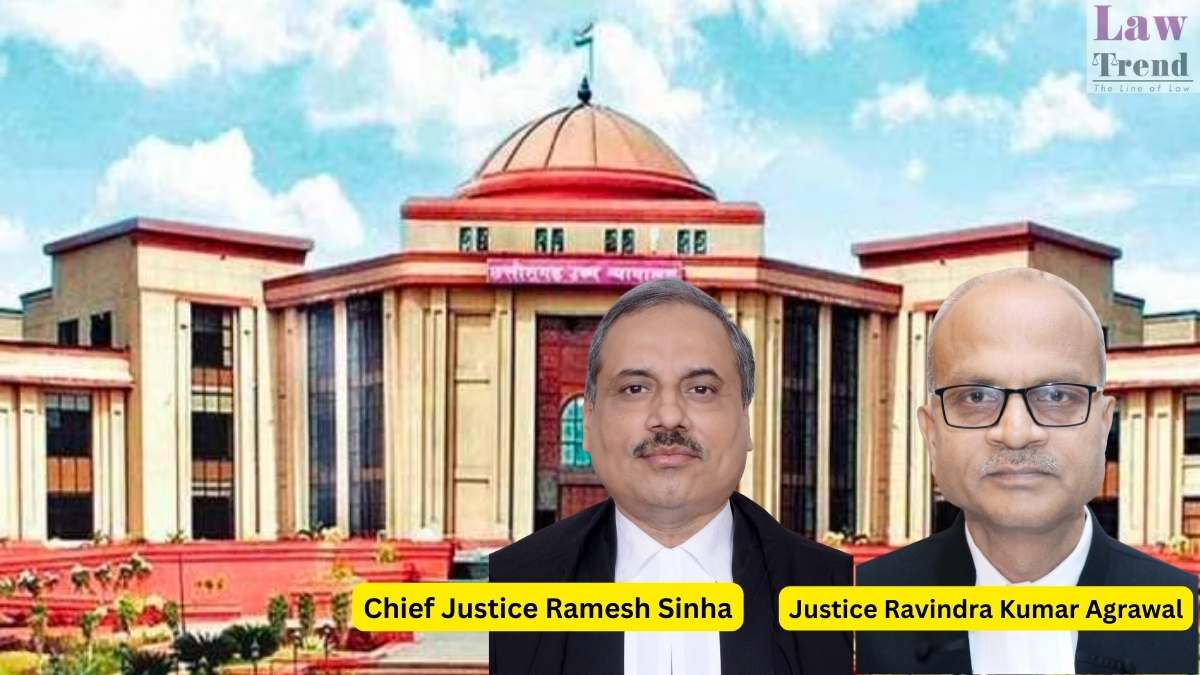
BILASPUR: The High Court of Chhattisgarh has affirmed that the testimony of a sexual assault victim is vital and can serve as the sole basis for conviction if it inspires the court’s confidence. In a recent judgment, Chief Justice Ramesh Sinha and Justice Ravindra Kumar Agrawal observed that while corroboration is not a mandatory prerequisite, the presence of medical and scientific evidence—such as DNA analysis—provides “scientific assurance” to the prosecution’s version.

Legal Issue

The primary legal issue before the Court was whether the conviction of an appellant for the repeated sexual assault of a minor could be sustained based on the victim’s testimony, especially when challenged on the grounds of delayed reporting and disputed age. The High Court dismissed the appeal, upholding the trial court’s order of life imprisonment for the “whole natural life” of the appellant.

Background of the Case

The appellant, Santosh Kumar Sahu, was accused of forcibly assaulting a minor (PW-01) on January 15, 2020, and subsequently exploiting her over eight to nine months through death threats against her family. The matter came to light only in September 2020 when the victim was found to be approximately 27 weeks pregnant. During the trial, a child was born, and DNA profiling confirmed the appellant was the biological father. The trial court convicted him under Sections 376(3) and 506 of the IPC and Section 6 of the POCSO Act.

Arguments of the Parties

The appellant’s counsel, Mr. N. Naha Roy, contended that the prosecution failed to prove the victim was a minor in accordance with Section 94 of the Juvenile Justice Act, 2015. He argued that the school records were secondary evidence and that the delay in lodging the FIR, coupled with the victim’s advanced stage of pregnancy before discovery, made her version doubtful.

Ms. Anusha Naik, Deputy Government Advocate for the State, argued that the victim’s testimony was “unblemished” and consistent with her Section 164 Cr.P.C. statement. She emphasized that the DNA report (Exhibit P-49) provided “clinching” evidence of the appellant’s involvement.

READ ALSO  Differentiating Between AYUSH and MBBS Doctors on the Basis of Duties Assigned For Grant of Honorarium is Reasonable: Allahabad HC

Court’s Analysis and Headnote Principle

The Court’s analysis centered on the reliability of the prosecutrix and the evidentiary value of scientific corroboration. In its Head-Note, the Court established the following principle:

“Testimony of the victim is vital, and unless compelling reasons exist necessitating corroboration, the Court may safely act upon the testimony of the victim of sexual assault alone to convict an accused where it inspires confidence and is found to be reliable, particularly when it is duly strengthened by corroborative medical evidence indicating pregnancy during the relevant period and further supported by DNA analysis of the child, lending scientific assurance to the prosecution version.”

The Court rejected the appellant’s challenge to the victim’s age, noting that school records (Exhibit P-13C and P-27) consistently identified her date of birth as October 4, 2005. It held that the prosecution had successfully established she was a “child” under Section 2(d) of the POCSO Act at the time of the incident.

Citing the Supreme Court in Sham Singh v. State of Haryana (2018), the Court remarked that requiring corroboration as a rule in such cases “amounts to adding insult to injury.” However, it noted that in this specific case, the medical evidence from Dr. Prachi Baranwal (PW-06) and the DNA results provided an “impregnable” foundation for the conviction.

READ ALSO  NEET PG Candidates Can't Withdraw from 3rd Round AIQ Counselling: J&K&L HC

Decision

The Court concluded that the trial court’s appreciation of evidence was sound and consistent with settled legal principles. Finding no perversity or illegality in the impugned judgment, the High Court affirmed the conviction.

“The testimony of the victim is natural, coherent, and inspires full confidence of this Court… the evidence on record forms a complete and consistent chain pointing unerringly towards the guilt of the accused.”

Case Details:

  • Case Title: Santosh Kumar Sahu v. State of Chhattisgarh
  • Case No.: CRA No. 1607 of 2025
  • Bench: Chief Justice Ramesh Sinha & Justice Ravindra Kumar Agrawal
  • Date: April 21, 2026

READ ALSO  Customer Who is Not Earning Money From Prostitution or Abetting Prostitution Will Not Be Liable to Be Punished Under Immoral Traffic (Prevention) Act: Allahabad HC
Ad 20- WhatsApp Banner

Law Trend
Law Trendhttps://lawtrend.in/
Legal News Website Providing Latest Judgments of Supreme Court and High Court

Related Articles

Latest Articles
