

Habeas Corpus | Elderly Father Free to Stay With Daughter-in-Law; AP High Court Orders Welfare Safeguards, Monitoring
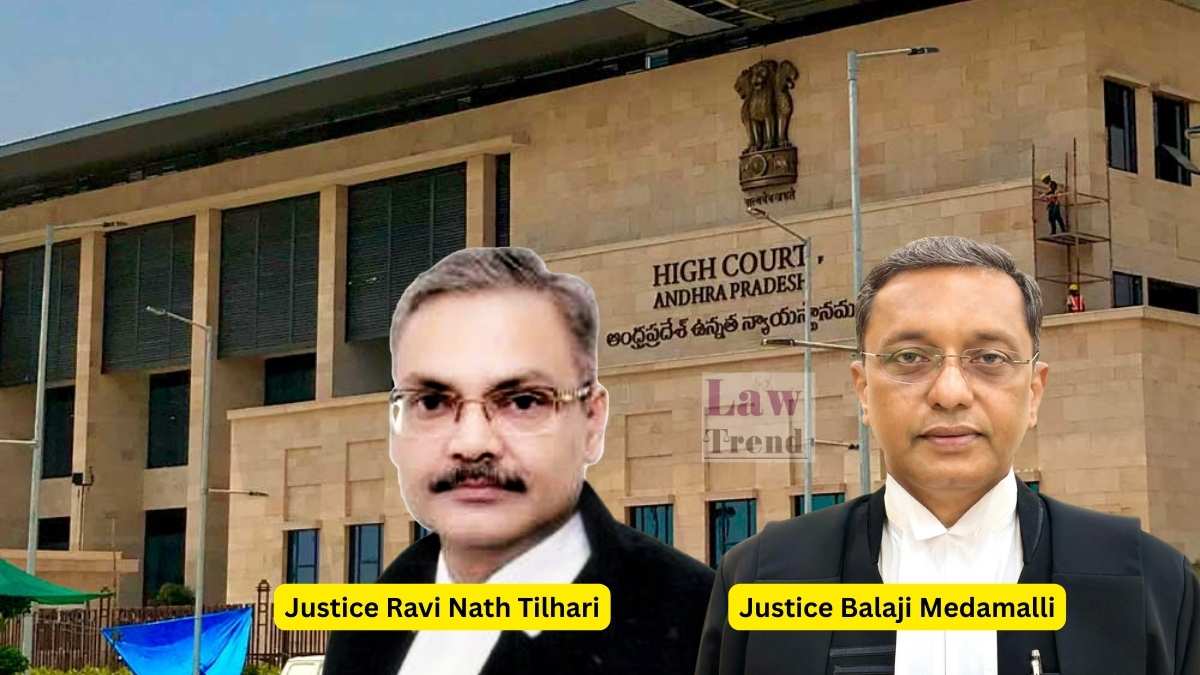
The High Court of Andhra Pradesh has issued interim directions in a Habeas Corpus petition involving an elderly man allegedly detained by his daughter-in-law. While the petitioner (the son) alleged illegal detention, the court observed that the alleged detenu expressed his voluntary willingness to stay with his daughter-in-law and granddaughters. The Court has ordered that the detenu remain with the daughter-in-law for now, subject to strict conditions regarding his medical care, location, and daily telephonic interaction with his son.

Background

The case, filed as W.P. No. 8490 of 2026, concerns the production of Chavali Venkata Subbarao, the father of the petitioner. The petitioner alleged that his father was being illegally detained by the 5th respondent—the petitioner’s wife and the detenu’s daughter-in-law—with the assistance of the Station House Officer of Satyanarayanapuram Police Station.

The court noted that the case presents a “very peculiar situation for an old aged father.” The petitioner and the 5th respondent are currently embroiled in matrimonial disputes. Despite these disputes, they were initially living in the same house, with the petitioner and his father on the ground floor and the 5th respondent with their daughters on the first floor.

The petitioner, an employee at BSNL, had installed CCTV cameras in his father’s room to monitor him while at work due to the father’s age and medical condition. On March 16, 2026, the petitioner observed via CCTV that his father was missing and subsequently lodged a complaint alleging that his wife had taken the detenu away.

Arguments of the Parties

The petitioner’s counsel argued that since the detenu was brought from the custody of the 5th respondent, any statement made by him was “not voluntary but under the fear, influence and pressure of the 5th respondent.” Furthermore, the petitioner expressed apprehension that the 5th respondent might take advantage of the custody to have properties transferred into her name or cause other losses to the petitioner.

READ ALSO  Irretrievable Breakdown of Marriage, Long Separation and Absence of Cohabitation is “Cruelty” With Each Other: SC Grants Divorce to Husband

On the other hand, the 5th respondent submitted that she and her daughters are taking “due care” of Chavali Venkata Subbarao. She informed the court that they are currently residing in a rented hotel room but plan to shift to more comfortable accommodation.

Court’s Analysis and Interaction with the Detenu

The alleged detenu was produced before the Court on a wheelchair. Despite hearing and speaking difficulties due to age, the Bench comprising Justice Ravi Nath Tilhari and Justice Balaji Medamalli expressed satisfaction that he understood the questions.

When asked in the regional language with whom he was staying, the detenu replied (as translated in the order): “I am staying with my daughter-in-law and granddaughters because my son beat me.”

He further stated that he has been living with them of his “own volition for the past five six months” and expressed a clear desire to continue living with his daughter-in-law and granddaughters.

READ ALSO  High Court’s Reasoning for Suspending Sentence in POCSO Case “Completely Untenable”: Supreme Court

The Decision

While keeping the petition pending for final decision, the Court passed several interim measures to balance the detenu’s expressed wishes with the son’s apprehensions:

  1. Custody: The alleged detenu Chavali Venkata Subbarao shall remain with the 5th respondent until further orders of the Court.
  2. Care: The 5th respondent and granddaughters must take due care of the detenu in all respects of his health condition and necessary requirements.
  3. Location Restrictions: The detenu shall not be moved outside the limits of Vijayawada City. Any change of address within the city must be communicated to the 4th respondent, the petitioner, and the Court.
  4. Police Monitoring: The 4th respondent is directed to ensure a visit by a police constable and a lady constable (in civil uniform) once every fifteen days during day time to interact with the detenu and submit a report regarding his care to the Court through the Registrar (Judicial).
  5. Interaction with Son: While the petitioner’s oral prayer for a physical meeting will be considered later, the Court directed that the petitioner (son) shall be allowed to be in contact and interact with his father daily via telephone or video conferencing, which shall be facilitated by the 5th respondent.
  6. Affidavit: The 5th respondent is required to file an undertaking on affidavit in terms of the welfare and interaction clauses within ten days.
READ ALSO  Internal Circular Prescribing Limitation for Ex-Gratia Payment Not Binding on Heirs Unless Communicated: Allahabad High Court

The Court noted that it may consider referring the parties to mediation for an amicable settlement on the next date of hearing, fixed for June 15, 2026.

Case Details Block

  • Case Title: Chavali [Petitioner Name Noted as Son] v. State of Andhra Pradesh & Ors.
  • Case No.: W.P. No. 8490 of 2026
  • Bench: Justice Ravi Nath Tilhari and Justice Balaji Medamalli
  • Date: 17.04.2026

Law Trend
Law Trendhttps://lawtrend.in/
Legal News Website Providing Latest Judgments of Supreme Court and High Court

Related Articles

Latest Articles
