The Supreme Court of India has reaffirmed the settled distinction between the “seat” and “venue” of arbitration, holding that once a seat is expressly designated by parties, it operates as an exclusive jurisdiction clause. The Court ruled that the mere conduct of proceedings or the rendering of an award at a different “venue” does not shift the supervisory jurisdiction away from the courts of the designated seat.
Background of the Case
The dispute arose from four infrastructure road projects in Jammu & Kashmir. The appellant, J&K Economic Reconstruction Agency (JKERA), had engaged the respondent, Rash Builders India Private Limited, for projects including the Shahdra-Kamalkote Road Project. Disputes emerged, leading to the appointment of a sole arbitrator.
By an order dated March 26, 2016, the Arbitral Tribunal, with the consent of both parties, specifically recorded that the “seat of arbitration shall be Srinagar and that the venue shall be New Delhi.” Following the delivery of the arbitral award on January 15, 2024, at New Delhi, JKERA filed a petition under Section 34 of the Jammu & Kashmir Arbitration and Conciliation Act, 1997, before the High Court of Jammu & Kashmir and Ladakh at Srinagar.
However, the High Court returned the petition on July 8, 2024, holding that since the proceedings were conducted and the award was rendered in New Delhi, the courts at New Delhi alone possessed jurisdiction.
Arguments of the Parties
The appellant contended that the arbitrator, with the parties’ consent, had fixed Srinagar as the seat. Under arbitration law, the seat determines supervisory jurisdiction, and this designation remains immutable unless altered by mutual agreement. Consequently, the courts at Srinagar alone had jurisdiction to hear the Section 34 challenge.
The respondent argued that the arbitral award explicitly recorded New Delhi as the place of arbitration “for all intents and purposes.” They further claimed that parties are free to alter the seat by mutual consent and that the appellant had already approached the High Court of Delhi for similar reliefs.
Court’s Analysis and Legal Principles
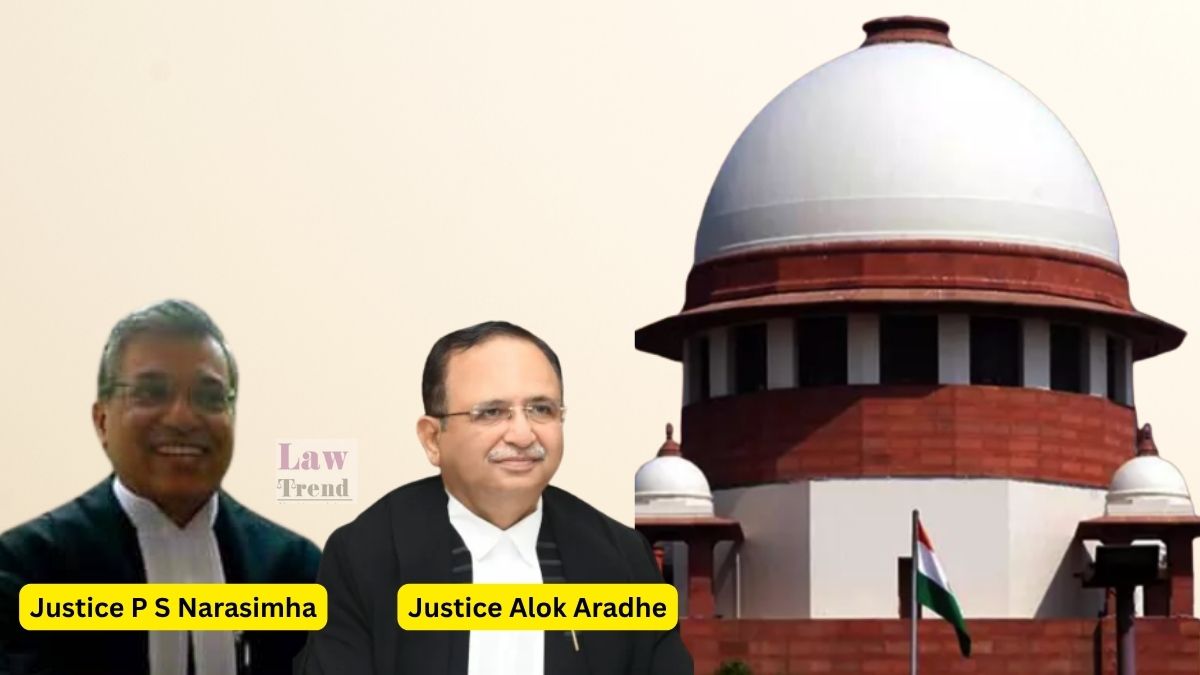
A Bench comprising Justice Pamidighantam Sri Narasimha and Justice Alok Aradhe observed that the distinction between seat and venue is “firmly embedded in arbitral jurisprudence” but continues to cause jurisdictional errors.
Referring to constitutional and three-judge bench precedents, including Bharat Aluminium Co. v. Kaiser Aluminium Technical Services Inc. and BGS SGS SOMA JV v. NHPC Ltd., the Court summarized the following core principles:
- Juridical Home: The seat of arbitration constitutes its “juridical home,” determining the curial law and identifying the court with supervisory control.
- Exclusive Jurisdiction: “Once the seat is designated by agreement of the parties, the courts of that place alone have exclusive jurisdiction to entertain all proceedings… including challenges to the award.”
- Venue vs. Seat: The venue is a “geographical location chosen for convenience” for hearings and does not confer jurisdiction. The Court noted, “The mere fact that arbitral proceedings are conducted or the award is rendered at a particular place does not confer jurisdiction on courts of that place if it is different from the designated seat.”
- Immutability: The seat remains fixed unless expressly altered by an agreement of the parties. It is not governed by “any stray recital in the award.”
Applying these to the facts, the Court noted that Srinagar was “consciously designated” as the seat. The surrounding circumstances—including the fact that the contracts were executed and performed in J&K—reinforced this “closest and most intimate connection.”
The Court criticized the High Court’s approach, stating it would “render the concept of juridical seat otiose” and introduce uncertainty by allowing the place of signing an award to determine jurisdiction. “Such a consequence would be contrary to principles of party autonomy and legal certainty,” the judgment stated.
Decision of the Court
The Supreme Court quashed the High Court’s order dated July 8, 2024, and restored the Section 34 proceedings at the High Court of Jammu & Kashmir and Ladakh. The Court directed the High Court to decide the matter on its merits with “due expedition.”
The Bench concluded that the court at Srinagar, being the court of the seat of arbitration, “alone possesses the jurisdiction to entertain and decide the challenge to the arbitral award.”
Case Details:
- Case Title: J&K Economic Reconstruction Agency v. Rash Builders India Private Limited
- Case No.: Civil Appeal No. ___ of 2026 (Arising out of SLP (C) No. ___ of 2026 @ Diary No. 44792 of 2025)
- Bench: Justice Pamidighantam Sri Narasimha and Justice Alok Aradhe
- Date of Judgment: April 15, 2026