

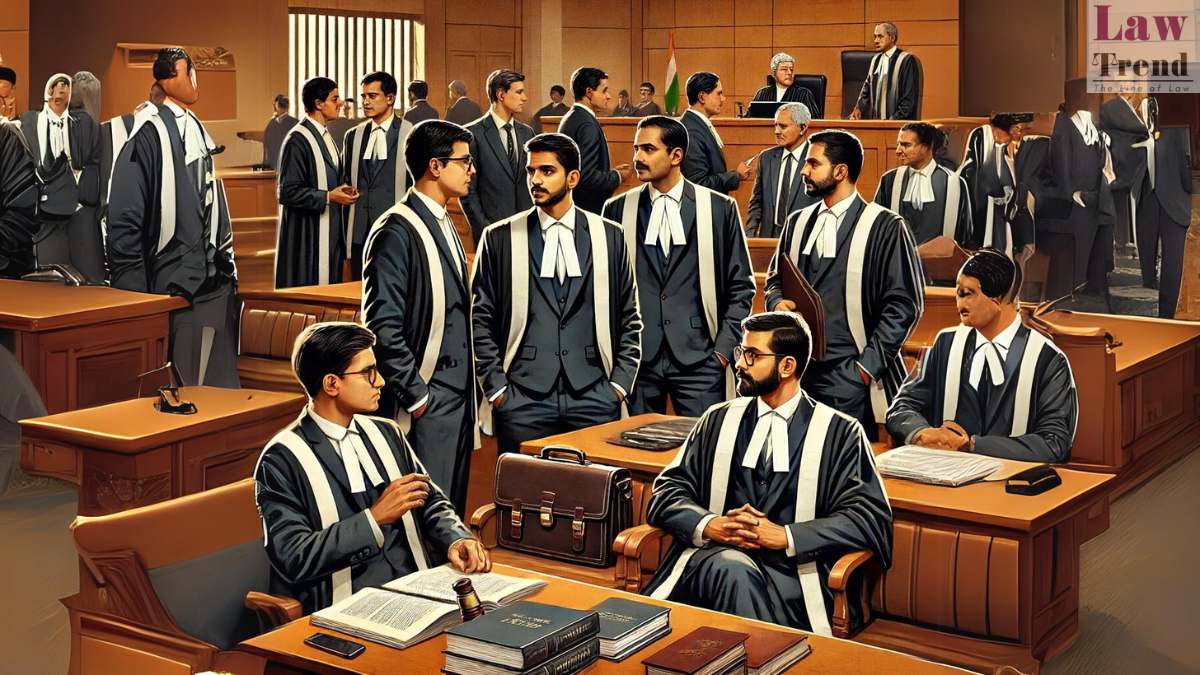
In a significant verdict examining the regulatory framework governing the appointment of government advocates in Uttar Pradesh, the Lucknow Bench of the High Court of Judicature at Allahabad, comprising Justice Rajesh Singh Chauhan and Justice Rajeev Bharti, has held that the Supreme Court’s binding directions in State of Punjab v. Brijeshwar Singh Chahal cannot be mechanically applied to the State of Uttar Pradesh due to distinct factual foundations, fee structures, and the presence of the Legal Remembrancer’s Manual. While declining to disturb existing appointments, the Court stepped in to curb institutional deficiencies, issuing an eight-point set of binding guidelines that mandates a preliminary need-based assessment, bars individuals with criminal antecedents, mandates prior No Objection Certificates for counsel appearing against the State, and requires the State to ensure adequate representation of women advocates.
Background of the Case
The proceedings arose from three connected petitions filed between 2017 and 2022 challenging the selection and empanelment process of State Law Officers—including Government Advocates, Additional Government Advocates, Chief Standing Counsel, Additional Chief Standing Counsel, Standing Counsel, and Brief Holders (civil and criminal).
In the leading Public Interest Litigation, PIL No. 16009 of 2017, the appointment procedure was assailed as non-transparent and violative of the Supreme Court’s ruling in State of Punjab v. Brijeshwar Singh Chahal (2016) and a coordinate bench decision in Ahmed Hussain Khan v. State of U.P. (2016). Two intervention applications were also moved in this petition: one by Advocate Manisha Srivastava, seeking adequate representation of women and challenging the Legal Remembrancer’s (L.R.) Manual as ultra vires Articles 14, 15, and 16 of the Constitution; and another by Advocate Arun Kumar Tiwari, raising concerns over lack of post-appointment supervision, conflict of interest through private practice, absence of a public grievance-redressal mechanism, and government advocates contesting Bar elections.
The second petition, Writ-C No. 31400 of 2017, filed in person by advocate Manendra Nath Rai who had unsuccessfully applied for empanelment in 2017, challenged the appointment lists—including the 2023 list comprising approximately 2,100 government counsel—on grounds of absence of public advertisement, lack of workload-based assessment, and non-disclosure of criminal antecedents. The third petition, PIL No. 527 of 2022, filed by Rama Shankar Tiwari and others, challenged a 2022 panel list, alleging non-compliance with the minimum five-year practice requirement for Brief Holders under the L.R. Manual and questioning the appointment of six Chief Standing Counsels.
Arguments of the Parties and Appearances
In the leading PIL (PIL No. 16009 of 2017), counsel Chandra Bhushan Pandey, assisted by advocates Tripti, Mohit Ashok, Arundhati Thakur, and Asim Kumar Singh (with advocates Manoj Kumar Tiwari and Asok Pande also on record for the petitioner), argued that appointments were being made in departure from prescribed procedure and the State Litigation Policy without adherence to the Chahal dictum.
Intervenor Arun Kumar Tiwari, appearing in person, submitted that the L.R. Manual lacks continuous supervision and accountability mechanisms, pointing out that private practice by panel counsel leads to conflicts of interest, and argued that government advocates should be barred from contesting Bar elections while in office. Intervenor Manisha Srivastava contended that executive instructions in the L.R. Manual result in systemic gender discrimination and urged the court to adopt a 30% benchmark for women lawyers on the State panel, relying on Yogamaya MG v. Union of India & Ors. (2025).
In Writ-C No. 31400 of 2017, petitioner in person Manendra Nath Rai submitted that against a working strength of approximately 111 judges, nearly 2,100 counsel were appointed without public notice or objective assessment, creating a surplus of around 1,000 counsel and burdening the public exchequer by nearly ₹5 crore per month. He placed reliance on paragraphs 8, 10, 17, 49, 50, and 51 of Brijeshwar Singh Chahal and highlighted that an RTI query inquiring whether criminal cases were pending against appointed counsel was dismissed by authorities as “misleading.”
In PIL No. 527 of 2022, counsel Alok Kirti Mishra, assisted by petitioner in person Rama Shankar Tiwari, and counsel Dharmesh Kumar Dwivedi (with counsel Dinesh Kumar Tripathi also on record), submitted that the 2022 panel list breached the L.R. Manual’s mandatory five-year practice criteria for Brief Holders, lacked a proper Selection Committee, and saw six Chief Standing Counsels appointed without demonstrated necessity.
Opposing the petitions, Advocate General of Uttar Pradesh Ajay Kumar Mishra, assisted by Additional Advocates General D.V. Singh and Kuldeep Pati Tripathi, Chief Standing Counsel Shailendra Kumar Singh, Additional Chief Standing Counsels Vivek Shukla and Ishan Mehta, and Standing Counsel Yogesh Kumar Awasthi, raised a preliminary objection on maintainability, arguing that interested persons cannot maintain a PIL under the Supreme Court’s ruling in Wing Commander GB Athri v. Union of India (2021).
On merits, the Advocate General argued that Brijeshwar Singh Chahal is distinguishable under the doctrine of precedents in Quinn v. Leathem (1901) because Chahal was anchored in an adverse Comptroller and Auditor General (CAG) report in Haryana and an absence of norms in Punjab and Haryana. In contrast, Uttar Pradesh is governed by an established L.R. Manual and operates on a hybrid retainership-plus-appearance fee structure rather than a fixed monthly consolidated salary. The State maintained that appointing counsel is an executive function, though it welcomed constructive directions to improve the existing system.
The Court’s Analysis
Examining the applicability of Brijeshwar Singh Chahal, the Bench agreed with the State that precedents cannot be applied in a vacuum, citing State of M.P. v. Narmada Bachao Andolan (2011):
“The court should not place reliance upon a judgment without discussing how the factual situation fits in with a fact situation of the decision on which reliance is placed, as it has to be ascertained by analysing all the material facts and the issues involved in the case and argued on both sides. A judgment may not be followed in a given case if it has some distinguishing features.”
Justice Rajesh Singh Chauhan and Justice Rajeev Bharti observed that no adverse CAG report exists for Uttar Pradesh, the L.R. Manual governs appointments, and the remuneration models differ substantially. Thus, the ratio of Chahal could not be mechanically applied. However, relying on State of U.P. v. U.P. State Law Officers’ Assn. (1994), the Court reiterated:
“Whatever the method adopted, it must be shown that the search for the meritorious was undertaken and the appointments were made only on the basis of the merit and not for any other consideration.”
Addressing the intervention seeking 30% women representation and challenging the L.R. Manual, the Court held that an intervenor cannot enlarge the scope of the original writ or seek independent affirmative relief, though it observed that the Government should endeavour to ensure appropriate representation of women.
On supervision and private practice under Paragraph 4.07 of the L.R. Manual, the Court declined to direct a separate grievance committee, noting that Paragraph 4.19 already provides for annual returns, but clarified that these annual performance returns must not remain confined to criminal cases and must encompass all categories of cases handled by State Law Officers.
The Court expressed deep concern over the State’s response to the RTI application regarding criminal antecedents:
“This Court firmly believes that the robe of a lawyer cannot conceal the stain of criminal conduct, nor can a law degree confer immunity from the law. The legal profession, by its very nature, demands the highest standard of intregity, probity and professional conduct. It is in this context that the Court endeavors to ensure that the oft-quoted adage: ‘पैदा हुआ वकील तो शैतान ने कहा, लो आज हम भी साहब-ए-औलाद हो गए!’ does not become the hallmark or defining identity of an advocate practicing before the Courts of Justice.”
Referencing Mohd. Kafeel v. State of U.P. (2025), the Court held that higher standards of scrutiny must apply to State Law Officers who represent the State in the administration of justice.
Addressing the workload and the appointment of six Chief Standing Counsels under Paragraph 5.01 of the L.R. Manual, the Bench observed that despite repeated opportunities, the State failed to bring on record any objective data, criteria, or methodology for assessing the required strength of counsel. Invoking Rattan Chand Hira Chand v. Askar Nawaz Jung (1991) regarding the duty of courts to fill legislative and administrative lacunae in the public interest, the Court held that a preliminary needs assessment is essential to avoid arbitrary appointments at taxpayer expense.
The Court noted the State’s affidavit dated October 4, 2023, confirming the constitution of a scrutiny committee headed by the Advocate General, with the Principal Secretary to the Chief Minister, the Principal Secretary (Home), and the Principal Secretary (Law)/Legal Remembrancer as Member Secretary.
The Decision
Disposing of all connected petitions, the High Court clarified that its findings would not disturb existing appointments, but laid down eight mandatory guidelines to be strictly observed by the State Government for future appointments:
- Needs Assessment: The State shall make a need-based proper assessment of the requirement of the number of State Law Officers for efficient and smooth conduct of State litigation.
- Eligibility and Criminal Antecedents: The State shall prescribe clear, objective, and transparent eligibility and selection criteria, taking into consideration professional experience, competence, integrity, behavior, and suitability. No person having criminal antecedents or undesirable behavior shall be appointed.
- Comprehensive Case Returns: The provisions of Paragraph 4.19 of the L.R. Manual should not be confined to criminal cases, but must include all categories of cases handled by State Law Officers.
- Public Domain: The entire process of selection and appointment, including eligibility criteria and assessment, shall be transparent and placed in the public domain to the extent permissible.
- Women’s Representation: The State shall ensure adequate representation of women advocates for appointment of State Law Officers, subject to availability.
- Mandatory Reporting of FIRs: Whenever an FIR or criminal case is registered against any State Law Officer practicing in Uttar Pradesh, a copy shall be forwarded without delay to the Advocate General for necessary action.
- Bar on Litigating Against the State: Any State Law Officer appearing or litigating against the State must obtain a prior No Objection Certificate (NOC) from the competent authority and annex it to the Vakalatnama. This restriction does not apply to Brief Holders, subject to Paragraph 6.11 of the L.R. Manual.
- Participation in Bar Elections: The State Government shall examine whether a State Law Officer may contest or participate in Bar Association or Bar Council elections, consulting relevant stakeholders before taking a decision and issuing regulatory directions.
Case Title: Mahendra Singh Pawar v. State of U.P. Thru. Prin.Secy to the CM and 2 others (with connected matters)
Case No.: Public Interest Litigation (PIL) No. 16009 of 2017, Writ-C No. 31400 of 2017, and Public Interest Litigation (PIL) No. 527 of 2022
Bench: Justice Rajesh Singh Chauhan and Justice Rajeev Bharti
Date: October 05, 2026




