

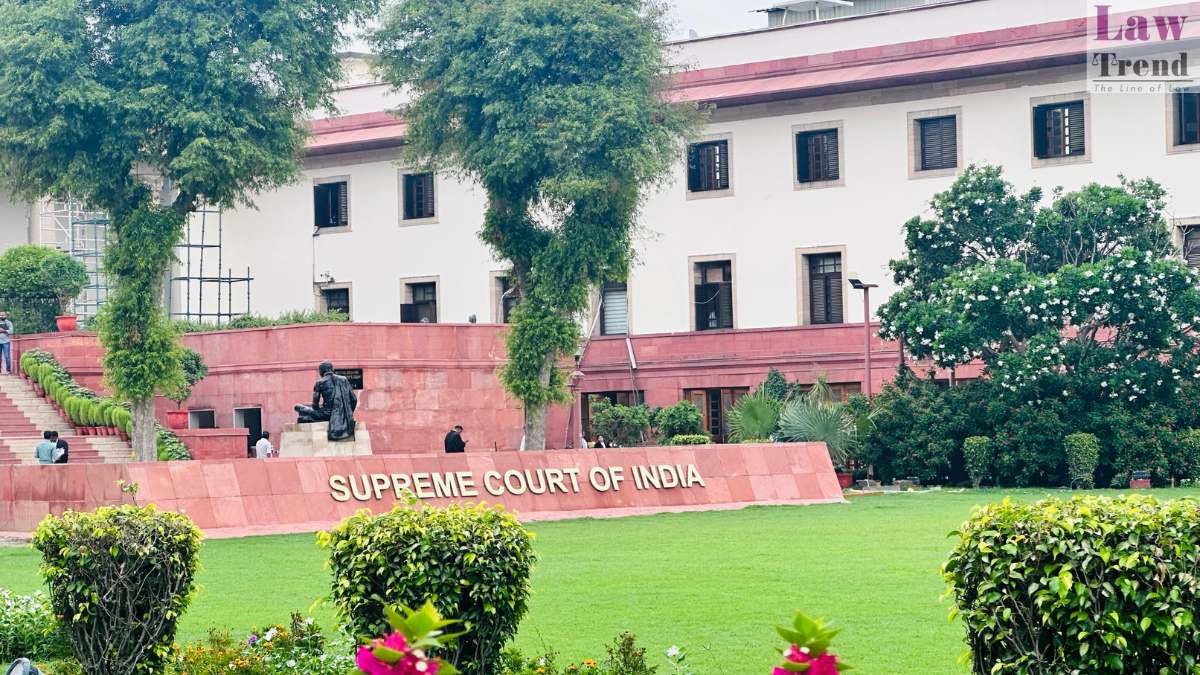
The Supreme Court on Thursday instructed the Punjab government to present a formal proposal detailing adequate land allocations for compensatory tree planting to clear the way for stalled National Highways Authority of India road works.
A three-judge bench comprising Chief Justice Surya Kant, Justice Joymalya Bagchi, and Justice V. Mohana sought a response from the state administration, ordering the national highway authority to furnish a copy of its plea to Punjab officials. During the hearing, the judges voiced concern over Punjab’s shrinking forest area and the slow pace of afforestation initiatives.
When the bench inquired whether compensatory parcels are earmarked within a five-kilometre radius of project sites where trees are chopped down, the central agency conceded that geographic proximity cannot always be preserved.
Strategic Highway Works Stalled
Representing the highways authority, Solicitor General Tushar Mehta told the court that a continuing judicial order from the high court prohibiting tree cutting has brought key infrastructure projects to a standstill. Arguing against an open-ended prohibition, Mehta asserted that statutory provisions for compensatory planting are mandatory and adhered to, even if replacement plots cannot consistently be situated within the five-kilometre zone.
Mehta further underlined Punjab’s geopolitical significance, pointing out that several stalled stretches are critical for strategic and defence movement in the border state.
Depleting Forest Cover Concerns
The high court originally halted tree removal across development works on December 24, 2025, subsequently revising the directions at various stages. That judicial intervention followed a public interest petition opposing the clearance of roughly 5,000 trees for the construction of the Zirakpur bypass, which connects Zirakpur in Punjab to a toll plaza on the Chandigarh-Shimla highway in Haryana.
In its earlier interventions, the high court noted that Punjab’s woodland stands at only 3.67 percent of its total geographical area, lagging behind even the desert state of Rajasthan, where forest cover accounts for 4.87 percent.




