

High Court Cannot Enhance Sentence in Revision Petition Filed by Accused Without Challenge by Complainant: Supreme Court
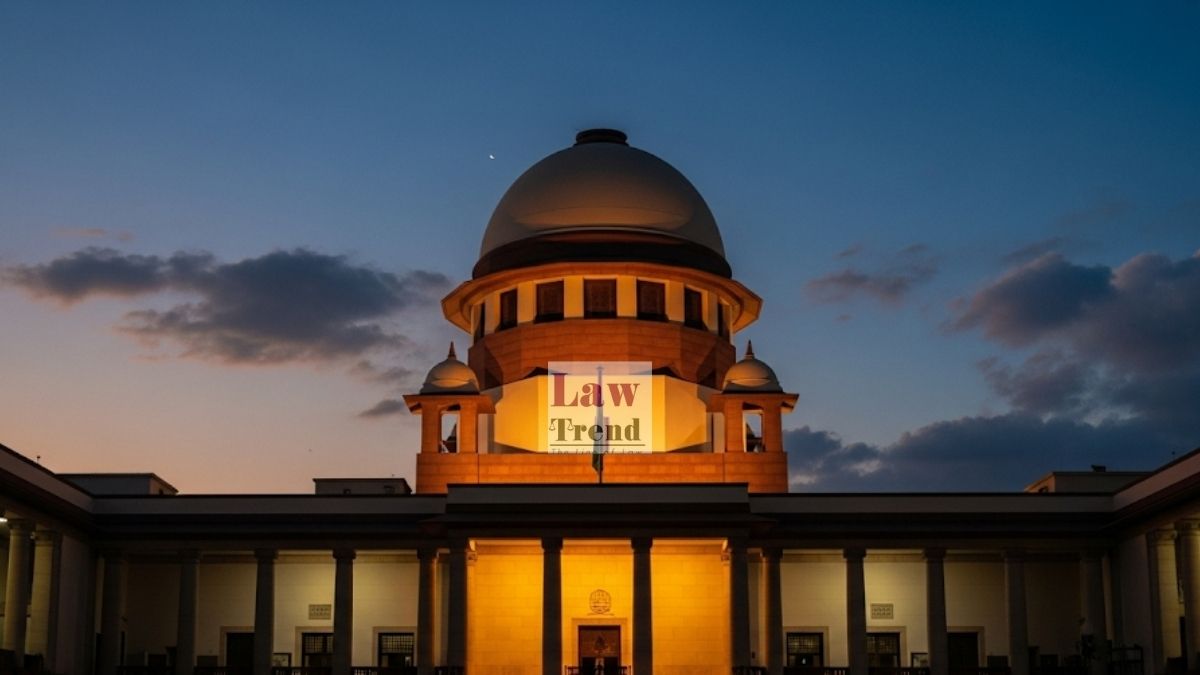

The Supreme Court of India, in a judgment delivered on May 6, 2026, has ruled that a High Court exercising revisional jurisdiction at the instance of an accused cannot place the petitioners in a “worse position” than they were under the appellate judgment, especially in the absence of any challenge by the complainant seeking enhancement of the sentence.

The Bench, comprising Justice K.V. Viswanathan and Justice Vipul M. Pancholi, upheld the conviction of the petitioners under the Negotiable Instruments Act, 1881, but set aside the High Court’s order that had restored a heavier sentence originally passed by the Trial Court.

Background of the Case

The matter originated from three complaint cases involving transactions where cheques were issued by the accused parties. The Trial Court originally convicted five parties: M/s Vasu Tech Limited (A1), Dhruv Varma (A2), R.L. Varma (A3), Aruna Varma (A4), and Ratan Lal Varma & Sons HUF (A5).

On October 31, 2012, the Trial Court directed Dhruv Varma (Petitioner No. 1) to undergo simple imprisonment for one year and pay compensation of ₹50,00,000 in each of the three cases (totaling ₹1.5 crore). Ratan Lal Varma & Sons HUF (Petitioner No. 2) was fined ₹1,00,000.

Upon appeal, the Appellate Court maintained the conviction but modified the sentence on September 30, 2014. It reduced the individual liability of Dhruv Varma to a consolidated ₹1 crore for all three cases and directed M/s Vasu Tech Limited and the HUF to pay ₹25,00,000 each.

READ ALSO  Supreme Court Round-Up for Thursday

The petitioners subsequently filed a revision petition before the High Court of Delhi. However, in its judgment dated February 27, 2026, the High Court set aside the Appellate Court’s modification and restored the Trial Court’s original, more severe sentence.

Arguments of the Parties

Mr. Vipin Sanghi, learned senior counsel appearing for the petitioners, raised a two-fold submission:

  1. He argued that the presumption under Section 139 of the Negotiable Instruments Act, 1881, was duly rebutted.
  2. He contended that Paragraph 32 of the High Court’s judgment, which restored the Trial Court’s sentence, was erroneous.

The Court noted that the complainant did not prefer any appeal or revision seeking enhancement of the sentence.

The Court’s Analysis

On the issue of conviction, the Supreme Court refused to accept the argument that the legal presumption was rebutted. The Court observed:

“We drew the specific attention of the learned senior counsel to the findings recorded by the High Court, including the admission in the cross-examination of petitioner no.1 herein regarding the transactions in question. In any event, there are concurrent findings of three Courts insofar as the existence of debt or other liability is concerned. We, therefore, maintain the conviction of the petitioner.”

However, regarding the enhancement of the sentence by the High Court, the Supreme Court found the High Court’s approach legally unsustainable. The High Court had justified the restoration of the Trial Court’s sentence by stating that the Appellate Court did not disclose “cogent reasons” for modifying the fine.

READ ALSO  Presence in Unlawful Assembly Alone Suffices for Conviction Under Section 149 IPC, No Overt Act Required: Supreme Court

Rejecting this, the Supreme Court held:

“In our considered view, in the absence of any challenge by the complainant seeking enhancement of sentence, the High Court, while exercising revisional jurisdiction at the instance of the accused, could not have placed the petitioners in a worse position than under the appellate judgment. The restoration of the Trial Court sentence, therefore, cannot be sustained.”

Decision

The Supreme Court disposed of the petitions by setting aside Paragraph 32 of the High Court’s judgment. While the conviction remains intact, the compensation and sentence shall be governed by the order of the Appellate Court (₹1 crore by Dhruv Varma and ₹25,00,000 each by the other concerned entities).

The Court granted the petitioners time until July 31, 2026, to deposit the amounts. The Court also extended this order to two related Special Leave Petitions (SLP (Crl.) Diary Nos. 25469/2026 and 25451/2026) arising from the same common High Court order.

READ ALSO  Merely Affixing a Notice on the Outer Part of a Building Structure would not be Substantial Compliance With Actual Service: JKL HC

Case Details:

  • Case Title: Dhruv Varma & Anr. vs. J K Varma
  • Case No.: Special Leave to Appeal (Crl.) No(s). 7595/2026
  • Bench: Justice K.V. Viswanathan, Justice Vipul M. Pancholi
  • Date: May 6, 2026

Law Trend
Law Trendhttps://lawtrend.in/
Legal News Website Providing Latest Judgments of Supreme Court and High Court

Related Articles

Latest Articles

