

Non-Disclosure of Exam Marks Alone Does Not Confer Right to Appointment: Supreme Court Sets Aside CAT, Calcutta HC Orders

The Supreme Court of India has ruled that the non-disclosure of examination marks by a recruiting authority does not justify a direction for the appointment of candidates in the absence of evidence that they successfully cleared the selection process. The Court set aside orders from the Central Administrative Tribunal (CAT) and the Calcutta High Court that had directed Durgapur Steel Plant to appoint respondents to the post of Plant Attendant, emphasizing that candidates do not possess an indefeasible right to appointment.

Background

The dispute stems from a 2007 recruitment drive by Durgapur Steel Plant (a unit of Steel Authority of India Limited) for the post of Plant Attendant. While 90 posts were initially advertised, the requirement was eventually increased to 200. Approximately 52,000 applications were received, and 29,459 candidates appeared for a written examination conducted by an independent agency. Ultimately, 194 candidates were appointed.

In 2009, several candidates (the respondents) approached the court seeking the production of written examination results and the disclosure of their marks. The case was transferred to the CAT, Calcutta Bench, which in 2018 directed the appellants to offer appointments to the respondents. The Tribunal’s decision was based on the fact that marks were not disclosed to the respondents and that recruitment records were not preserved by the plant despite the pendency of the litigation. This order was subsequently upheld by the Calcutta High Court on September 27, 2019.

Arguments of the Parties

Appellants (Durgapur Steel Plant): Senior Counsel Mr. Ranjit Kumar, representing the appellants, submitted that the written examination was outsourced to an independent agency and there was no mandate to publish the marks of all 29,459 participants. He argued that the records were destroyed bona fide after the recruitment was finalized. Furthermore, he noted that the qualifications for the post were revised in 2008, making it legally impossible to appoint the respondents under the old criteria.

Respondents: Counsel Mr. Subhasish Bhowmick argued that the recruitment process was arbitrary and lacked transparency as no cut-off marks or evaluation criteria were ever disclosed. He contended that because the appellants failed to produce records, an adverse inference should be drawn to conclude that the respondents had passed the examination.

READ ALSO  Courts Cannot Impound Passport as Bail Condition: Madras HC Sets Aside Direction to Surrender Passport

The Court’s Analysis

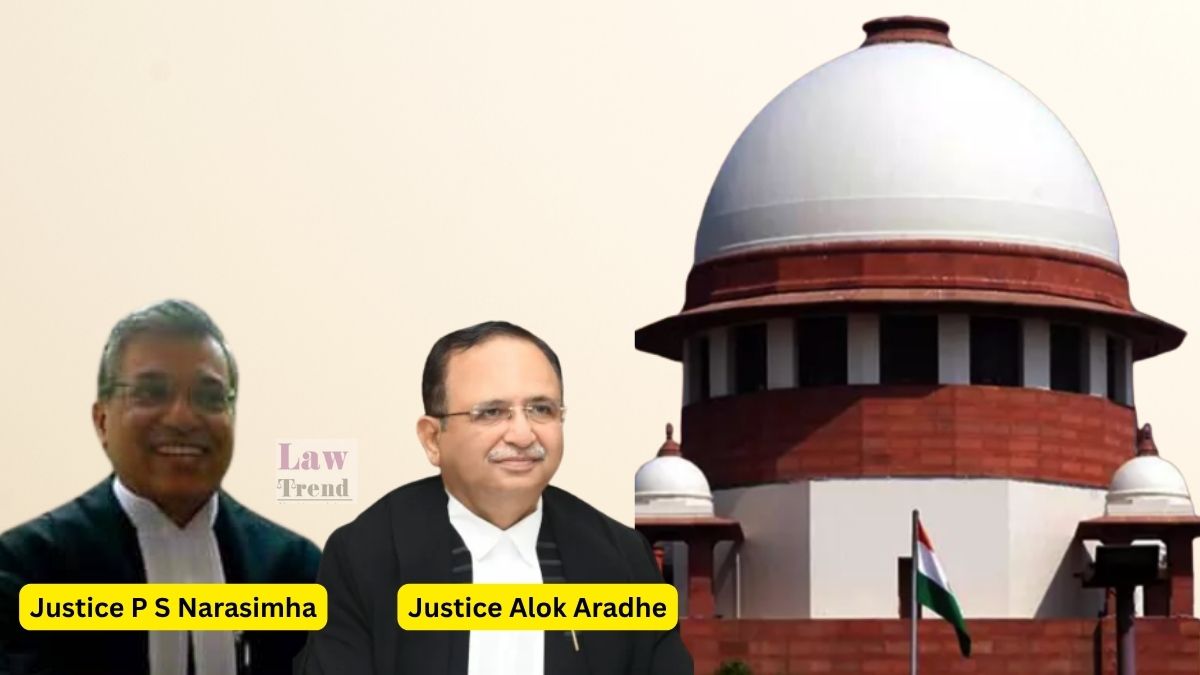
The Bench, comprising Justice Pamidighantam Sri Narasimha and Justice Alok Aradhe, analyzed the legal obligations of the State in recruitment processes and the validity of drawing adverse inferences regarding missing records.

1. No Indefeasible Right to Appointment The Court reiterated that even if a candidate’s name is included in a merit list, it does not create a right to be appointed. Referencing several precedents, the Court noted:

“It is well settled in law that a candidate whose name appears in the select list does not acquire any indefeasible right to appointment to the post in the absence of any specific rule entitling such appointment.”

2. Non-Disclosure vs. Proof of Passing The Court found that the respondents failed to establish that they had actually qualified in the examination. It observed:

READ ALSO  Failed to Demonstrate Fraudulent Intent or Inducement: Rajasthan HC Quashes Criminal Case

“Neither the recruitment rules nor the advertisement required the publication of the marks obtained by all the candidates… Merely because the respondents were not shown to have failed, no inference could be drawn that they had passed the written examination.”

3. Bona Fide Destruction of Records The Court accepted the appellants’ explanation for the unavailability of records, noting that there was no prescribed duration for their preservation.

“Therefore, the explanation of the appellants for non-production of the record that the same were unavailable or had been destroyed appears to be bona fide. Mere non-production of such records does not justify drawing an inference that the respondents had cleared the written test.”

4. Revision of Recruitment Qualifications The Court further highlighted that a direction for appointment was not feasible because the eligibility qualifications for the post of Plant Attendant had been revised in 2008.

READ ALSO  Emotive majoritarian interpretation of Constitution should not be made to justify Article 370 abrogation, SC told

The Decision

The Supreme Court set aside the directions of the CAT and the Calcutta High Court for the appointment of the respondents. However, taking into account that Respondent No. 1 had been pursuing litigation for nearly two decades, the Court exercised its discretion to award monetary compensation.

“As we are setting aside the orders of the Tribunal and the High Court… in the peculiar facts and circumstances of the case, we deem it appropriate to direct the appellants to pay a sum of Rs.5,00,000/- (Rupees Five Lakhs) to respondent no.1 within a period of two months.”

The appeals were disposed of accordingly, with no order as to costs.

Case Details

Case Title: Durgapur Steel Plant & Ors. v. Bidhan Chandra Chowdhury & Ors.

Case No.: Civil Appeal No. ___ of 2026 (Arising out of SLP (C) No. 41 of 2020)
Bench: Justice Pamidighantam Sri Narasimha and Justice Alok Aradhe
Date: May 7, 2026

Law Trend
Law Trendhttps://lawtrend.in/
Legal News Website Providing Latest Judgments of Supreme Court and High Court

Related Articles

Latest Articles

