

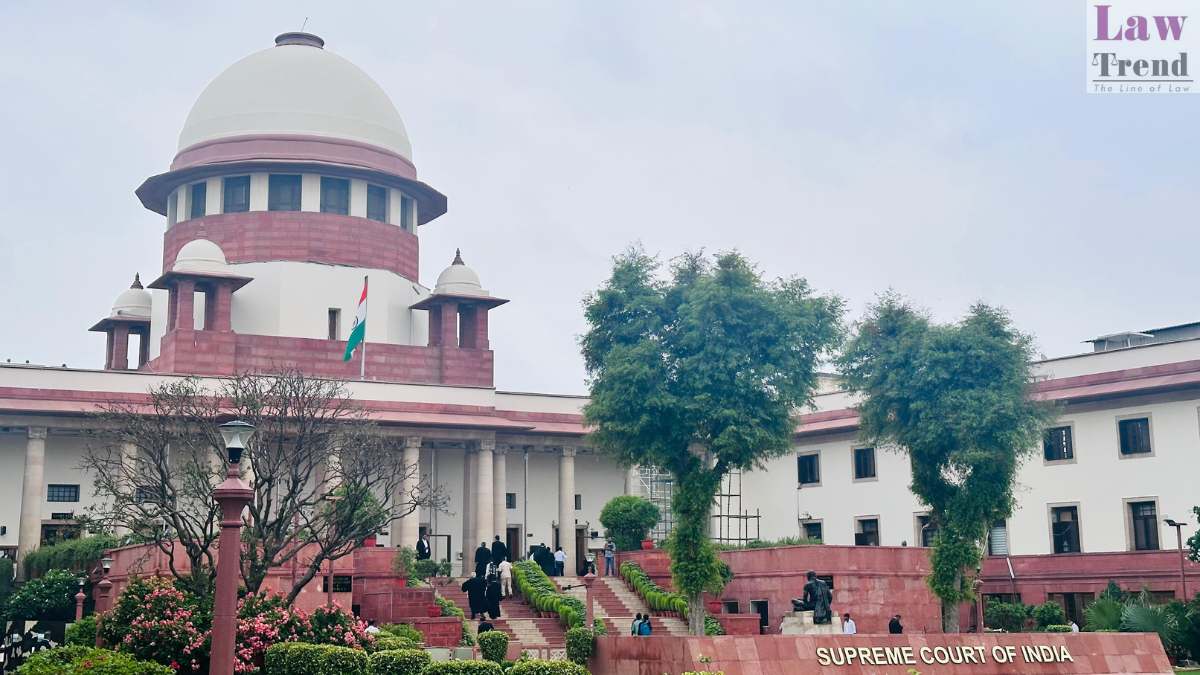
The Supreme Court on Friday declined to grant bail to Aakriti Chaudhary, a Delhi University student accused of inciting violence during an industrial workers’ protest in Noida last month. A bench comprising Justices BV Nagarathna and Ujjal Bhuyan directed the petitioner to approach the Allahabad High Court, citing the massive backlog of cases currently before the apex court.
“Why don’t you go to high court? Everybody comes here by filing petition under Article 32 of the Constitution,” the bench observed during the hearing. The justices highlighted the strain on the judiciary, noting that there are currently 93,000 cases pending in the Supreme Court.
Chaudhary, a Daulat Ram College graduate with a Master’s in History, is one of three women accused of fueling unrest during the April 13 demonstrations. Her counsel sought bail on the grounds that the police had failed to provide the specific reasons for her arrest at the time of her detention.
While the Supreme Court stood firm on procedural hierarchy regarding the bail plea, it did take action on a separate, related matter. The court issued notices to police officials following a plea from Keshaw Anand, who has alleged torture at the hands of Uttar Pradesh police officers.
The charges stem from a protest by industrial factory workers in Noida demanding a revision of long-pending wage hikes. While the demonstration began as a gathering to raise slogans for salary increases, officials state the situation escalated into significant violence. Participants allegedly engaged in stone-pelting, property vandalism, and the torching of at least one vehicle.
Earlier, a local Noida court had granted conditional police remand for Chaudhary and two other women: Srishti Gupta, also in her 20s from Delhi, and Manisha Chauhan, a local industrial worker. In their application for custody, police argued that a search of the suspects’ residences was necessary, citing a “full possibility” of recovering critical evidence related to the violence.
The lower court had previously allowed the women’s legal representatives to be present during the investigation proceedings to ensure oversight. Following Friday’s Supreme Court ruling, Chaudhary’s legal team must now seek relief through the state’s High Court system.




