

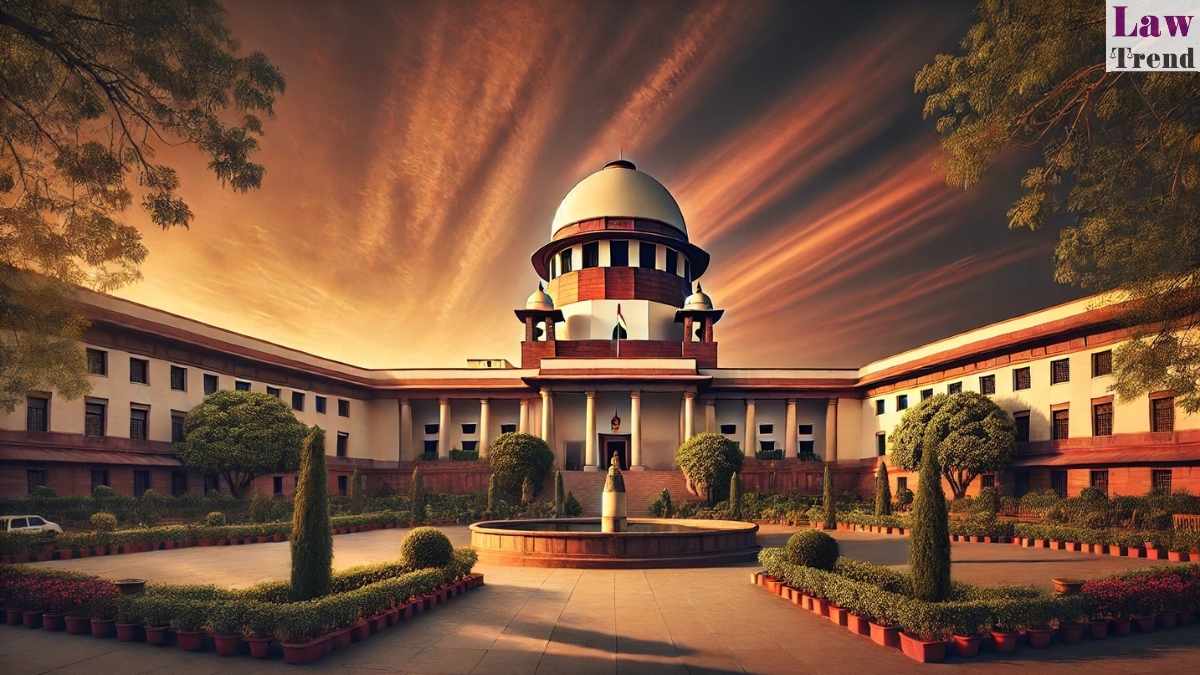
The Supreme Court on Thursday delved into a series of petitions challenging the constitutional validity of the 2023 law governing the appointment of India’s top election officials. During the second day of final hearings, a bench comprising Justices Dipankar Datta and Satish Chandra Sharma heard arguments claiming the legislation was passed without parliamentary debate and effectively grants the executive “sole dominance” over the poll body.
At the heart of the legal battle is the Chief Election Commissioner and Other Election Commissioners (Appointment, Conditions of Service and Term of Office) Act, 2023. The law altered the selection panel for the Chief Election Commissioner (CEC) and Election Commissioners (ECs), replacing the Chief Justice of India (CJI) with a Union Cabinet Minister nominated by the Prime Minister. The current panel consists of the Prime Minister, a Cabinet Minister, and the Leader of the Opposition.
Lawyers appearing for various petitioners, including the Association for Democratic Reforms (ADR) and Congress leader Jaya Thakur, argued that the law’s passage was procedurally flawed. Advocate Prashant Bhushan told the bench that the legislation was cleared via a voice vote with “virtually no debate” because a significant number of Opposition MPs were under suspension at the time.
Advocate Shadan Farasat supported this claim, noting that approximately 95 Lok Sabha MPs and 12 Rajya Sabha MPs were suspended when the Bill was moved and passed. According to Bhushan, the government made no attempt to defend the Act during its passage, relying instead on its legislative majority.
Senior advocate Vijay Hansaria argued that the new law departs from the constitutional principles established by the Supreme Court’s own 2023 judgment in the Anoop Baranwal case. That ruling had mandated a selection committee of the Prime Minister, the Leader of the Opposition, and the CJI to ensure the Election Commission remained insulated from executive interference.
Hansaria contended that like the judiciary, the Election Commission acts as a “watchdog of democracy” and must remain autonomous. He argued that the current structure, where the executive holds two out of three votes on the panel, subjects the institution to executive dominance.
However, the bench raised critical questions regarding the limits of judicial intervention. Justice Datta repeatedly asked whether the court has the authority to direct Parliament to enact a law in a specific manner.
“This judgment [Anoop Baranwal] was only to fill the vacuum till the law is made. There is no observation that the law should be framed in a particular manner,” Justice Datta observed, questioning if the previous ruling mandated that the CJI must be included in all future legislation.
The petitioners also highlighted the practical application of the new law by citing the appointments of current ECs Gyanesh Kumar and Sukhbir Singh Sandhu in March 2024.
Hansaria pointed out that the Leader of the Opposition was reportedly given a list of nearly 200 names on March 13, followed by a shortlist of six names on March 14—the same day the selection committee met to finalize the appointments. Kumar and Sandhu were sworn in the following day.
“How can the leader of opposition be expected to look into so many names in one day?” Hansaria asked, using the timeline to illustrate the potential for concentrated executive power.
The Supreme Court is set to continue hearing the detailed submissions next Thursday.




