

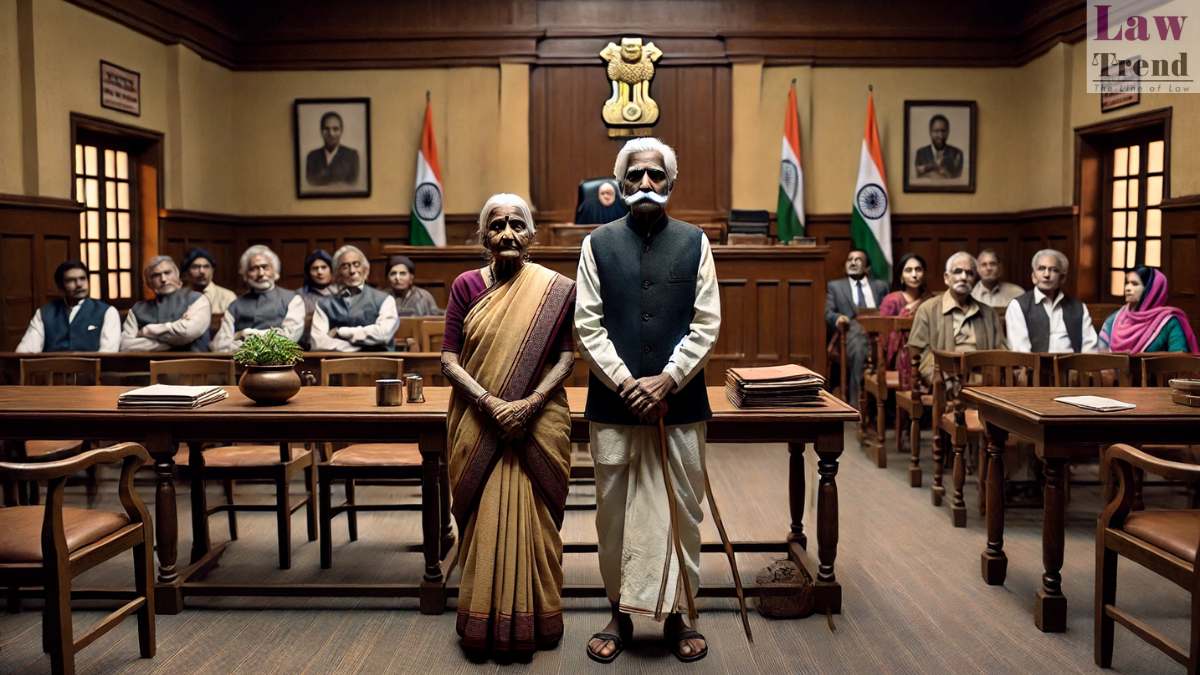
In a landmark judgment reinforcing the rights of elderly parents, the Gauhati High Court has ruled that senior citizens do not need to become “penniless or destitute” before they can seek legal recourse to evict abusive or neglectful children from their homes.
Upholding the eviction of two sons from the self-acquired house of their 86-year-old father, a division bench comprising Chief Justice Ashutosh Kumar and Justice Arun Dev Choudhury declared that financial self-sufficiency alone does not guarantee a dignified and peaceful life for the elderly.
The ruling, delivered on May 19, dismissed an intra-court appeal filed by the two brothers. The siblings were challenging a November 18, 2025, decision by a single-judge bench, which had originally upheld a Maintenance Tribunal order directing them to vacate their father’s property in Dhubri Town.
‘Dignity Over Decimals’: Why Pensioners Are Still Protected
The core of the legal battle rested on the sons’ argument that their father—a retired bank employee—receives a steady pension and possesses sufficient financial means to maintain himself. Consequently, they argued, he should not be allowed to invoke the protective provisions of the Maintenance & Welfare of Parents and Senior Citizens Act, 2007.
The High Court emphatically rejected this defense.
“We are also unable to accept the submissions that a senior citizen receiving a pension is not entitled to invoke the protection of the statute under Section 23 of the Act, 2007,” the bench stated in its order. “The Act does not require a senior citizen to become penniless or destitute before approaching the authorities… Financial sufficiency, by itself, does not ensure peaceful living, emotional security, or a dignified residence.”
The court emphasized that the legislative intent behind the 2007 Act extends far beyond basic economic survival. It is specifically designed to safeguard an elderly person’s right to live with safety, respect, and peace of mind within their own home.
A Breakdown of Family Trust
The dispute centers on an 86-year-old father who had permitted his two sons and their families to live on a portion of his self-acquired property. The court observed that such arrangements are common in India, typically built on “family arrangements, trust, and affection” rather than formal legal deeds.
However, the father alleged that this permissive arrangement disintegrated into years of neglect, harassment, and interference with his peace. He pointed out that his sons and daughters-in-law completely neglected him even during highly vulnerable periods of critical illness.
Desperate for peace, the father publicly disowned his sons, declaring them “Tejya Putra” (disinherited), and approached the Maintenance Tribunal to have them evicted. He clarified to the court that he did not want to take even a “farthing” of financial support from them; he simply wanted them out of his house.
A judicial attempt at reconciliation also laid bare the depth of the domestic rift. During a court-mandated mediation session on February 20, where the judges interacted directly with the father and sons, the bench observed a “complete lack of communication” between the parties, despite them living on the exact same floor of the house.
Sibling Defense and Domestic Violence Arguments Rejected
In a bid to retain possession of the property, the sons also argued that their wives (the daughters-in-law) had a legal right to reside there under the Protection of Women from Domestic Violence Act, 2005, claiming the property constituted a “shared household.”
The High Court dismissed this argument, noting there was “no whisper of an allegation” of domestic violence in any of the original filings. The court ruled that such a claim could not be introduced for the first time during the appellate stage without any foundational pleadings.
Furthermore, the court clarified that because the sons admitted their initial stay was purely due to their father’s permission and did not claim any independent title to the land, they could not use this “permissive occupation” to trap their father in a hostile living environment.
The Changing Fabric of Indian Society
The division bench used the judgment to reflect on the broader, evolving social dynamics in the country, noting that the traditional joint family system is steadily weakening.
As a result, a growing number of elderly citizens find themselves emotionally neglected, physically insecure, and lacking support. The court warned that if parents are forced to live in constant fear and distress due to their children’s behavior, authorities cannot be rendered powerless simply because there is no formal deed of transfer.
“The object of the Act, 2007, is to protect the life, dignity, residence, and property of senior citizens,” the court added, reinforcing that anyone who stands to inherit a senior citizen’s property has a moral and legal duty to maintain their well-being.
The Gauhati High Court has granted the two sons a 90-day grace period to voluntarily vacate the premises and restore peace to their father’s home.




