

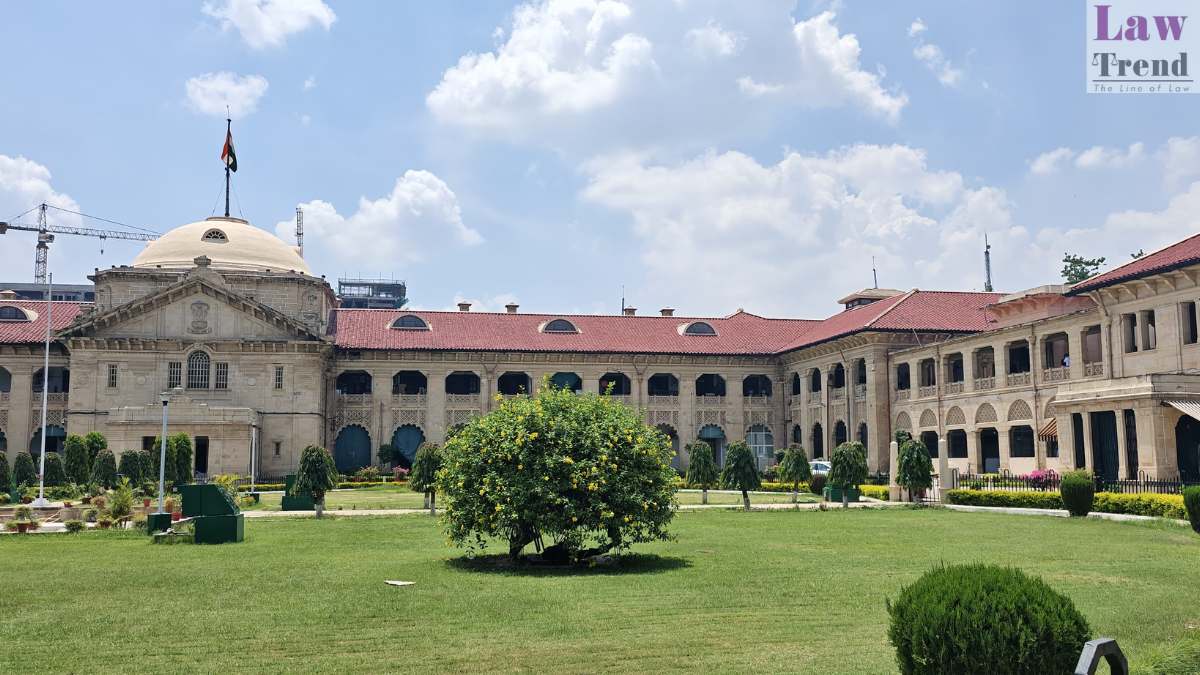
In a strongly worded ruling, the Allahabad High Court has declared that police harassment or torture of an accused person’s relatives is a “colonial practice” that directly violates the fundamental right to life and personal liberty guaranteed under the Constitution of India.
The division bench, comprising Justice JJ Munir and Justice Tarun Saxena, issued the landmark observations during a hearing on May 8. The court has formally restrained the Prayagraj police from summoning, detaining, or threatening the family members of a man who had eloped with a young woman.
Daily Detentions Under the Guise of Investigation
The ruling comes in response to a petition filed by Munita Devi and her relatives, who alleged systematic harassment by local police in Prayagraj.
According to the petitioners, the ordeal began after Munita Devi’s son, Ashish Kumar (also known as Chhotu), eloped with the daughter of a police informant. In their bid to locate the couple, officers from the Karchhana police station allegedly forced the family into a grueling daily routine.
The petitioners stated that police summoned them to the station every single day, forcing them to sit there from morning until evening as a coercive tactic to track down the eloped couple.
A Violation of Article 21
Slamming the police’s reliance on intimidation, the High Court emphasized that such heavy-handed tactics have no place in a modern democratic society. The bench ruled that subjecting family members to this treatment is a direct violation of Article 21 of the Constitution of India, which guarantees the right to life and personal liberty.
Furthermore, the judges pointed out that modern law enforcement has evolved far beyond legacy colonial methods. The bench noted that in contemporary times, the police have access to advanced scientific methods to locate accused individuals and bring them to justice, making the intimidation of innocent relatives entirely unnecessary and unlawful.
Court Demands Accountability from Senior Officials
To ensure accountability, the High Court’s May 8 order strictly prohibits police from summoning, detaining, or threatening Munita Devi and her relatives on any pretext related to the filed First Information Report (FIR).
The court has also demanded immediate answers from local law enforcement leadership. The bench directed the Deputy Commissioner of Police (Yamuna Nagar) Prayagraj, along with the Station House Officer (SHO) of the Karchhana police station, to file detailed affidavits explaining the exact circumstances under which the petitioners were being summoned to the police station on a daily basis.




