

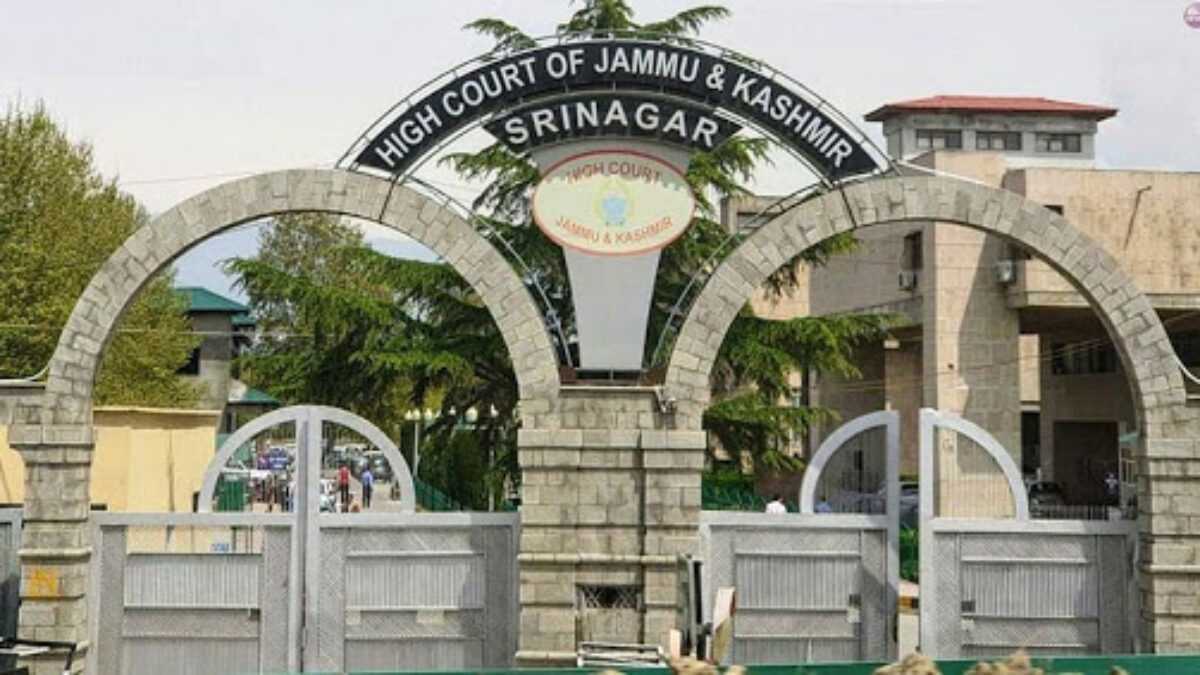
Observing that the primary justification for keeping a man in custody has long since expired, the Jammu and Kashmir and Ladakh High Court has quashed a preventive detention order, ruling that continued detention is completely unnecessary.
In a ruling delivered on May 15, Justice Sanjay Dhar declared that because the petitioner’s detention was directly tied to maintaining security during the 2025 Amarnath Yatra—an annual pilgrimage that concluded nearly nine months ago—there is no longer any valid reason to keep him in custody.
“It appears that the petitioner has been subjected to preventive detention because of the Shri Amarnathji Yatra that was to take place in the year 2025. Since the Yatra period is long over, the reason for keeping the petitioner in preventive detention has vanished by now, thereby rendering the need for the petitioner’s preventive detention unnecessary,” the Court observed.
Behind the Detention Order
The case dates back to April 30, 2025, when the Ganderbal district magistrate issued a preventive detention order against the petitioner. The executive authority had placed him under custody under Section 8 of the Public Safety Act (PSA) to prevent him from participating in activities deemed prejudicial to state security during the Amarnath Yatra.
The Amarnath Yatra is a highly significant annual Hindu pilgrimage to the sacred Amarnath cave situated in the Himalayas of Jammu and Kashmir. Last year, the pilgrimage took place from July 3 to August 9.
The state authorities justified the action by claiming the man demonstrated a consistent ideological alignment with terrorist and separatist elements, and was actively glorifying militants and inciting local youth.
Vague Allegations Defeat Constitutional Safeguards
Beyond the expired timeframe of the Yatra, the High Court found severe procedural and constitutional flaws in the detention order itself. Justice Dhar ruled that the grounds presented by the state were “vague, cryptic and lacking in material particulars.”
According to the Court’s findings, the detention files failed to mention:
- Specific locations where the alleged meetings took place.
- The identities of the alleged terrorists, extremists, or separatists the petitioner supposedly aligned with.
- The specific dates or periods when these interactions allegedly occurred.
The Court emphasized that Article 22(5) of the Constitution of India mandates that each ground of detention must be individually and clearly specified. Without these crucial details, it is impossible for a detainee to understand the allegations and build an effective legal challenge.
“Vagueness of grounds of detention strikes at the root of the subjective satisfaction of the detaining authority, thereby vitiating the order of detention,” the Court stated.
Arguments in Court
During the proceedings, the petitioner’s counsel, Advocate G N Shaheen, strongly contended that the police had fabricated the allegations merely to justify an illegal detention. Shaheen argued that the state failed to provide the petitioner with the actual material and evidence that formed the basis of his detention, violating essential procedural safeguards under the Public Safety Act.
Conversely, representing the state, General Advocate Waseem Gull argued that the detention was justified. Gull maintained that the executive’s decision was a preventive measure based on a “reasonable predilection of future behaviour” drawn from the detainee’s past conduct. He asserted that all grounds of detention and supporting materials had been properly handed over, read, and explained to the petitioner.
Ultimately, the High Court rejected the state’s stance, pointing out that vague assertions cannot legally support deprivation of liberty, especially when the event that triggered the security concern has long passed.




