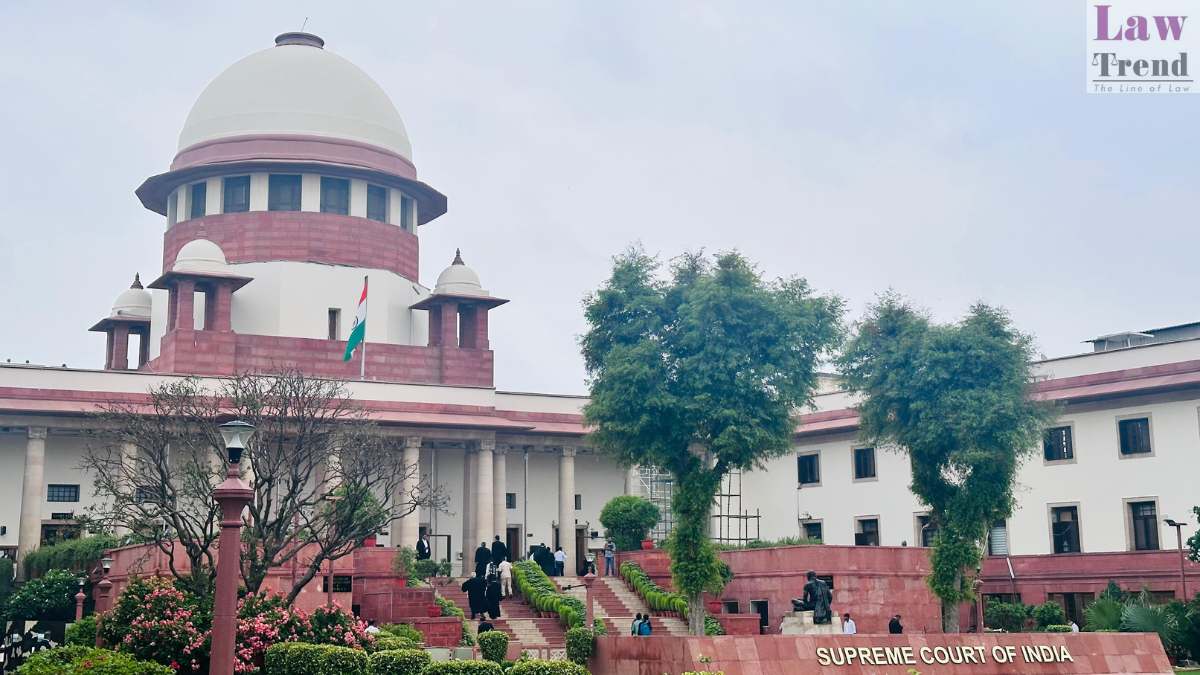
The Supreme Court has held that the 2018 closure of the Rehbar-e-Taleem (ReT) Scheme in Jammu and Kashmir cannot retrospectively impair the rights of candidates who had already been placed in select panels. The Court directed the Union Territory of Jammu and Kashmir to issue formal engagement orders to such candidates within eight weeks, subject to available vacancies and their position in the select panel.
A Bench of Justice J.K. Maheshwari and Justice Atul S. Chandurkar modified the judgment of the High Court of Jammu & Kashmir and Ladakh, which had upheld the closure of the ReT Scheme but carved out certain exceptions for candidates whose selection process had progressed before the closure order.
The Supreme Court clarified that its directions are issued in the peculiar facts of the case by invoking Article 142 of the Constitution and shall not be treated as a precedent. It also made clear that the judgment does not revive the ReT Scheme for any purpose.
Background
The batch of appeals arose from challenges to the closure of the Rehbar-e-Taleem Scheme, which was formally closed by Government Order No. 919-Edu of 2018 dated November 16, 2018.
The ReT Scheme had been launched by the Education Department of the erstwhile State of Jammu and Kashmir through Order No. 396-Edu of 2000 dated April 28, 2000. It was intended to address the shortage of teaching staff at the elementary level, particularly in underserved and remote areas.
The Supreme Court noted that the scheme aimed to ensure accessible, accountable and quality education by creating a direct link between schools and the local community. The judgment records that the scheme sought to provide “constant interface and interaction with the community to secure universal enrollment and to check the hindrance of drop-outs” in areas where educational facilities were scarce.
By the 2018 closure order, the Government formally closed the ReT Scheme and cancelled or withdrew all advertisement notices and panels where no engagement orders had been issued.
High Court’s Decision
The High Court had upheld the constitutionality of the closure order but held that certain categories would not be affected by it.
It held that select panels which had been acted upon and where formal engagement orders had been issued would remain unaffected. It further held that the closure order would not override judgments passed or to be passed by the Court holding candidates entitled to engagement.
The High Court also protected cases where select panels had been approved and the aggrieved parties had approached the Court before the panels could be acted upon.
The Union Territory challenged these exceptions, particularly the directions relating to candidates whose cases were pending in litigation. Some candidates, on the other hand, challenged the upholding of the closure order itself.
Arguments Before The Supreme Court
Appearing for the Union Territory, Additional Solicitor General K.M. Natraj submitted that after the enactment of the Right of Children to Free and Compulsory Education Act, 2009, and the regulations framed by the National Council for Teacher Education, appointments under the ReT Scheme could no longer survive.
It was argued that the qualifications prescribed under the ReT Scheme fell short of the statutory requirements under the RTE Act and NCTE regulations.
On the other side, senior counsel appearing for the candidates argued that several persons had already been appointed from the same select panels involved in the litigation. It was submitted that the claims of the candidates before the Court required consideration on the basis of parity and equal treatment.
The State placed on record that 39,585 ReT teachers had been appointed between 2002 and 2018. In relation to the 74 advertisements involved in the present appeals, 2,349 posts had been advertised and 1,679 candidates had appeared in select panels. Out of them, 1,538 candidates had been appointed.
The State further stated that in cases where objections or litigation were pending, engagement orders could not be issued before the closure order.
Court’s Analysis
The Supreme Court found that the sole reason for non-issuance of engagement orders to the candidates before it was the pendency of litigation as on the date of the closure order.
The Court held that such classification failed, prima facie, when tested on Article 14 of the Constitution.
The Bench observed:
“This classification, prima facie, fails when tested on the anvil of Article 14 of the Constitution of India.”
Referring to the well-settled test for valid classification, the Court said that any classification by the State must be based on an intelligible differentia and must have a rational nexus with the object sought to be achieved.
The Court noted that the object of the closure order, as stated by the State, was to address concerns relating to fake mark-sheets, fabricated degrees and forged documents, which had allegedly led to deterioration in the standard of education.
Against this object, the Court found no rational basis to distinguish between candidates against whom litigation was pending and those against whom no litigation was pending.
The Bench held:
“Mere pendency of litigation concerning a candidate is an extraneous circumstance and cannot, by any stretch of imagination, be made a basis for such classification.”
At the same time, the Court emphasized that after the introduction of the RTE Act, the minimum qualifications prescribed by NCTE under Section 23 of the Act must be complied with for appointment of new teachers as well as by those already appointed.
The Court relied on its recent judgment in Anjuman Ishaat-E-Taleem Trust v. The State of Maharashtra & Ors., where it was held that passing the Teachers’ Eligibility Test is a mandatory condition for appointment as a teacher for Classes I to VIII in schools covered by the RTE Act.
Quoting from that decision, the Court reiterated that TET is “not a mere procedural requirement but forms an essential part of the minimum qualification criteria.”
It further quoted the ruling to state that TET is “a constitutional necessity flowing from the right to quality education under Article 21A.”
State’s Proposal
During the hearing, the State submitted a proposal stating that where select panels were approved but final appointment orders were yet to be issued, such cases would not be affected by the closure of the ReT Scheme.
The proposal stated that appointments would be made within three months, subject to the outcome of pending litigation and eligibility.
It further proposed that such appointees would be required to acquire minimum qualifications under the RTE Act, including clearing the TET, within two years and two attempts.
The candidates suggested certain modifications, including that the word “approved” be read as “prepared” to avoid further litigation, and that the two-year/two-attempt condition be made more liberal because TET was not being conducted regularly every year by the State.
Supreme Court’s Directions
Invoking Article 142 of the Constitution, the Supreme Court directed that the closure order dated November 16, 2018 shall not retrospectively impair the rights of candidates placed in select panels.
The Court directed the State to issue formal engagement orders to candidates in the select panels within eight weeks, according to their position in the panel and subject to available vacancies.
The Court further directed that candidates appointed under these directions must acquire the minimum qualifications prescribed under NCTE regulations and notifications, including qualifying TET, within three years and three attempts from the date of engagement or appointment.
The State was also directed to conduct TET annually.
The Court held that after acquiring the required qualifications and passing TET within the prescribed period, the services of such appointees shall be regularized on completion of two years of service thereafter.
The same requirement was made applicable to similarly situated candidates who had already been appointed from select panels under the ReT Scheme after August 23, 2010, the date of the NCTE notification prescribing minimum qualifications, but who did not possess the prescribed qualifications including TET.
Seniority And Regularization
On seniority, the Court directed that once candidates or appointees acquire the prescribed qualifications and qualify TET, their seniority shall be redrawn and determined by the competent authority by maintaining their respective positions in the select panels.
The Court clarified that seniority shall not be affected by the date of appointment, joining or regularization.
The Bench directed:
“The inter se seniority shall also be determined accordingly.”
However, the Court also made clear that candidates or appointees, including those already appointed and regularized, who do not acquire the required qualifications and fail to qualify TET within the prescribed period, may have their services dispensed with by the State.
The Court observed:
“The mandate of Article 21-A of the Constitution of India cannot be left at altar even while rendering complete justice invoking Article 142 of the Constitution of India.”
Such candidates, the Court clarified, would not have any claim to seniority or regularization under the directions issued in the judgment.
Directions To Apply In Rem
The Supreme Court held that its directions shall apply in rem to candidates already appointed pursuant to the 74 advertisements involved in the proceedings, even if they were not parties before the Court.
The Court directed that the judgment be widely publicized and that all candidates and appointees be informed of the directions so that they may take steps to acquire the minimum qualifications under NCTE regulations and notifications, if they have not already done so.
The directions will also apply to candidates litigating before any Court, provided their cases were filed before the date of the Supreme Court judgment.
However, the Court clarified that candidates who had not already filed cases in any Court would not acquire any fresh cause of action because of the judgment.
No Revival Of ReT Scheme
The Supreme Court expressly clarified that its judgment shall not be treated as reviving the ReT Scheme.
The Bench said:
“At the cost of repetition, it is clarified that this judgment shall not be construed as reviving the ReT Scheme for any purpose whatsoever, nor shall it be interpreted so as to create or confer any right upon candidates who were not part of a prepared select panel or who failed to approach the Court timely.”
It added that the directions were issued in the peculiar facts and circumstances of the case under Article 142 and shall not be treated as precedent.
Court Flags Low Honorarium
The Supreme Court also noted that teachers appointed under the scheme were receiving remuneration of ₹3,000, which was pointed out during arguments as being too low, especially when minimum wages were higher.
The Court observed:
“It is hoped and trusted that the State Government shall realize the aforesaid situation, and for dispensation of quality education, they shall take a decision on their discretion for enhancing the honorarium.”
It directed the State Government to apply its mind to the prevailing situation and take an appropriate decision on revision of honorarium as deemed fit.
Decision
The Supreme Court modified the High Court judgment to the extent of its directions. It disposed of all pending applications, including impleadment and intervention applications, and made no order as to costs.
Case Title: Union Territory of Jammu and Kashmir and Ors. v. Saba Wani, with connected matters
Coram: Justice J.K. Maheshwari and Justice Atul S. Chandurkar
Date: April 30, 2026