

Once Election Petition Is Finally Allowed, Prescribed Authority Becomes ‘Functus Officio’: Supreme Court Dismisses Appeal in Gram Panchayat Election Dispute
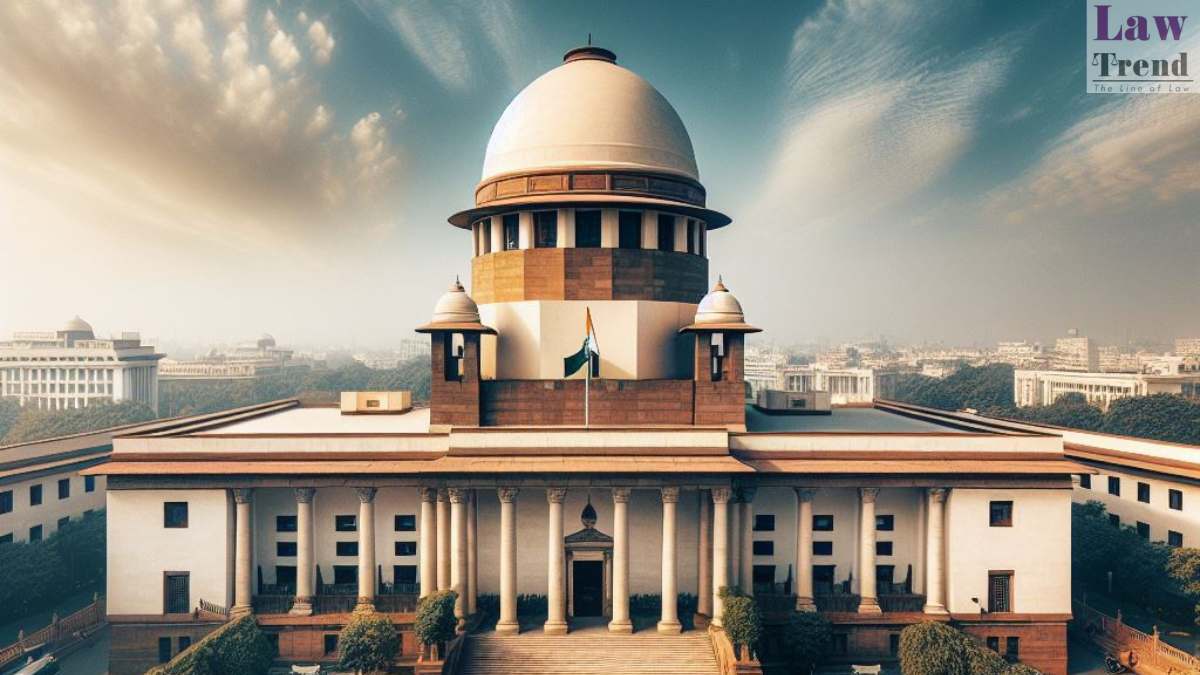

The Supreme Court of India, in a judgment delivered by a Bench of Justice Aravind Kumar and Justice Prasanna B. Varale, has dismissed an appeal challenging an Allahabad High Court decision that set aside a recounting order in a Gram Panchayat Pradhan election. The Court held that once a Prescribed Authority passes an order granting final relief in an election petition, it becomes functus officio and loses jurisdiction to pass any further orders, such as declaring a new result after a subsequent recount.

Background of the Case

The dispute arose from the 2021 Three-Tier Panchayat (Pradhan) Election for Parauli Sughapur Village in Uttar Pradesh. The Appellant, Urmila Devi, lost the election to Respondent No. 3, Manoj Devi, by a narrow margin of two votes. Alleging procedural discrepancies and irregularities during the counting process—specifically violations of Rules 104, 105, and 106 of the U.P. Panchayat Election Rules, 1994—the Appellant filed an Election Petition under Section 12C of the Uttar Pradesh Panchayat Raj Act, 1947.

On November 5, 2022, the Sub-Divisional Officer (SDO)/Prescribed Authority allowed the petition and ordered a recount, citing significant discrepancies between Election Forms 45 (Part-1) and 46 (Part-2). Following the recount, the Appellant was declared the winner by 12 votes on March 17, 2023.

Arguments of the Parties

Appellant’s Contentions: Represented by Mr. Ashok Anand, the Appellant argued that the High Court erred by ignoring factual findings of irregularities. It was contended that the recount justified the petition as the Appellant was found to have actually won. The Appellant further argued that the Respondent had an alternative remedy of filing a Revision under Section 12C(6) of the Act and that the High Court should not have interfered in a process ensuring electoral transparency.

Respondent No. 3’s Contentions: Counsels Mr. Kaushal Yadav and Mr. Nandlal Kumar Mishra argued that the SDO’s order dated November 5, 2022, was a final order. By “allowing” the petition and simultaneously ordering a recount, the SDO became functus officio. They relied on the principle that once a tribunal finally decides a matter, it cannot reopen or continue proceedings. They also argued that the recount was ordered on vague grounds, violating the sanctity of the secret ballot.

READ ALSO  Long-Term Consensual Relationship Started When Victim’s Husband Was Alive Cannot Be Termed Rape on False Promise of Marriage: Kerala HC

State’s Position: The State Authorities (Respondents 1, 2, and 21) maintained that the Prescribed Authority acted within its powers under Rule 4(3) to ensure a fair result, citing precedents where recounting was permitted due to material irregularities.

The Court’s Analysis

The primary legal question was whether the SDO’s order on November 5, 2022, was an interim direction or a final order. The Supreme Court emphasized the scheme of Section 12-C of the Uttar Pradesh Panchayat Raj Act, 1947, noting that only the Prescribed Authority has the power to set aside an election.

READ ALSO  Compromise/Marriage with Accused Can't be Mandated as a Condition for Grant of Bail: Allahabad HC

The Court observed:

“Once the Prescribed Authority passes an order granting final relief, it is well settled in law that it ceases to have jurisdiction to pass any further order in relation to the election, as it would become functus officio in respect of the matter adjudicated.”

The Bench relied on the precedent in Hari Vishnu Kamath v. Syed Ahmad Ishaque and Ors. (AIR 1955 SC 233). It also approved the reasoning of the Allahabad High Court in Parshuram vs. State of U.P. and Ors. (2022), which stated:

“Once the election petition has itself been decided the Prescribed Authority becomes ‘functus officio’ and even if after re-counting of votes… the same would be meaningless as the Authority… would be powerless to set aside the election… considering that the said power can only be flow out from the order passed by an authority in an election petition, who is no longer having the election petition before it.”

Distinguishing this case from the recent ruling in Raj Kumari v. Asha Devi (2024), where a recounting order was deemed “interim” because it specifically fixed a date to apprise the results back to the authority, the Court found that the SDO in the present case had “allowed” the petition and “rejected” the opponent’s statement outright on November 5, 2022. This language rendered the order final.

Decision of the Court

The Supreme Court concluded that the Prescribed Authority, having become functus officio on November 5, 2022, could not have passed the subsequent order on March 17, 2023, declaring the Appellant as the winner.

READ ALSO  Whether the scope of the word “goods” as defined under Section 2(m) of the UP VAT Act should be limited to only “taxable goods”? Answers SC

The Court held:

“The power to set aside election results vests exclusively with the Prescribed Authority, and once it has become functus officio, such power cannot be exercised thereafter.”

Dismissing the appeal, the Apex Court upheld the High Court’s judgment and reiterated the warning to the Prescribed Authority to “remain cautious in future while dealing with election petitions.”

Case Details:

  • Case Title: Urmila Devi v. The State of Uttar Pradesh & Ors.
  • Case No.: Civil Appeal No. 7427 of 2026 (Arising out of SLP (C) No. 9638/2023)
  • Bench: Justice Aravind Kumar and Justice Prasanna B. Varale
  • Date: May 11, 2026

Law Trend
Law Trendhttps://lawtrend.in/
Legal News Website Providing Latest Judgments of Supreme Court and High Court

Related Articles

Latest Articles

