

Non-Deposit of Balance Sale Consideration Within Stipulated Time Renders Specific Performance Decree Inexecutable: Supreme Court
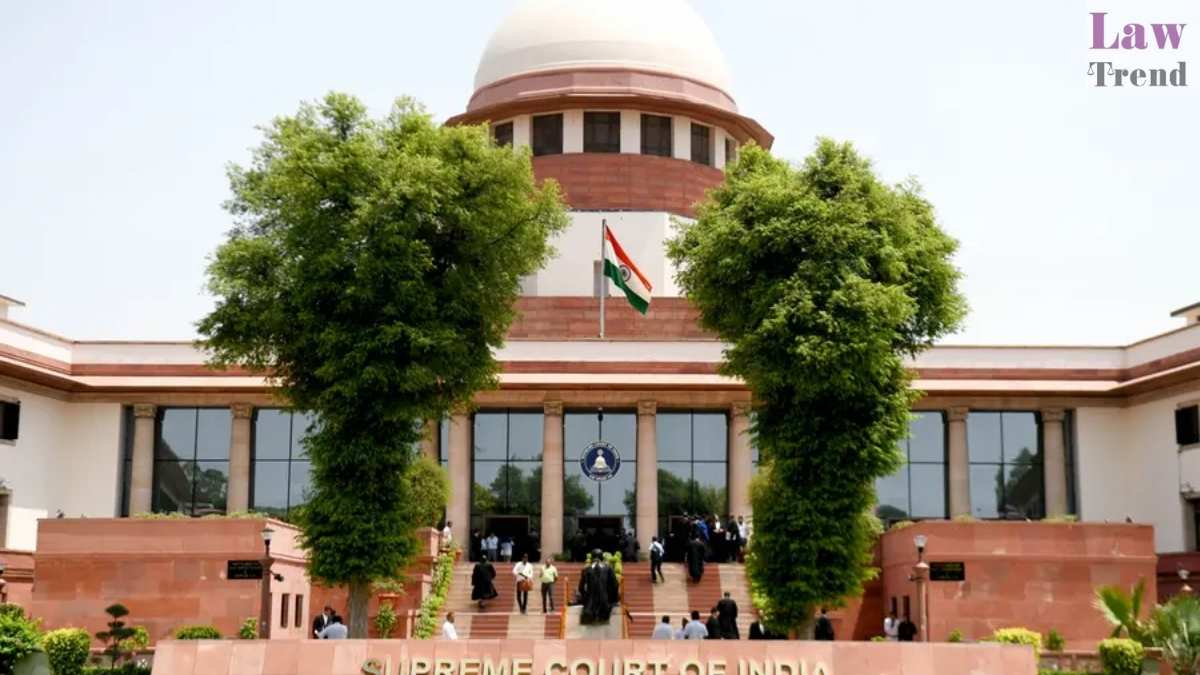

The Supreme Court of India has ruled that a decree for specific performance becomes inexecutable if the decree-holder fails to deposit the balance sale consideration within the time stipulated by the court. The Bench of Justice Pankaj Mithal and Justice S.V.N. Bhatti observed that such a decree is conditional and imposes reciprocal obligations, and failure to comply with the timeline results in the “deemed dismissal” of the suit.

Background of the Case

The dispute originated from an agreement to sell agricultural land admeasuring 12 kanals and 19 marlas in Mewat, Haryana, dated October 19, 2005. The defendant-appellant (Habban Shah) agreed to sell the land to the plaintiff-respondent (Sheruddin) for ₹5,00,000 per acre, receiving ₹80,000 as advance.

When the sale deed was not executed by the agreed date of March 15, 2006, the plaintiff filed a suit for specific performance. On October 31, 2012, the trial court decreed the suit, directing the defendant to execute the sale deed “after receiving the balance sale consideration within the period of three months from the date of this judgment.”

The decree was challenged through first and second appeals, both of which were eventually dismissed by 2017. Although a short-lived interim stay on alienation existed in the first appeal, no stay on the deposit of money was ever granted. The plaintiff failed to deposit the balance amount within the three-month window, eventually depositing ₹6,92,410 only in October 2015 after seeking permission from the Executing Court. The defendant objected, arguing the decree was now inexecutable.

Arguments of the Parties

For the Appellant (Defendant): Senior Counsel Shri Manoj Swarup argued that the decree specifically required the deposit within three months. Since the plaintiff neither deposited the amount nor moved for an extension within that period, the contract stood rescinded under Section 28 of the Specific Relief Act, 1963. He relied on the precedent in Balbir Singh v. Baldev Singh (2025) to assert that the decree had become a “dead letter.”

READ ALSO  Probation Of Offenders Act 1958 Cannot Be Made Applicable To POCSO Cases: Calcutta HC

For the Respondent (Plaintiff): Counsel Shri Divyesh Pratap Singh contended that the plaintiff was always ready and willing. He argued that the delay was due to the pendency of appeals and an interim order. He further claimed that once the Executing Court permitted the late deposit in 2015, the delay stood “condoned” or “extended” by implication.

The Court’s Analysis

The Supreme Court identified the core issue as whether the non-deposit within the stipulated time was fatal to the execution of the decree.

1. Nature of the Decree: The Court noted that a decree for specific performance is in the nature of a preliminary decree and the court does not become functus officio after passing it. However, it is a conditional decree. Justice Mithal observed:

“The conditional decree is self-operative, therefore, non-compliance of any condition leads to automatic dismissal of the suit… the suit for specific performance of a contract stands automatically dismissed when the conditions under the decree are not complied with.”

READ ALSO  SC Asks Union Of India To Formulate A Scheme For Regulating Funds Of NGOs

2. Section 28 of the Specific Relief Act: The Court clarified that while Section 28 allows a vendor to apply for rescission of the contract upon default, it is not mandatory for the vendor to file such an application for the decree to become inexecutable. Citing Prem Jeevan v. K.S. Venkata Raman (2017), the Court held that the decree vanishes if the deposit is not made in time and no extension is sought.

3. Readiness and Willingness: The Bench emphasized that “readiness and willingness” must be continuous. The Court remarked:

“The plaintiff-respondent having failed to abide by such a condition indicates that he was not actually ready and willing to perform his obligation under the decree which obligation, in essence, took the shape of a condition under the agreement.”

4. Equity and Discretion: The Court highlighted that specific performance is an equitable and discretionary relief. It stated that it would be inequitable to condone a delay of years, especially when land prices increase manifold. The Court held that the “hyper-technical approach” mentioned in recent cases like Dr. Amit Arya v. Kamlesh Kumari (2025) did not apply here because the plaintiff showed a “positive act” of non-compliance by not seeking an extension for years.

READ ALSO  Offence Under Section 498A IPC Valid Despite Irregular Interfaith Marriage: Kerala HC

The Decision

The Supreme Court set aside the High Court’s order dated March 24, 2025, and the Executing Court’s order. It upheld the defendant’s objections and directed the execution proceedings to be closed.

To balance the equities, the Court ordered:

  • The defendant-appellant must refund the earnest money of ₹80,000 to the plaintiff with 8% simple interest per annum from October 19, 2005.
  • If unable to refund, the defendant may sell 1/2 acre of the land to the plaintiff or a third party to satisfy the payment within three months.

The Court concluded:

“The decree of specific performance dated 31.10.2012 is rendered inexecutable on account of non-compliance of the condition to deposit the balance sale consideration… and the contract as a whole stand rescinded in terms of Section 28 of the Act.”

Case Details:

  • Case Title: Habban Shah v. Sheruddin
  • Case No.: Civil Appeal No. ___ of 2026 (Arising out of SLP (C) No. 14479 of 2025)
  • Bench: Justice Pankaj Mithal, Justice S.V.N. Bhatti
  • Date: May 6, 2026

Law Trend
Law Trendhttps://lawtrend.in/
Legal News Website Providing Latest Judgments of Supreme Court and High Court

Related Articles

Latest Articles

