

Lok Adalat Cannot Reject Final Report or Take Cognisance: Allahabad HC Quashes Complaint Proceedings and Summoning Order
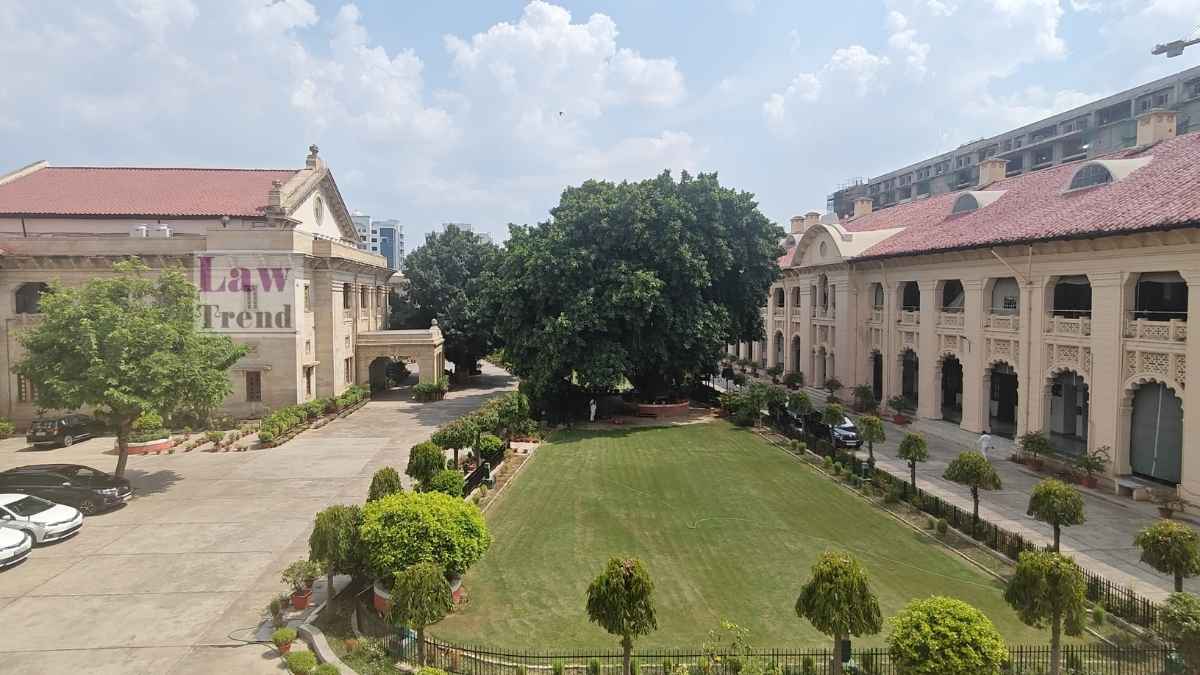

The Allahabad High Court has quashed a summoning order and the entire proceedings of a complaint case, ruling that a Lok Adalat lacks the jurisdiction to perform judicial functions such as rejecting a police Final Report (FR) or directing that a protest petition be treated as a complaint. The Court emphasized that Lok Adalats are purely conciliatory forums and cannot decide cases on merits or pass judicial orders in the absence of a settlement between parties.

Background

The case originated from NCR No. 141/2015, registered at Police Station Atarra, District Banda. Following an investigation, the police submitted a Final Report (No. Nil/2016) on December 10, 2016, stating that no case was made out. The complainant filed a protest petition against this report. On December 9, 2017, while sitting in a National Lok Adalat, the Judicial Magistrate of Banda passed an order rejecting the police’s Final Report and directing that the matter be treated as a complaint case.

Consequently, on March 28, 2024, a summoning order was issued against the applicants—Smt. Mayya @ Prem Kumari, Smt. Ranjana, and Km. Bandana—under Sections 323, 504, and 506 of the I.P.C. in Complaint Case No. 725/नौ/2017. The applicants challenged both the Lok Adalat’s order and the subsequent summoning order before the High Court under Section 528 of the Bharatiya Nagarik Suraksha Sanhita (BNSS).

Arguments

The counsel for the applicants argued that the Lok Adalat exceeded its jurisdiction by passing a judicial order. They relied on the Supreme Court judgment in State of Punjab and Ors. Vs. Ganpat Raj (2006) 8 SCC 364 to contend that Lok Adalats cannot adjudicate matters.

The learned A.G.A. for the State also submitted that the matter was decided in Lok Adalat in a manner that was not in accordance with the law laid down by the Hon’ble Supreme Court.

READ ALSO  'No Authority to Interfere in Bar Association Elections': Allahabad High Court Stays Bar Council's Order: 

Court’s Analysis

Justice Achal Sachdev examined the scope of the Legal Services Authorities (LSA) Act, 1987. The Court noted that under Section 21 of the Act, every award of a Lok Adalat is deemed a decree of a civil court and is final and binding. However, the Court clarified that these provisions apply when a settlement is reached.

The Court observed:

“A Magistrate, while sitting as a member of Lok Adalat, has a limited jurisdiction regarding matters before him. The primary role of a Lok Adalat is to facilitate a settlement between the parties on the basis of their consent regarding the dispute. If no compromise is reached, the Lok Adalat must return the case to the regular court.”

The Court further stated:

“It cannot perform judicial functions like rejecting an final report or deciding to treat it as a complaint case. Any judicial order rejecting a report and switching to a complaint procedure must be made by the regular court where the case was originally pending.”

Referencing the Supreme Court’s decision in Estate Officer vs. Colonel HV Mankotia (2021 SCC ONLINE SC 898), the High Court reiterated that Lok Adalats are “purely conciliatory forums, not adjudicatory ones.” The Court held that if no compromise is arrived at, Section 20(5) of the LSA Act mandates that the record be returned to the referring court for disposal in accordance with the law.

READ ALSO  इलाहाबाद हाई कोर्ट ने आदेश की अवहेलना पर लखनऊ पुलिस कमिश्नर को अवमानना नोटिस जारी किया

The Court pointed out that acts such as “rejecting an FR” or “taking cognisance” are judicial functions that must be performed by a Magistrate in their regular court capacity. The Court remarked that since the initial order dated December 9, 2017, was passed without jurisdiction, it was a “jurisdictional nullity” that tainted every consequential step, including the summoning order.

Decision

The High Court found that the Lok Adalat in this case assumed a judicial role and ignored the absence of consensus. Justice Sachdev held:

READ ALSO  Once the Conviction Is Sustained Under Section 376 AB, IPC the Fixed Term Punishment Could Not Be for a Period of Less Than 20 Years: SC

“In the eyes of law and ratio given by the Supreme Court in a catena of judgements, the impugned cognizance/summoning order dated 28.03.2024, impugned order dated 09.12.2017 as well as entire proceedings… are not sustainable in law and are hereby quashed.”

The application under Section 528 BNSS was allowed, and the proceedings against the applicants were set aside.

Case Details:

  • Case Title: Smt. Mayya @ Prem Kumari And 2 Others Versus State of U.P. and Another
  • Case No.: APPLICATION U/S 528 BNSS No. 7481 of 2025
  • Bench: Justice Achal Sachdev
  • Counsel for Applicant(s): Markandey Rai, Pradeep Kumar Rai, Sandeep Kumar Rai
  • Counsel for Opposite Party(s): Anil Kumar Dubey, G.A., Ram Milan Dwivedi
  • Date: April 23, 2026

Law Trend
Law Trendhttps://lawtrend.in/
Legal News Website Providing Latest Judgments of Supreme Court and High Court

Related Articles

Latest Articles

