

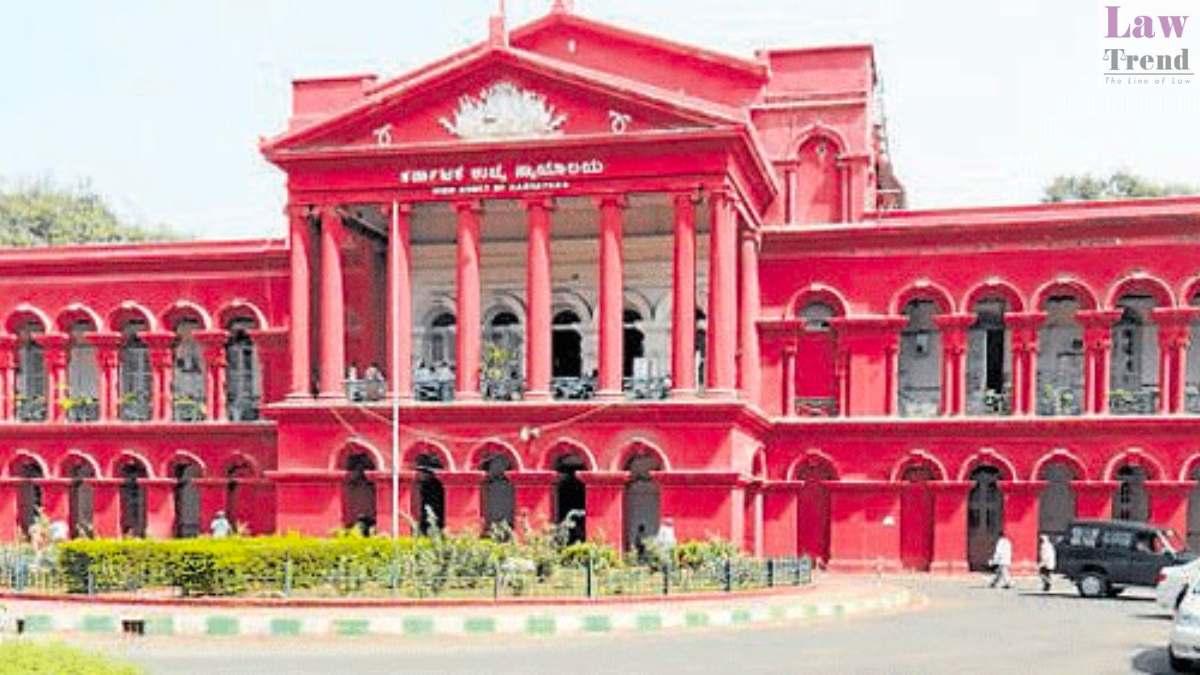
State departments and administrative authorities in Karnataka must now systematically record and publish online all disciplinary measures and fines levied against public information officers who fail to comply with the Right to Information Act, the Karnataka High Court has ruled.
In an order issued on September 23, Justice Suraj Govindaraj instructed public authorities to upload year-wise records of penalties and disciplinary steps taken against errant Public Information Officers (PIOs) directly onto their official websites. The court also ordered the Karnataka State Information Commission (KSIC) to design a standardized template to ensure that such regulatory data is captured and maintained uniformly across government bodies.
Standardised Formats and Proactive Disclosure
Explaining the rationale behind the directive, Justice Govindaraj observed that information relating to the functioning and enforcement of the transparency law should be captured at its origin rather than reassembled from separate case records whenever an application is filed. The judge stated that public institutions should prioritize organized record-keeping that enables prompt retrieval and proactive public disclosure, rather than having officials expend considerable administrative time recreating data that could easily be archived in a structured system.
Statutory Mandates for Annual Reporting
The ruling highlighted existing obligations under Section 25(3) of the RTI Act, which requires the KSIC to assemble a detailed annual report. That statutory report must document the overall number of requests submitted, the frequency of rejections along with the specific legal exemptions cited, the volume and results of appeals, fees collected from citizens, institutional reform proposals, and specific particulars of disciplinary actions initiated against public officers for non-compliance.
RTI Applicant Relieved of Explaining Motive
The court issued these directions while partly allowing a petition brought by transparency activist Ramesh Babu N. Babu had approached the high court after a designated PIO refused to provide information he had requested, arguing that the KSIC did not store the material in the specific format Babu had requested.
Addressing that refusal, the bench emphasized that Section 6(2) of the RTI Act explicitly protects applicants from having to justify why they want public records or to submit personal background details beyond standard contact information. Consequently, Babu was under no legal duty to prove personal interest or reveal his intentions.
Partly granting the plea, the court ordered the KSIC to inspect its existing documentation and provide the accessible details to Babu within eight weeks, in accordance with the provisions of the law. The commission was granted an outer limit of 60 days to secure and transmit any remaining information that must be collected from other government departments.




