

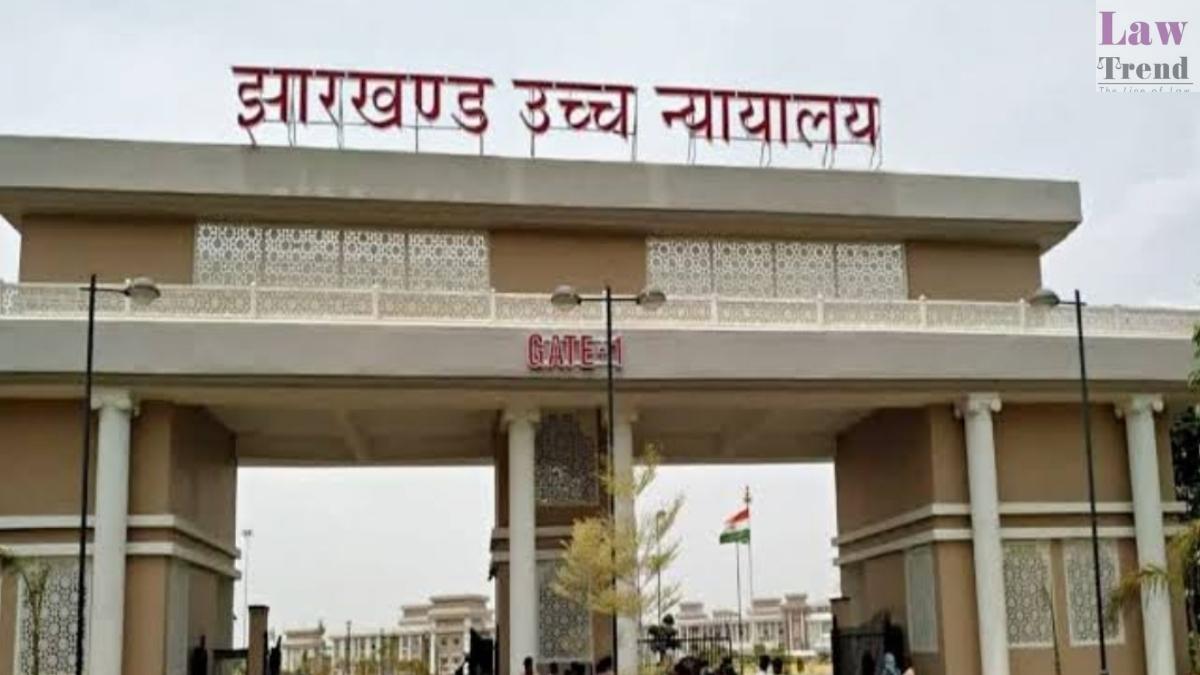
The Jharkhand High Court has directed the state Criminal Investigation Department to register a first information report and investigate alleged malpractice in the selection process for secondary school teachers.
In an order issued on August 29, Justice Deepak Roshan instructed the Chief Secretary of Jharkhand to immediately lodge a criminal complaint against unidentified individuals who compromised the integrity of the examinations. The court ruled that any appointments finalized by the Jharkhand Staff Selection Commission will remain subject to the outcome of the criminal investigation.
Justice Roshan noted that educators play a foundational role in preparing future generations, who may eventually occupy key public, private, or constitutional offices. Emphasizing that safeguarding the examination system serves the broader public interest, the court stated that those responsible for undermining the process must face justice to preserve candidates’ trust in public institutions.
The court also directed the commission to publish and communicate the scores of all 2,819 candidates slated for the re-examination within two weeks, while instructing authorities to pursue departmental proceedings against anyone found complicit in the irregularities.
Scrutiny Over Commission Conduct And Unexplained Numbers
The high court criticized the commission for failing to pursue criminal charges despite acknowledging malpractice. The bench observed that the recruiting body appeared to avoid prosecution to shield culpable individuals, noting that responsibility could lie with internal staff, the private vendor hired to manage the online testing centres in Ranchi, or the computer centres themselves.
The court also held that the commission acted as a judge in its own cause by ordering a re-examination based solely on an internal report from the private testing vendor, contrary to principles of natural justice.
The selection process had drawn legal challenges from candidates after the commission announced on April 23, 2026, that 2,819 candidates would have to retake Paper-II on May 8 due to technical faults, unauthorized logins, and suspicious activity. Although affected candidates sought a judicial stay, a division bench declined to stall the test on May 7, allowing the re-examination to proceed.
Data submitted by the commission revealed that 2,355 candidates sat for the re-test while 482 were absent, bringing the total to 2,837. Advocate Rupesh Singh, representing the petitioners, argued that the commission had unlawfully inserted 18 additional candidates into the re-examination pool under the pretense of testing the original 2,819 candidates. The court observed that the commission failed to provide pleadings or documentation supporting its explanation for the discrepancy.
Origin Of The Dispute
The initial computer-based testing took place across multiple dates between January 15 and February 22 for appointments to teach classes 9 through 12. The test comprised Paper-I, which served as a qualifying test, and Paper-II, which determined rank and merit.
Authorities subsequently informed candidates of unauthorized multiple logins and irregular system access. On April 15, the commission issued its final answer keys after reviewing objections. However, petitioners approached the high court claiming the commission withheld their individual response sheets and final keys while releasing them to other applicants, thereby denying them the right to contest provisional answers.
Representing the state, advocate Sanjoy Piprawall appeared during the hearings. While the petitioners cautioned that systemic vulnerabilities would persist without an independent probe, the court declined to cancel the overall recruitment drive, reasoning that candidates had already sat for the re-test under earlier judicial orders. Instead, the bench concluded that an expedited inquiry by the state CID would best protect innocent applicants and deter future examination fraud.




