

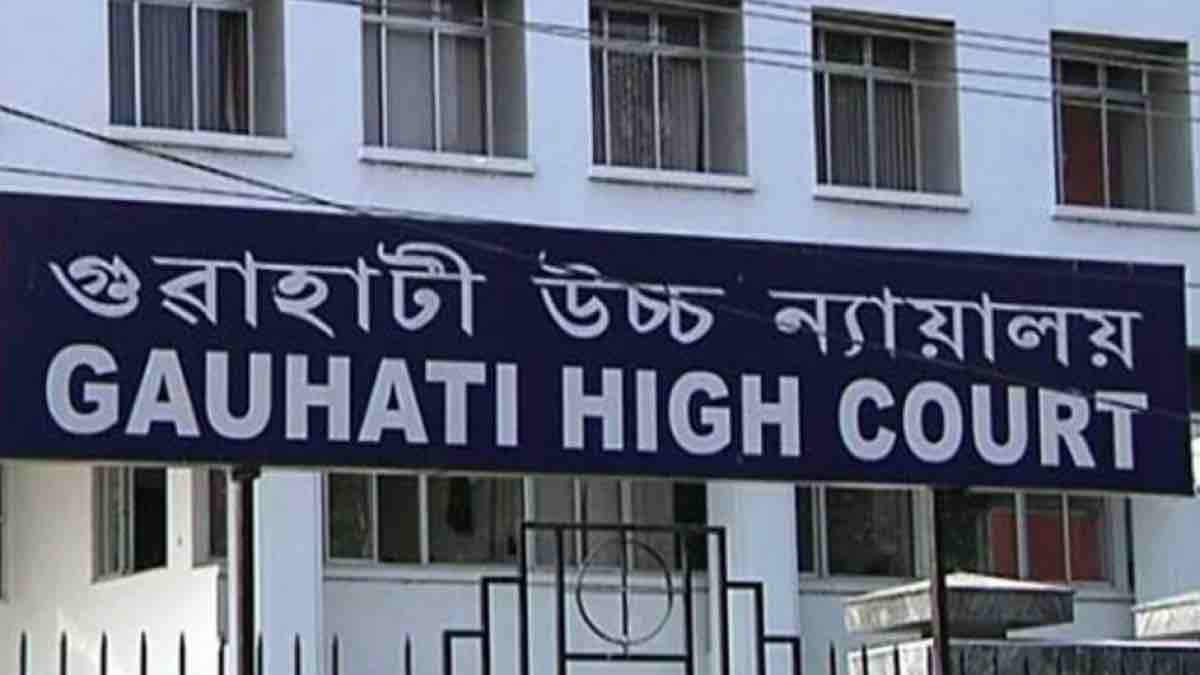
The Gauhati High Court has dismissed a writ petition seeking compassionate appointment more than 31 years after the petitioner’s father died in harness. The Court held that a claimant who stays silent for decades after an initial application loses the right to discretionary relief under Article 226 of the Constitution.
Justice Manish Choudhury found that the petition suffered from “abnormal delay and laches.” He also held that communications exchanged among the authorities could not extend the cause of action.
Background
The petitioner’s father, Makibur Rahman, was an Assistant Teacher at Kaharpur Lower Primary School. He died in harness on 23 June 1995, leaving behind eight sons, two daughters and two surviving wives.
According to the petitioner, he applied for compassionate appointment to the Deputy Inspector of Schools, Mangaldoi, within a year of his father’s death. The application was forwarded to the Director of Secondary Education, Assam, by an office letter dated 4 March 1996.
No positive response came between 1996 and 2023. On 30 August 2023, the petitioner submitted a fresh representation to the District Commissioner, Darrang. On 7 December 2023, the District Commissioner issued a Next-of-Kin Certificate listing him among the deceased’s eleven next of kin. The District Level Committee took up his case at its meeting on 16 December 2023 and decided to forward it to the Government for further action.
Arguments
Advocate A.A. Dewan, appearing for the petitioner, relied on the Supreme Court’s decision in Canara Bank vs. Ajithkumar G.K., 2025 INSC 184. He argued that lapse of time is a major ground for denial only where a claim is lodged belatedly. Because the petitioner had applied immediately after his father’s death, he submitted, delay could not be a ground for rejection.
Standing Counsel A. Phukan appeared for the Elementary Education Department (respondent nos. 1, 2, 4 and 5). Junior Government Advocate S. Konwar appeared for respondent nos. 3 and 6.
Court’s Findings on Delay in Compassionate Appointment
The Court noted that after the initial application, the authorities did not take up the petitioner’s case for more than 27 years, and that he waited throughout in the expectation of a favourable decision. Rejecting that approach, the Court observed:
“Admittedly, the petitioner kept quiet for more than twenty-seven years to submit his representation in the year 2023 on the premise that there were exchange of some communication among the respondent authorities. Such exchange of communication cannot be held to have extended the cause of action.”
The Court relied on Umesh Kumar Nagpal vs. State of Haryana, [1994] 4 SCC 138, and State of West Bengal vs. Debabrata Tiwari, [2025] 5 SCC 712. It noted that, under Debabrata Tiwari, prolonged delay by either the applicant or the authorities dilutes the sense of immediacy, and that a claim may not be entertained after a considerable lapse of time.
The Court observed that the purpose of the policy is to help the family tide over a sudden crisis, and added:
“Mere death of an employee in-harness does not entitle his family to such source of livelihood. The compassionate appointment is not a vested right which can be extended at any time after the death of a government servant.”
The Court also described compassionate appointment as an exception to the rule that public appointments must follow the principles of Articles 14 and 16 of the Constitution.
The Court pointed out that the petitioner had done nothing further after his 1995 application until 2023, and had approached the Court more than 30 years after his father’s death. It held:
“This Court is of the considered view that such an approach, after prolonged delay, disentitles the petitioner to the discretionary relief under Article 226 of the Constitution of India.”
It found that, on these facts, Ajithkumar G.K. was of no assistance to the petitioner.
Outcome
Holding that the petition was “found to have been suffered from abnormal delay and laches”, the Court dismissed it with no order as to costs.
Case Title: Md Samsuddin Ahmed vs. The State of Assam and 5 Ors.
Case No.: WP(C)/5515/2025
Bench: Justice Manish Choudhury
Date: 11.11.2026


