

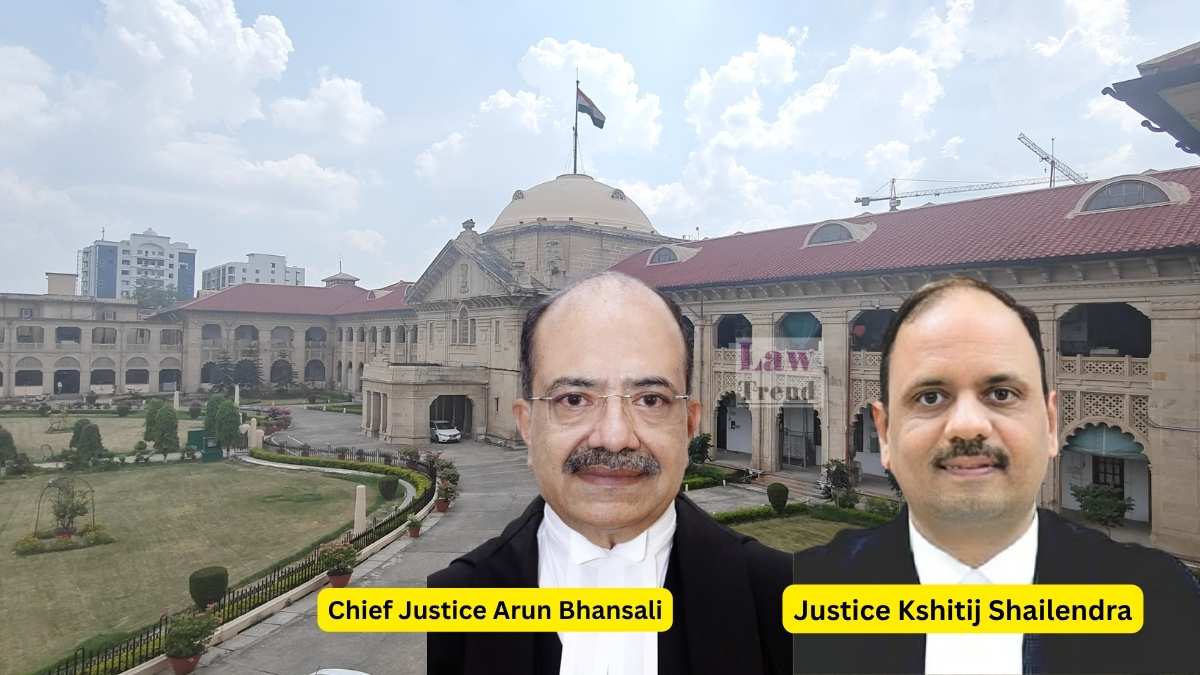
The Allahabad High Court has set aside a 159-page Commercial Court order that upheld an arbitral award against Penguin Random House India Private Limited in a commercial lease dispute. The High Court held that despite its length, the order was only a “summary disposal” of the objections filed under Section 34 of the Arbitration and Conciliation Act, 1996.
A Bench of Chief Justice Arun Bhansali and Justice Kshitij Shailendra allowed Penguin Random House’s appeal under Section 37 of the Act and sent the matter back to the Commercial Court, Gautam Budh Nagar, for a fresh decision.
Background
Mindmill Software Limited first let a commercial premises to Penguin Random House under an unregistered lease dated 28.03.2008, for three years from 01.04.2008. While that lease was still running, the parties signed a registered lease dated 24.06.2009 for the same premises. It ran from 24.06.2009 to 23.05.2010, at a rent of ₹5 lakh per month.
Clause 11 of the 2009 lease dealt with “overholding”. It provided that if the lessee stayed in possession after the lease expired without the lessor’s written permission, it would have to pay damages or mesne profits of ₹50,000 per day.
Penguin Random House did not hand over possession when the lease ended on 23.05.2010. The respondent kept raising bills at ₹5 lakh per month, and the appellant paid them up to March 2011. The appellant called these payments rent; the respondent treated them as damages for unauthorised use and occupation.
The respondent appointed a sole Arbitrator on 01.04.2011. In an award dated 05.09.2012, the Arbitrator applied the ₹50,000-per-day rate. He awarded ₹1,04,70,968 for the period from 24.05.2010 to 31.03.2011 and ₹2,10,50,000 for the period from 01.04.2011 to 05.09.2012, with simple interest at 12% per annum. On 08.12.2023, the Commercial Court dismissed the appellant’s Section 34 objections to the award.
Arguments
Senior Advocate Rahul Agarwal, assisted by Advocate Vedant Agarwal, appeared for Penguin Random House. He argued that the Commercial Court had only reproduced the award and the objections without examining the merits. He submitted that the damages ignored Sections 73 and 74 of the Contract Act, 1872, and that because the respondent kept accepting rent, Section 116 of the Transfer of Property Act, 1882 applied: the lease was deemed renewed and Clause 11 did not apply.
He also relied on emails showing that the appellant had tried to vacate in March 2011 and had handed over the keys, which the respondent returned. The appellant eventually surrendered the keys before the Commercial Court on 09.02.2016.
Senior Advocate Rakesh Pande, assisted by Advocate Pranjal Mehrotra, appeared for Mindmill Software. He argued that the Commercial Court had recorded cogent findings, that a court cannot re-appreciate evidence under Sections 34 or 37, and that Section 116 had no application because Clause 11 expressly covered overholding without written permission. In the alternative, relying on Gayatri Balasamy v. ISG Novasoft Technologies Limited, he submitted that the High Court could modify the award if it found the damages wrongly computed.
Court’s Findings on Section 34 Arbitration Act Scrutiny
The Bench found that Clause 11 was not absolute. Whether it applied depended on certain contingencies, and the Arbitrator’s interpretation of it needed to be examined. Under Section 74 of the Contract Act, the Court noted, the ₹50,000 figure could be taken only as the “outer limit” of the damages, not as the figure on which the sum is computed.
The Court then went through the impugned order page by page. It found that pages 6 to 84 only reproduced paragraphs 123 to 345 of the award, and pages 86 to 142 quoted the parties’ written submissions in full. The Court expressed its disapproval:
“The infirmity in the impugned judgment is not merely one of inadequate reasoning, it goes to the very root of the adjudicatory exercise undertaken by the Commercial Court.”
It added:
“It is a fundamental attribute of judicial adjudication that the quality and efficacy of a judgment is determined not by the number of pages it occupies but by the depth of judicial scrutiny, the precision of its reasoning and the manner in which it resolves the controversy brought before the Court.”
The Bench held that the Commercial Court had never examined the legality and quantum of damages under Sections 73 and 74 of the Contract Act, the parties’ conduct, or whether the doctrine of holding over under Section 116 of the Transfer of Property Act applied. The emails, the payments of rent, and the handing over and return of the keys had also gone unexamined.
Relying on Bombay Slum Redevelopment Corporation Private Limited v. Samir Narain Bhojwani, which recognises summary disposal of a Section 34 petition without considering the merits as an exceptional ground for remand, the Court held that the case fell within that category. The disposal was, “notwithstanding length of the order impugned, is only a ‘summary disposal’.”
The Bench said it was not commenting further on the award itself, because doing so might prejudice either party once the matter went back to the Commercial Court.
Outcome
The Court allowed the appeal and set aside the Commercial Court’s order of 08.12.2023 in Arbitration Objection (Case) No. 7 of 2012. It remanded the matter to the Commercial Court, Gautam Budh Nagar, to decide afresh after hearing the parties, with utmost expedition.
The amount deposited by the appellant under the High Court’s order of 01.03.2024 will stay in a fixed deposit on the same terms, subject to further orders of the Commercial Court.
Case Title: Penguin Random House India Private Limited v. Mindmill Software Limited
Case No.: Appeal Under Section 37 of Arbitration and Conciliation Act 1996 No. 34 of 2024
Bench: Chief Justice Arun Bhansali and Justice Kshitij Shailendra
Date: 04.11.2026


