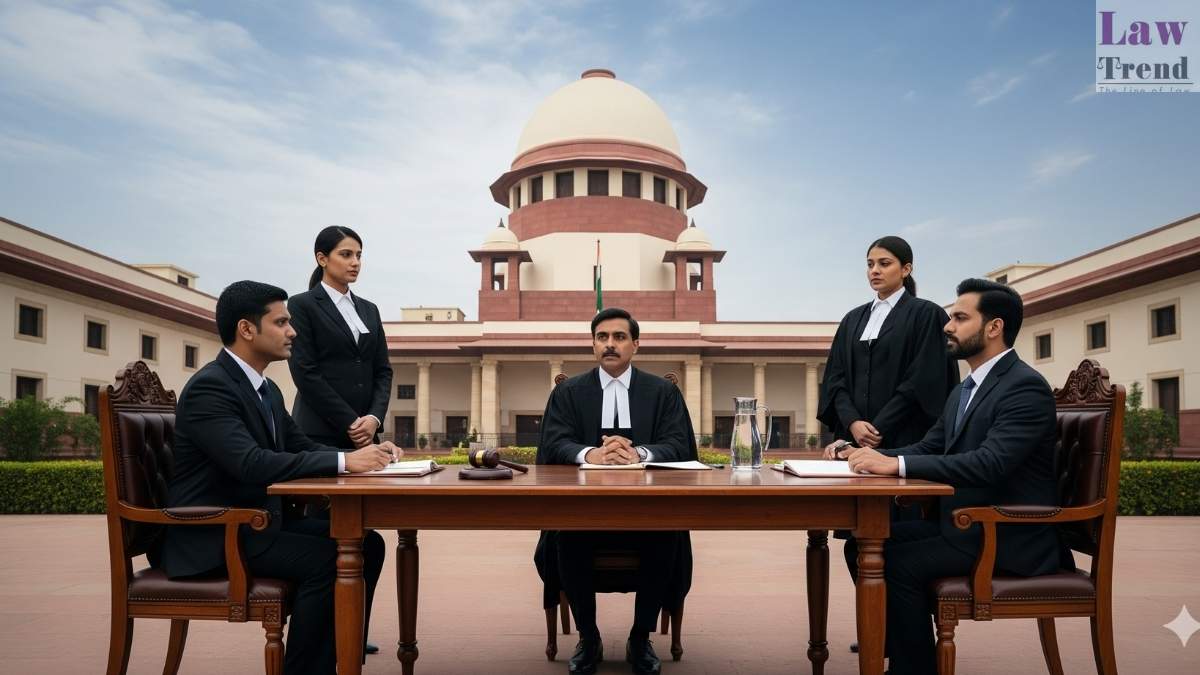
The Supreme Court of India has held that a contractual clause requiring a party to “ensure no liability” is recovered from another creates an absolute and immediate obligation, rather than a contingent indemnity dependent on final appellate confirmation. Setting aside a Delhi High Court judgment, a Bench of Justice S.V.N. Bhatti and Justice Prasanna B. Varale directed the promoters of Rockland Hospitals to pay ₹15,86,17,808 to VPS Healthcare within 30 days, following the enforcement of a 2019 Consent Award.
Background of the Case
The dispute involves VPS Healthcare and Medeor Hospitals (Appellants) and their former promoters, Prabhat Kumar Srivastava and Rishi Srivastava (Respondents/Promoters). In 2016, VPS acquired Rockland Hospitals (renamed Medeor) via a Share Purchase Agreement. Following disputes, the parties entered into a Deed of Compromise on February 2, 2019, which was transformed into a Consent Award by the Singapore International Arbitration Centre (SIAC).
Under Paragraph 32(a) of the Award, the Promoters undertook to defend various proceedings, including an arbitration claim by Ernst & Young (EY). Crucially, the Promoters agreed to “ensure that no liability in regard to the said litigation is recovered” from the Appellants by the “Forum.”
In 2021, an Arbitral Tribunal awarded EY approximately ₹10 crore plus interest. To stay the execution of this award pending a Section 34 challenge, the Delhi High Court required Medeor to deposit ₹15,86,17,808. Medeor made this deposit under protest to protect its assets. When the Appellants sought to enforce the SIAC Consent Award to recover this amount from the Promoters, the High Court deferred execution, ruling that the obligation only arises after confirmation by the “Highest Court of Appeal.”
Arguments of the Parties
For VPS/Medeor (Appellants): Counsel Mr. Anirudh Bhatia argued that Paragraph 32(a) created an immediate obligation. He contended that the phrase “ensure no liability… is recovered” meant the Promoters were required to insulate the Appellants at every stage. He relied on Khetarpal Amarnath v. Madhukar Pictures, asserting that since Medeor was compelled by a “Forum” to deposit the funds, the liability had crystallized, triggering a cause of action to call upon the indemnifier.
For the Promoters (Respondents): Senior Counsel Ms. Diya Kapur argued that the contract must be strictly construed. She maintained that the fifth limb of the clause specifically deferred the discharge of liability until 30 days after confirmation by the “Highest Court of Appeal.” Citing Export Credit Guarantee Corp. of India Ltd. v. Garg Sons International, she argued that the court could not substitute words to create an earlier trigger point.
The Court’s Analysis
The Supreme Court identified five distinct “limbs” within Paragraph 32(a) and found that the High Court had erred by focusing exclusively on the final limb.
Absolute vs. Contingent Obligation: The Court observed that while the clause contained an indemnity component, the fourth limb—requiring the Promoters to “ensure” no recovery by the Forum—represented an absolute obligation. The Bench stated:
“Where the promisor incurs an absolute obligation, it can be enforced without the occurrence of actual loss, whereas in an indemnity contract, the risk of loss remains contingent. The word ‘ensure’ in the fourth limb… points to an absolute obligation, and not a contingent obligation.”
Definition of “Forum”: The Court noted that “Forum” was contractually defined to include any “Tribunal” or “Judicial Authority.” Therefore, the Arbitral Tribunal’s award and the High Court’s deposit order constituted a “recovery by the Forum.”
Rejection of Purposive Construction: The Bench criticized the High Court’s departure from the literal text of the agreement. Justice Bhatti noted:
“Purposive construction is unavailable in the present case because a literal and plain reading of Paragraph 32(a) of the Consent Award, taking every limb together and none in isolation, ensures an immediate enforceable obligation. The present case is one of discharge of a crystallised liability, and it is not a case of indemnity that matures only upon the confirmation by the Highest Court of Appeal.”
The Court further observed that if the Promoters’ interpretation were accepted, they could simply choose not to appeal to the Supreme Court, thereby ensuring that no liability is ever “confirmed by the Highest Court,” rendering the protection of the Appellants a nullity.
Decision
The Supreme Court allowed the appeal and the Enforcement Petition. The Promoters were granted 30 days to pay or deposit ₹15,86,17,808 for the benefit of VPS/Medeor. The Court clarified that this amount remains subject to the final outcome of the EY litigation; if the EY award is eventually set aside, the Promoters would be entitled to the funds.
Case Details:
- Case Title: VPS Healthcare Private Limited and Another v. Prabhat Kumar Srivastava and Another
- Case No.: Civil Appeal No. 2026 (@ SLP (C) No. 23869 of 2023)
- Bench: Justice S.V.N. Bhatti and Justice Prasanna B. Varale
- Date: April 13, 2026