

Once Bank Accepts Settlement Amount and Issues No Dues Certificate, It Cannot Withhold Title Deeds: Allahabad High Court
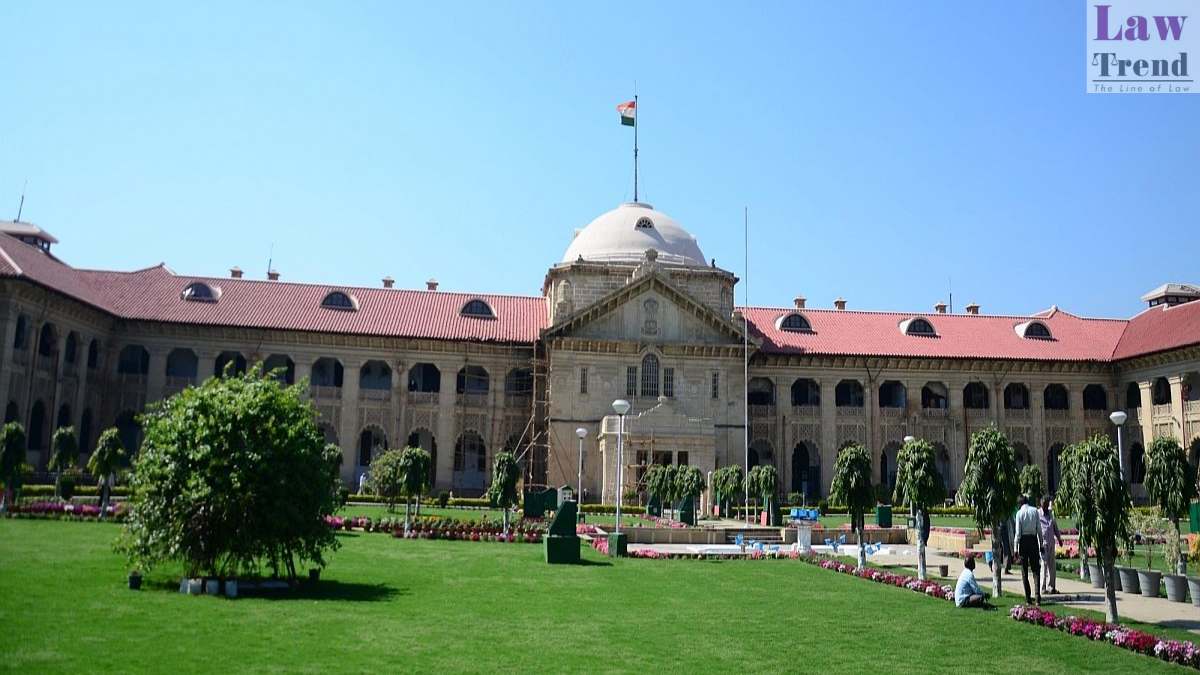

The High Court of Judicature at Allahabad has allowed a writ petition filed under Article 226 of the Constitution, issuing a writ of mandamus to command the Bank of India to release the original title deed of a residential property in Ghaziabad. The division bench, comprising Justice Ajit Kumar and Justice Indrajeet Shukla, ruled in favour of the petitioner, Seema Jain, who had cleared the outstanding loan of the original owner’s borrower son through a compromise settlement. The court held that the bank had no justification to withhold the title documents after accepting the settlement amount and issuing a “no dues certificate” without challenging the petitioner’s ownership.

Background of the Case

The petitioner, Seema Jain, purchased house no. 265, Prem Nagar, Bhatta Jat, Gaushala Road, Ghaziabad from the original owner, who was arrayed as respondent no. 3 in the petition. The purchase was executed on October 18, 2002, by the petitioner acting as a power of attorney holder, after which she entered physical possession of the property and subsequently mutated her name in the municipal records.

The security interest over the property had been created earlier in the year 2000, prior to the execution of the conveyance deed in 2002. The credit facilities extended by the bank included a cash credit limit of Rs. 3 lakhs and a term loan of Rs. 2 lakhs to the borrower.

In the year 2012, the respondent bank issued a possession notice to the petitioner, seeking to draw proceedings under Section 14 of the Securitisation and Reconstruction of Financial Assets and Enforcement of Security Interest (SARFAESI) Act, 2002.

Upon inquiry with the concerned bank manager, the petitioner was informed that the whereabouts of the borrower (the son of respondent no. 3) were unknown. Consequently, the bank entered into a compromise settlement with the petitioner as the owner in possession of the secured asset. The petitioner agreed to settle the outstanding loan in a lump sum payment of Rs. 5,50,000/- (comprising Rs. 5,00,000/- towards the principal amount and Rs. 50,000/- towards interest and other charges).

READ ALSO  Maintenance Award Based on Actual Earnings and Not Mere Qualifications: Delhi High Court Dismisses Husband’s Appeal Against Family Court Order

Following this payment, the bank issued a “no dues certificate” on May 15, 2013, which certified:

“Certified that Account NO. 711130100000019+ Loan Account No. 711170400050035 of M/s. Charu Products, D-133 BRIA, Ghaziabad, Prop. Sh. Naresh Kumar S/-. Sh Tirath Das, 265 Prem Nagar, Ghaziabad. Have been closed under Compromise. There are now no outstanding dues of M/s. Charu Products.”

Despite the settlement, the bank withheld the original title deed. The petitioner was compelled to approach the High Court as she was unable to secure a financial loan from any bank or financial institution for her daughter’s marriage in the absence of the original title documents.

Arguments of the Parties

The learned counsel for the petitioner, Sri Raj Kumar Singh and Sri Rajat Aren, argued that the petitioner is the sole owner in possession of the property as per municipal records. He submitted that because the petitioner had fully cleared the bank’s dues under a mutually agreed compromise settlement, the bank had no legal right to withhold the original title deed.

READ ALSO  "विवाह शोषण का लाइसेंस नहीं": इलाहाबाद हाईकोर्ट ने "आर्थिक शोषण" और तथ्यों को छिपाने पर वकील पति पर लगाया ₹15 लाख का जुर्माना

The learned counsel for the respondent bank, Sri Ashok Kumar Singh, submitted that the title document is supposed to be returned only to the borrower who took the loan. He contended that the third respondent, from whom the petitioner purchased the property, was merely a guarantor. He further admitted that the third respondent had since passed away, and the whereabouts of the borrower son remained unknown.

However, during the proceedings, the bank’s counsel conceded that the petitioner had paid the sum of Rs. 5,50,000/- to clear the debt and that the “no dues certificate” had indeed been issued on May 15, 2013. He fairly admitted that nothing in the bank’s counter-affidavit demonstrated that any outstanding dues remained unpaid to the bank. He also did not dispute that the bank had never questioned the petitioner’s sale deed or transfer of the secured assets, despite the security interest being created in the year 2000 and the conveyance deed being executed subsequently in 2002.

Court’s Analysis

The High Court analysed the undisputed facts of the case, noting that the petitioner stands as the sole owner in possession of the secured asset in the municipal records. The bench observed that the sale deed in question has never been questioned by any party, and there is no ongoing civil or criminal litigation concerning the property.

Reviewing the bank’s stance and the contents of its counter-affidavit, the court observed:

READ ALSO  Work Charge Services Not Eligible for First Time Bound Promotion if Absorbed on a Different Pay Scale, Rules SC

“since petitioner stands to be sole owner in possession of the secured assets in the municipal records, inasmuch as, sale deed in question has never been questioned by any one, nor any civil or criminal litigation is going on.”

Critically assessing the bank’s decision to hold back the documents, the court noted:

“In view of above, we see no justification for the bank to hold back the title deed once it had accepted money towards dues, and never questioned the title deed of the petitioner inasmuch as municipal records entries.”

Decision

Accordingly, the High Court allowed the writ petition, holding that the bank cannot justify withholding the title deeds after accepting the settlement money and issuing a no dues certificate.

The court issued a writ of mandamus directing the respondent bank to release the original title deed document of the house in question to the petitioner in light of the “no dues certificate” issued on May 15, 2013. The bank has been ordered to comply with this direction within a period of two weeks from the date of presentation of a certified copy of the order.

Case Details

  • Case Title: Seema Jain v. Zonal Manager, Bank Of India And 2 Others
  • Case No.: WRIT-C No. 32865 of 2025 (Neutral Citation: 2026:AHC:116981-DB)
  • Bench: Justice Ajit Kumar and Justice Indrajeet Shukla
  • Date: May 20, 2026

Law Trend
Law Trendhttps://lawtrend.in/
Legal News Website Providing Latest Judgments of Supreme Court and High Court

Related Articles

Latest Articles

