

None Can Deny There Is Corruption in the Judiciary; Judges Need Not Be Treated as ‘Holy Cows’: Madras High Court
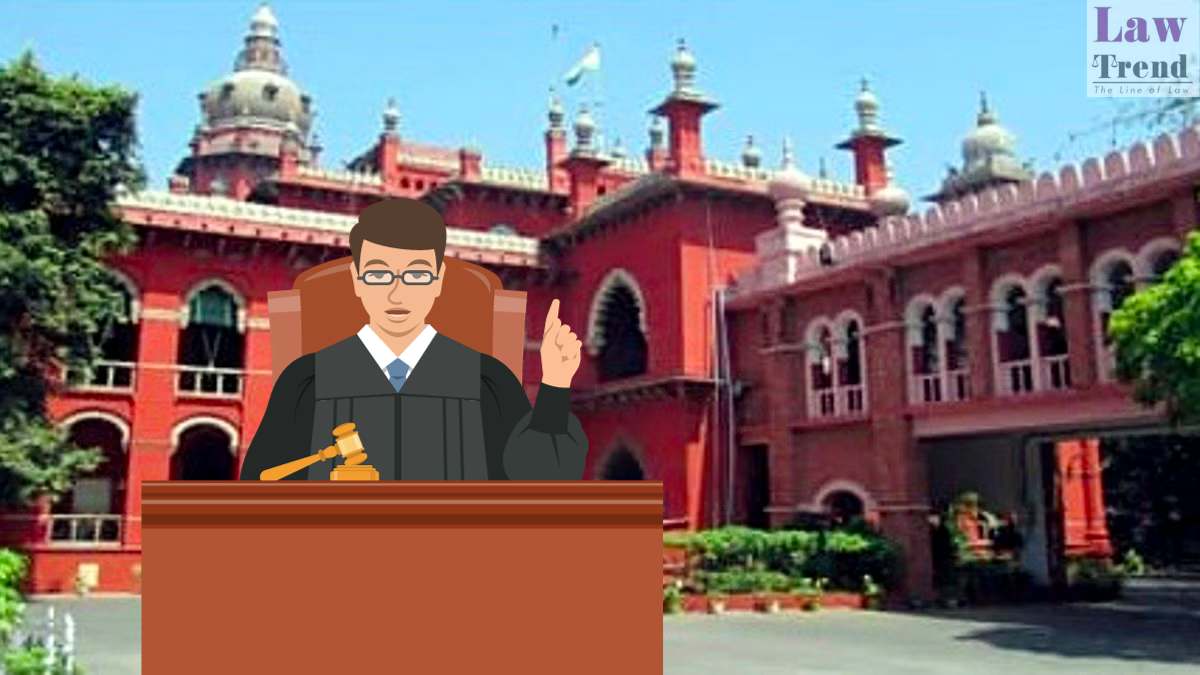

The Madras High Court has dismissed a writ petition seeking to ban or regulate the screening of the Tamil film ‘Karuppu’ on cinema screens and Over-the-Top (OTT) platforms. The Division Bench of Justice G. R. Swaminathan and Justice V. Lakshminarayanan held that depicting corruption in an imaginary court does not constitute criminal contempt under the Contempt of Courts Act, 1971. In a landmark ruling defending free speech, the court declared that the judiciary must have “broad shoulders” to withstand public scrutiny, asserting that judges are not above criticism.

Background of the Case

The petitioner, R.S. Tamilvendan, a practicing lawyer residing in Kodambakkam, Chennai, approached the High Court under Article 226 of the Constitution of India. He sought a Writ of Mandamus directing the Home Department of Tamil Nadu, the Information and Public Relations Department of Tamil Nadu, and the Central Board of Film Certification (CBFC) to ban or regulate the movie ‘Karuppu’ in theatres and on OTT platforms.

The petition was based on a representation dated May 17, 2026. Produced by Dream Warrior Picture (the fourth respondent), the movie stars R.J. Balaji (who also directed it), S. Suriya, and Trisha. The film is set in an imaginary court in ‘Seven Wells’, depicting its presiding officer as corrupt and in an unholy alliance with an unethical advocate who wields immense power over the court.

The court noted that the petitioner’s representation written in Tamil was “galore with errors.” He wrote the expression for majesty of courts (மாட்சிமை) as ‘மார்ச்சிமை’, spelt “sacred” (புனிதமானதாகும்) as ‘புணிதமானதாகும்’, and referred to OTT platforms with a term meaning pilgrimage spots (புண்ணியத்தலங்கள்). He even spelt his own name incorrectly. While stating the petition deserved dismissal on these grounds, the Bench chose to resolve it on legal merits.

Arguments of the Parties

The petitioner, represented by counsel Mr. M. Senthilkumar, argued that the portrayal of courts in ‘Karuppu’ is highly damaging and scandalizes the judicial system. He contended that the filmmakers and actors had committed criminal contempt under the Contempt of Courts Act, 1971, and that the court must intervene to ban or regulate the film.

READ ALSO  Conviction Doesn’t Automatically Lead to Dismissal From Service: Allahabad HC

For the respondents, Government Advocate Mr. M. Murali appeared for the State departments, and Senior Panel Counsel Mr. K. Srinivasamoorthy appeared for the CBFC. They defended the film’s clearance by the expert body.

Court’s Observations and Analysis

1. Realities of Corruption in the Judiciary (Paragraph 5 of the Judgment)

Addressing the core theme of the film, the court frankly observed in Paragraph 5 of the judgment:

“None can deny there is corruption in the Judiciary. There were and are corrupt Judges. While addressing a legal conference in Kollam, Kerala, former CJI Bharucha implied that 20 per cent of the Judges in this country were corrupt. The startling statement made by the Bhushans (father and son duo) is still in public memory. We would not go that far. We refuse to even endorse such sweeping statements. But, we do know and have come across instances of judicial corruption. The Full Court of the Madras High Court regularly shows the exit door to such black sheep. The Supreme Court acknowledged in High Court of Judicature at Bombay -vs- V.Shirish Kumar Rangrao Patil (1997) 6 SCC 339 that the cancerous cells of corruption constantly keep creeping into the vital veins of the judiciary. It was also observed that the need to stem it out by judicial surgery lies on the judiciary itself by its self imposed or corrective measures or disciplinary action under Article 235 of the Constitution. Corruption in Judiciary cannot be committed without some members of the Bar becoming privy to the corrupt. The vigilant watch by the High Court is the sustaining stream to catch the corrupt and to deal with the situation appropriately.”

2. Artistic Licence and Cinematic Exaggeration

Justice G.R. Swaminathan recorded that he had watched the movie in a theatre. While agreeing that the film’s portrayal of the legal system is “grossly exaggerated,” the Bench held that artistic licence must be protected on a “high pedestal,” citing Manoharlal Sharma -vs- Sanjayleela Bansali (2018). Drawing from philosopher Theodor Adorno, the court noted: “Every work of art is an uncommitted crime.”

3. Freedom of Speech and Censor Board Authority

The court held that films fall under the fundamental right to freedom of expression under Article 19(1)(a) of the Constitution of India. Citing Prakash Jha Productions -vs- Union of India (2011), the court ruled that when the expert body (CBFC) has cleared a film, a writ court in a Public Interest Litigation will not substitute its opinion to ban the movie on the grounds of contempt of court.

4. The “Broad Shoulders” Standard for Scrutiny

Rejecting the idea that judges are above public criticism, the Bench observed:

READ ALSO  Madras HC dismisses plea for ED Probe into Money seizures in Tamil Nadu ahead of Polls

“Judges need not be treated as holy cows. Justice is not a cloistered virtue; she must be allowed to suffer the scrutiny and respectful even though outspoken comments of ordinary men.”

Citing S.Rangarajan -vs- P.Jagjivan Ram (1989), the Bench noted that whether a movie involves contempt of court “should be viewed from the perspective of a calm judge with broad shoulders and not that of a touchy character.”

5. Contempt Law and Imaginary Courts

The court ruled that “criminal contempt” under Section 2(c) of the Contempt of Courts Act, 1971, must be interpreted strictly. Because the entire film unfolds within an imaginary court in ‘Seven Wells’—which the Bench compared to the fictional village of Malgudi in R.K. Narayan’s works—it held:

“When a person presiding over an imaginary Court is portrayed as corrupt, it would not attract the penal provisions contained in Contempt of Courts Act, 1971.”

Decision

The Madras High Court concluded that no grounds existed to issue the directions sought by the petitioner. The writ petition was dismissed, and the connected miscellaneous petition was closed. No costs were imposed.

Case Details

  • Case Title: R.S. Tamilvendan v. The Secretary to the State of Tamil Nadu & Others
  • Case No.: WP No. 20286 of 2026 and WMP NO. 21743 of 2026
  • Bench: Justice G. R. Swaminathan and Justice V. Lakshminarayanan
  • Date of Judgment: May 21, 2026

READ ALSO  HC reserves orders on Senthil Balaji's bail plea
Ad 20- WhatsApp Banner

Law Trend
Law Trendhttps://lawtrend.in/
Legal News Website Providing Latest Judgments of Supreme Court and High Court

Related Articles

Latest Articles

