

Bar on Special Appeal Must Yield Where Single Judge Passes a Non-Speaking Order Violating Natural Justice: Allahabad High Court
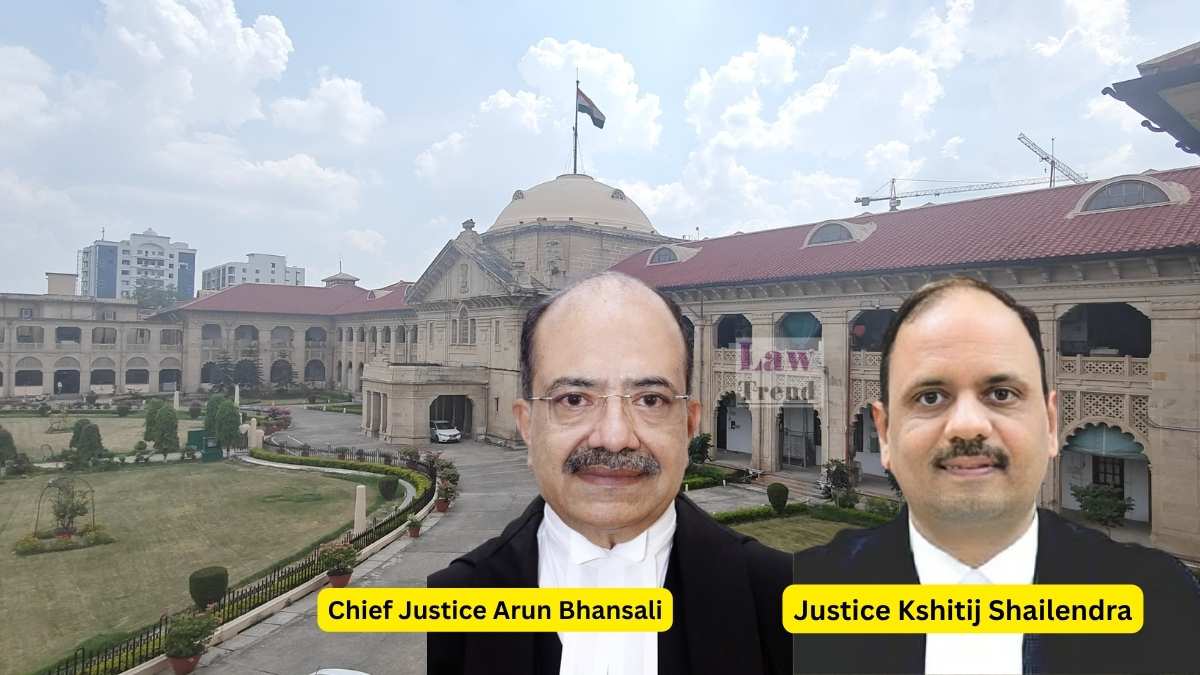

The Allahabad High Court has ruled that the statutory bar on filing a special appeal against a Single Judge’s order does not apply if that order is completely unreasoned and “non-speaking.” A Division Bench comprising Chief Justice Arun Bhansali and Justice Kshitij Shailendra held that such unreasoned orders violate the foundational principles of natural justice, which require judicial decisions to be backed by clear reasoning. The ruling came as the court set aside an unreasoned order of a Single Judge that had remitted a society registration dispute back to the Commissioner of Agra Division, thereby restoring the writ petition for a fresh and reasoned hearing on its merits.

Background of the Case

The dispute originated from an order dated March 12, 2019, passed by the Deputy Registrar, Agra, which cancelled the registration of a Society under Section 12-D(1)(c) of the Societies Registration Act, 1860. The respondent-Committee of Management, acting through its President Shri Niwas, challenged this cancellation before the Commissioner of Agra Division, Agra. The Commissioner, acting as the appellate authority, dismissed the appeal on September 18, 2025, and subsequently rejected a review application on October 9, 2025.

Shri Niwas, representing the Committee of Management, then approached the High Court by filing a writ petition (Writ-C No. 140 of 2026) to challenge the decisions of both the Deputy Registrar and the Commissioner. On February 24, 2026, a learned Single Judge set aside the Commissioner’s orders and remitted the matter back to the appellate authority for a fresh decision. The Single Judge noted that the appellate authority had not correctly considered the legal position established in Laljimal Dharamshala Society and another Vs. The Commissioner Agra Division Agra and others (2020). Sanjay Agrawal, the appellant in the present matter, preferred a special appeal against this decision of the Single Judge.

Arguments of the Parties

Before the Division Bench, the respondent raised a preliminary objection regarding the maintainability of the special appeal. The respondent argued that under Chapter VIII Rule 5 of the Allahabad High Court Rules, 1952, a special appeal is explicitly barred when a writ petition is filed challenging an order passed by an appellate or revisional authority under any Central or State Act. To support this objection, the respondent relied on the judgments in Vajara Yojna Seed Farm, Kalyanpur (M/s.) and others Vs. Presiding Officer, Labour Court II, U.P., Kanpur and another (2003), Committee of Management and another Vs. State of U.P. and others (2025), and Subhanti Rai and 5 others Vs. Committee of Management of Van Awadh Gram Shiksha Mandal District Mau and 19 others (2025).

Conversely, the counsel for the appellant argued that the Single Judge’s order was entirely “non-speaking” as it failed to record any factual background, details of the impugned orders, or the specific legal principles of the Laljimal precedent. The appellant contended that the order did not even clarify whether the writ petition was allowed or disposed of, making the bar under Rule 5 inapplicable. The appellant placed strong reliance on the Supreme Court judgment in Abhishek Gupta Vs. Dinesh Kumar and others (2025).

READ ALSO  Can Criminal Proceedings be Quashed Where Compromise Deed Does Not Contain Reasons? Answers P&H HC- Know More

The Court’s Analysis

Analyzing the issue of maintainability, the Division Bench noted that at first glance, a strict reading of Chapter VIII Rule 5 of the Rules of 1952, alongside the Full Bench decision in Sheet Gupta Vs. State of U.P. and others (2010), would bar the appeal since the writ petition was directed against an appellate authority’s order. However, the Bench emphasized that the Supreme Court in Abhishek Gupta had relaxed this rigour.

The Bench quoted the Supreme Court’s observation on Rule 5:

READ ALSO  Cheque Bounce Sec 138 NI Act| Demand Notice Sent Via Email/WhatsApp Is Valid: Allahabad High Court 

“Although Rule 5, inter alia, ordains that no Special Appeal shall lie from an order passed by a Single Judge of the High Court in writ proceedings under Article 226 of the Constitution where an appellate/revisional order of the Government or any officer or authority under any of the specified enactments is under challenge, in our considered opinion, Rule 5 has to be read and understood in a manner that advances the cause of “access to justice” and not thwart it.”

The Supreme Court had further clarified that:

“In the circumstances before us, the bar created by Rule 5 must yield to the foundational principles of natural justice, namely, the right to be heard and the right to a fair hearing.”

Justice Arun Bhansali, writing the judgment for the Division Bench, observed that the Single Judge’s order did not contain a single word explaining the facts of the case, the impugned orders, how the Laljimal judgment was relevant, or how the Commissioner’s orders contradicted that precedent.

The Court held that the necessity to record reasons is an essential component of natural justice. It referred to the Supreme Court’s landmark ruling in Kranti Associates Private Limited and another Vs. Masood Ahmed Khan and others (2010), which summarized the requirement for reasoned decisions:

“Reasons have virtually become as indispensable a component of a decision making process as observing principles of natural justice by judicial, quasi-judicial and even by administrative bodies.”

The ruling in Kranti Associates further stated:

“Reasons in support of decisions must be cogent, clear and succinct. A pretence of reasons or rubber-stamp reasons’ is not to be equated with a valid decision-making process.”

Based on these principles, the Division Bench concluded that because the Single Judge’s order was ex-facie non-speaking and failed to provide any reasons, the bar under Rule 5 must yield. Thus, the special appeal was maintainable, and the respondent’s preliminary objection could not be sustained. The Bench also noted that the judgments cited by the respondent were inapplicable as they did not address the specific issue of a non-speaking order passed by a Single Judge.

Decision of the Court

The Division Bench allowed the appeal, setting aside the Single Judge’s order dated February 24, 2026. The Bench restored Writ-C No. 140 of 2026 to its original file and directed that it be listed before the appropriate Bench on July 14, 2026, as a fresh case to be decided in accordance with law.

READ ALSO  Allahabad HC Directs Food Adulteration Complainant to Approach Food Safety Department

Case Details:

Case Title: Sanjay Agrawal Versus State of U.P. and 4 others
Case No.: Special Appeal No. 400 of 2026
Bench: Chief Justice Arun Bhansali and Justice Kshitij Shailendra
Date: July 1, 2026

Law Trend
Law Trendhttps://lawtrend.in/
Legal News Website Providing Latest Judgments of Supreme Court and High Court

Related Articles

Latest Articles

