

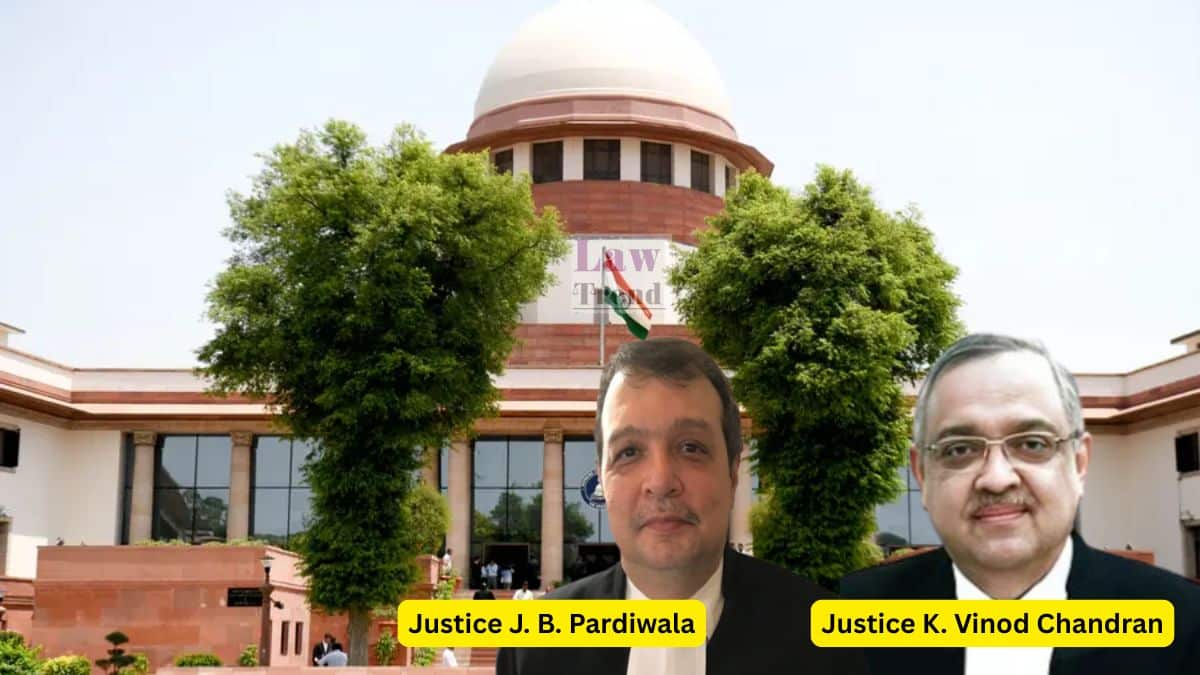
The Supreme Court on Monday took suo motu cognizance of a series of rape cases reported from Delhi-NCR, including the alleged gang rape of a 17-year-old girl at a public park in southeast Delhi, and directed its registry to register a suo motu public interest litigation on the issue.
A Bench of Justice J.B. Pardiwala and Justice K. Vinod Chandran ordered that the matter be listed for hearing, while raising concerns over public safety and the functioning of law-enforcement and administrative authorities.
Referring to the recent incident involving the teenager, Justice Pardiwala said it brought back painful parallels with the 2012 Nirbhaya case and raised questions over whether law-enforcement mechanisms had made meaningful progress in the years since.
According to media reports referred to in the proceedings, the 17-year-old girl was gang-raped on September 21 at Astha Kunj Park near Kalkaji Mandir in southeast Delhi by three men who allegedly posed as police officers.
At least 13 cases of sexual assault have been reported from the national capital this month.
Court Flags Public Safety Concerns
The Bench observed that the increasing number of such incidents across Delhi-NCR pointed to a systemic failure by law-enforcement agencies and public administrative authorities to ensure basic public safety.
It said the right to live with dignity and without fear of violence forms an intrinsic part of the fundamental right to life and personal liberty guaranteed under Article 21 of the Constitution.
The Court also stressed that public spaces such as parks, roads, buses, metro stations, subways and footbridges cannot be allowed to become high-risk areas because of inadequate lighting, lack of surveillance, insufficient patrolling or other preventable administrative shortcomings.
Calls For Accountability, Measurable Response
The Bench further observed that expressions of concern by public authorities and elected representatives may be understandable, but without accountability they do not address the larger institutional issue.
The Court said that expressing solidarity alone cannot provide a solution to the problem.
It called for a measurable institutional response and for accountability to be fixed on authorities responsible for preventing crime, maintaining public order and protecting vulnerable persons.




