

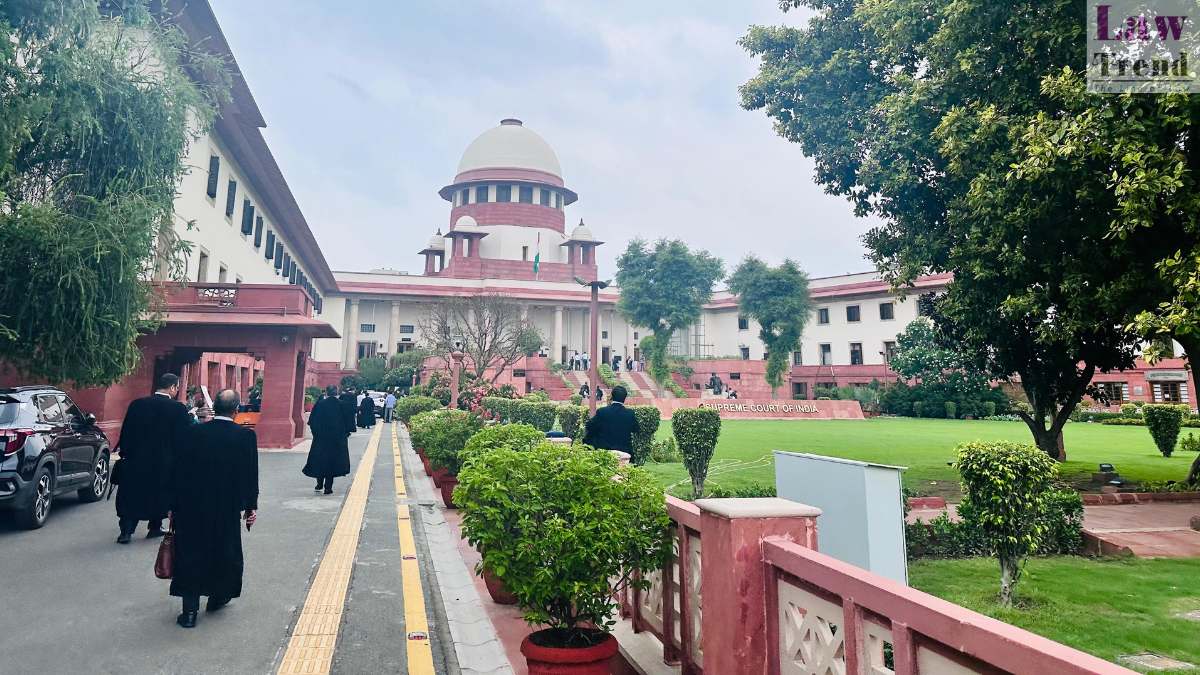
The Supreme Court has refused the Centre’s request to finalise service allocation for the Civil Services Examination 2025 on the OBC creamy layer criteria used before its March 11, 2026 judgment. Because allocation for CSE-2025 is still pending, the Court held that the creamy layer principle as it interpreted in that judgment will govern it. It also clarified that the ruling does not, by itself, reopen selections or appointments concluded before March 11, 2026.
A Bench of Justice Pamidighantam Sri Narasimha and Justice R. Mahadevan disposed of the Union of India’s miscellaneous applications and gave it two more months to comply with the judgment.
Background
The respondent candidates had cleared the Civil Services Examination. The Department of Personnel and Training (DoPT) treated them as OBC creamy layer by applying the income/wealth test to their parents’ income from Public Sector Undertakings. It did this because equivalence between PSU posts and Government posts had not been determined. The Central Administrative Tribunal ruled in the candidates’ favour, and the Madras, Delhi and Kerala High Courts dismissed the Union’s challenges.
On March 11, 2026, the Supreme Court dismissed the Union’s appeals. It directed the Union to consider the claims of the respondents and intervenors under the principles it laid down and to implement them within six months. The Union then sought a direction that the judgment would not apply retrospectively, permission to allocate CSE-2025 services on the earlier criteria, and two years to establish equivalence of posts.
Arguments
Solicitor General Tushar Mehta, appearing for the Union, said the CSE-2025 result had been declared on March 6, 2026, five days before the judgment. He argued that applying the judgment retrospectively would affect more than 6.69 lakh reserved vacancies filled over ten years, including 3.70 lakh OBC vacancies. Relying on Indra Sawhney v. Union of India, he sought prospective operation of the judgment.
Prateek K Chadha, appearing for Respondent No. 1 Rohith Nathan, argued that the applications were an attempt to get around review jurisdiction. Senior Advocate P. Wilson cited a CSE-2025 candidate’s case to argue that the criteria had been applied inconsistently. Karina Chawla, appearing for Respondent No. 3 G. Babu, pointed to the Union’s unexplained 166-day delay in filing the applications.
Senior Advocate Sanjay Hegde, appearing for intervenors Yashvardhan Singh and others, argued that valid OBC-NCL certificates of candidates on the UPSC list dated March 6, 2026 could not be reopened by counting salary income. Gauraan, appearing for intervenor M. Sindhuja, said a CAT order in her favour had been neither complied with nor challenged.
No Reopening of Concluded Selections
The Court held that its earlier directions were confined to the parties and intervenors before it. It observed:
“We find no observation or direction requiring the Union Government to revisit appointments already made, revise the seniority of any person, or undertake any selection, appointment or service allocation exercise afresh.”
It directed that “The ratio laid down in the judgment shall not, by itself, furnish a ground for reopening selections or appointments already concluded prior to the judgment dated 11.03.2026.” Pending claims of similarly placed persons, it said, may be decided on their own merits by the forums concerned. All selections, appointments and roster allotments made after March 11, 2026 will be governed by the 1993 Office Memorandum as the Court interpreted it.
CSE-2025 Allocation to Follow Judgment
On the CSE-2025 allocation, the Court held:
“Since the process of allocation remains pending and there is no convincing or reasonable justification for deferring the implementation of the judgment dated 11.03.2026, the creamy layer principle, as interpreted in the said judgment, shall govern the allocation of services to OBC candidates selected through the Civil Services Examination, 2025.”
No Timeline for Post Equivalence
The Court declined to prescribe a timeline for establishing equivalence of posts, saying these matters fall within the domain of the executive and the legislature. It said the Government remains free to frame its policy on the creamy layer. It also cautioned that miscellaneous applications “cannot, however, be employed as a ruse to secure reconsideration of the merits of the judgment under the guise of seeking clarification.”
Outcome
The Court disposed of the applications and extended the time to comply with the March 11, 2026 judgment by two months.
Case Title: Union of India & Others v. Rohith Nathan and Another, etc.
Case No.: Miscellaneous Application Nos. 3313–3315 of 2026 in Civil Appeal Nos. 2827–2829 of 2018
Bench: Justice Pamidighantam Sri Narasimha and Justice R. Mahadevan
Date: November 6, 2026


