

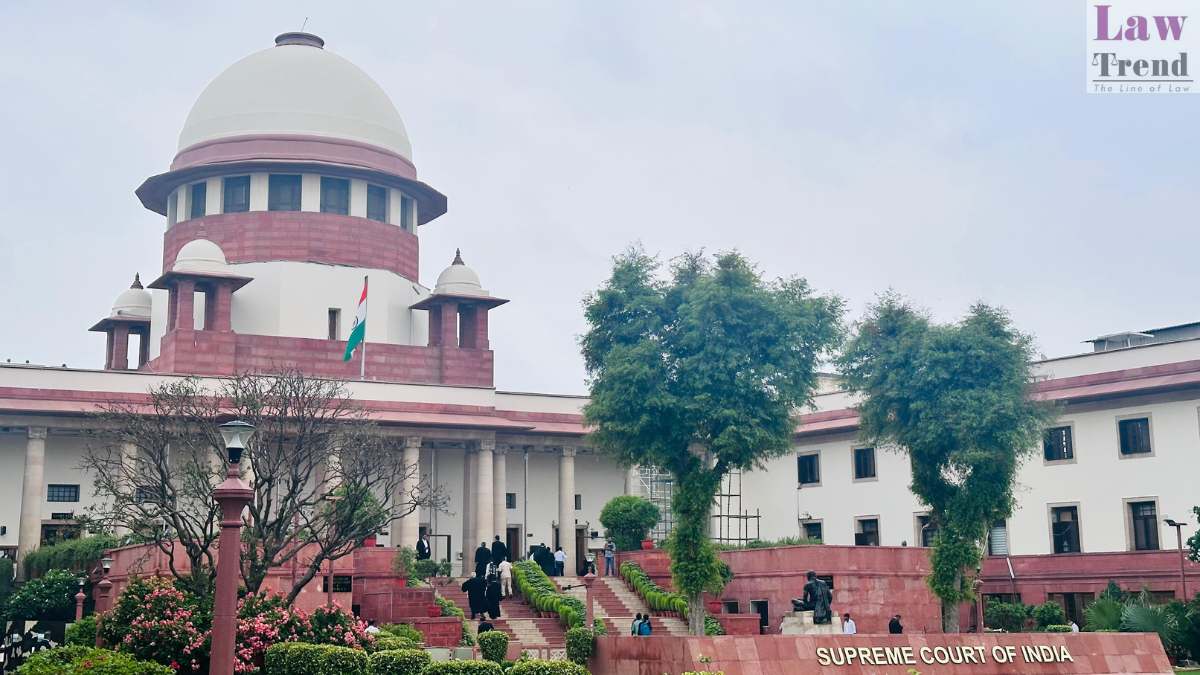
The Supreme Court has held that a trial court can reject a plaint under Order VII Rule 11 of the Code of Civil Procedure even before the plaint is registered. However, the Court said that the likelihood of a suit failing at trial is no ground for rejecting it. The Court also directed that every plaint rejected before registration must be entered in a register.
A Bench of Justice Ujjal Bhuyan and Justice Atul S. Chandurkar set aside the rejection of a suit by the Principal District Judge, Cuddalore, and the Madras High Court’s affirmation of it. The Bench restored the plaint for registration and trial.
Background
The plaintiff, G. Pazhanivel, claimed ownership of a piece of land that his son had settled on him by a registered settlement deed of 26 February 2021. According to the plaint, he borrowed ₹25,00,000 from the defendant’s husband at an interest rate of 24% per month. At the husband’s insistence, he executed a sale deed in the defendant’s name on 15 March 2021.
The plaintiff pleaded that the sale deed was only security for the loan and that he stayed in possession of the land. He said the defendant avoided reconveying the property when he offered to repay the loan with interest, and tried to take forcible possession on 25 May 2025. He sued for a declaration of title, redemption of the mortgage “styled as sale deed”, reconveyance and a permanent injunction.
Before the suit was registered, the trial court rejected the plaint. It held that the sale deed had no resale clause and that no resale agreement had been filed. A Division Bench of the Madras High Court upheld this, holding that the plaint disclosed no cause of action.
Arguments
Senior Advocate Shoeb Alam, appearing for the plaintiff, argued that Order VII Rule 11 cannot be invoked before registration of a suit. He submitted that, read as a whole, the plaint clearly disclosed a cause of action. He relied on the Madras High Court’s decisions in Selvaraj v. Koodankulam Nuclear Power Plant India Limited and Government of Tamil Nadu v. Ponnusamy, and on Alka Gupta v. Narender Kumar Gupta.
G. Indira, appearing for the defendant, argued that the registered sale deed showed an outright sale and that nothing pointed to an intention to reconvey. She submitted that the power under Order VII Rule 11 can be exercised at any stage, so rejecting the plaint before registration was valid.
Power Exists Before Registration
The Court rejected the plaintiff’s argument on the stage at which the power can be used. Relying on T. Arivandandam v. T.V. Satyapal, Saleem Bhai v. State of Maharashtra, Madiraju Venkata Ramana Raju v. Peddireddigari Ramachandra Reddy and Church of Christ Charitable Trust v. Ponniamman Educational Trust, it held that a plaint may be rejected even before registration. The Bench added that “formal registration of a plaint by itself would not clothe the plaint with a shield of invincibility as its maintainability can always be questioned at any stage in exercise of power under Order VII Rule 11 of the Code.”
But Plaint Wrongly Rejected
The Court found that the trial court had not said which clause of Rule 11 it was applying. It had also overlooked the plaint’s other prayers and treated the suit as one only for redemption. The Bench held that “it was not permissible for the trial Court to ignore material averments made in the plaint nor could it refuse to read the plaint as a whole.” It noted that the High Court had not considered the plaintiff’s specific ground that he should first be allowed to lead evidence.
The Court observed:
“Likelihood of a suit being dismissed after trial does not furnish a ground for the Court to reject the plaint prior to the trial.”
It added that “If a plaint discloses a cause of action, which it does in the present case, and the suit does not appear to be barred by any law in view of statements made in the plaint, it has to go for trial.” It relied on Ganga Bai v. Vijay Kumar.
Record of Pre-Registration Rejections Mandated
The Court held that rejections made before registration must not go unrecorded. It observed that “Rejection of a plaint has the character of a ‘decree’ as defined by Section 2(2) of the Code.” The Bench said a record would help if the rejection is appealed. It would also let a defendant know about an earlier rejection if the plaintiff files a fresh suit under Order VII Rule 13.
The Court directed that every such rejection be recorded in a register kept under Order IV Rule 2 CPC. Where the Civil Manual or the applicable Rules make no provision for this, the High Courts may act under Section 122 CPC.
Outcome
The Court allowed the appeal without costs and restored the plaint for registration. It clarified that its observations are not a view on the merits of the suit. It directed that copies of the judgment be sent to the Registrars General of the High Courts and the Directors of State Judicial Academies.
Case Title: G. Pazhanivel v. S. Thilagavathy
Case No.: Civil Appeal No. 13154 of 2026
Bench: Justice Ujjal Bhuyan and Justice Atul S. Chandurkar
Date: November 5, 2026


