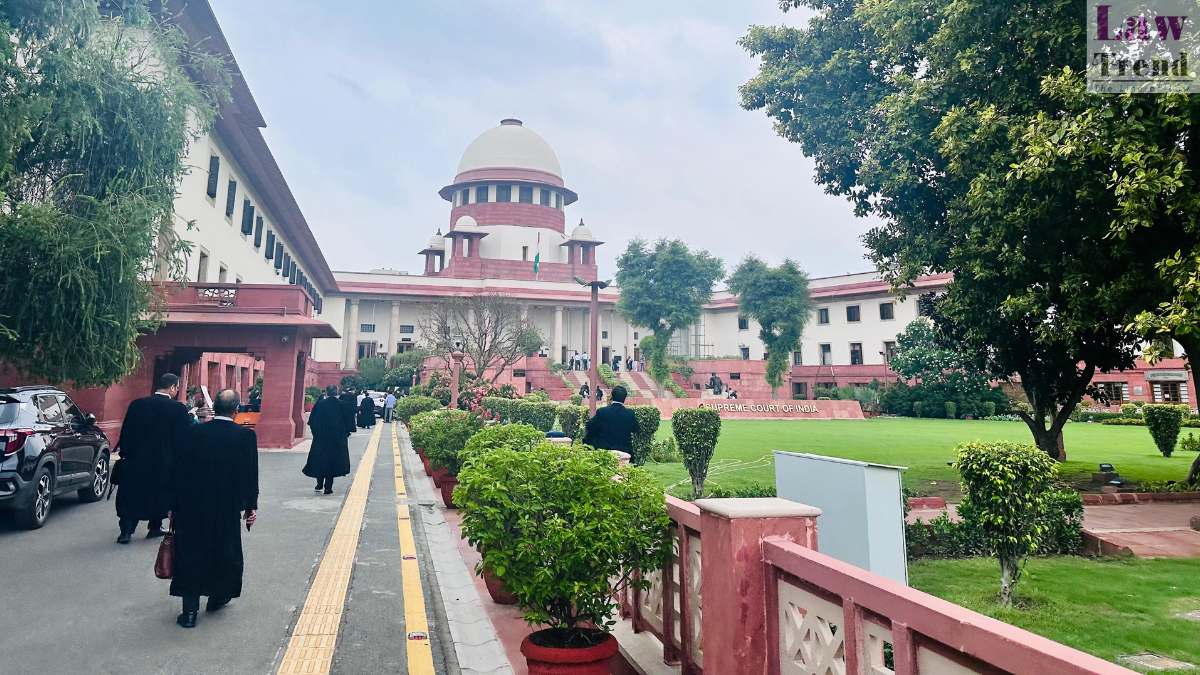
The Supreme Court of India has ruled that a banking company governed by the Securitisation and Reconstruction of Financial Assets and Enforcement of Security Interest Act, 2002 (SARFAESI Act) is entitled to take recourse to its provisions to recover a secured debt acquired or assigned from a non-banking financial company (NBFC), even if that NBFC was not a notified financial institution under the Act at the time the debt was created. Resolving the issue in a batch of appeals, a Bench comprising Justice Sanjay Kumar and Justice Sanjeev Sachdeva held that once an entity to which the SARFAESI Act applies takes over a live and subsisting debt, the loan account immediately assumes the status of a secured debt enforceable under the Act. Consequently, the Court allowed the appeal filed by Kotak Mahindra Bank Limited against a contrary decision of the Bombay High Court, while dismissing connected challenges raised by defaulting borrowers.
Background of the Case
The primary appeal arose from a transaction involving City Financial Consumer Finance Limited (CFCFL), an NBFC which was initially not a notified “financial institution” under Section 2(1)(m) of the SARFAESI Act (it was eventually notified as such by the Central Government on August 27, 2018).
In the lead matter, one Amit Bipin Shah had availed a home loan of ₹69,60,000 from CFCFL to purchase a residential flat from Trupti Sanjay Mehta and Sanjay Walchand Mehta. Upon default, an arbitration award was passed against Shah in July 2010 for ₹75,30,872 plus interest. On July 13, 2012, Kotak Mahindra Bank Limited (KMBL) took over this loan account from CFCFL. KMBL subsequently issued a demand notice under Section 13(2) of the SARFAESI Act in July 2013 and obtained an order under Section 14 from the Chief Metropolitan Magistrate, Mumbai, to take physical possession of the flat. However, the Mehtas, who claimed they were still in possession and that title was never conveyed to Shah, challenged the action before Debts Recovery Tribunal-II, Mumbai (DRT). The DRT ruled in November 2014 that KMBL, as an assignee of CFCFL, could not invoke the SARFAESI Act because CFCFL’s debt was not covered by the enactment at its inception. This decision was affirmed by the Debts Recovery Appellate Tribunal, Mumbai, and later by a Division Bench of the Bombay High Court on July 16, 2015.
Two connected appeals involved similar assignments from CFCFL to KMBL:
- In the second appeal, Anil Manohar Sable and Jayashree Anil Sable defaulted on housing loans taken from CFCFL in 2009. Following an arbitration award, KMBL took over the account on April 9, 2013, and took symbolic possession before obtaining an order under Section 14 from the Additional District Magistrate, Nagpur, on October 3, 2018. The Sables challenged this possession order directly before the Supreme Court.
- In the third appeal, Poorti Rent a Car and Logistics Pvt. Ltd. and its directors had availed a loan of ₹2.98 crore from CFCFL in 2009, which became a non-performing asset (NPA). KMBL took over the debt via an assignment deed on July 18, 2012, and initiated Section 14 proceedings before the Chief Metropolitan Magistrate, Esplanade, Mumbai. The borrowers filed a writ petition before the Bombay High Court, which was dismissed on February 24, 2022, on the ground that the issue stood decided against them by earlier Supreme Court precedents.
Arguments of the Parties
The borrowers contended that banks and financial institutions covered under the SARFAESI Act cannot acquire non-performing assets from entities outside the Act’s ambit and then invoke its summary enforcement mechanisms. They argued that doing so lacked jurisdiction, noting that the SARFAESI Act prescribes an extraordinary remedy permitting enforcement without judicial intervention. Relying on the decision in Mardia Chemicals Ltd. and others vs. Union of India and others, they asserted that the Act’s constitutional validity was upheld specifically to tackle the macro-economic menace of NPAs on recognized lending institutions. Allowing banks to deliberately purchase non-performing loans originated outside the statutory framework, they argued, ran counter to the legislative purpose. The borrowers also dissected the statutory definitions of “borrower” under Section 2(1)(f), “debt” under Section 2(1)(ha), “financial institution” under Section 2(1)(m), “non-performing asset” under Section 2(1)(o), and “security arrangement” under Section 2(1)(zb) to claim that both the lender and borrower had to qualify under the Act at the time the debt and security were created.
Conversely, KMBL maintained that the loan agreements expressly permitted assignment of debts, vesting in the assignee all rights and remedies held by the original lender.
The Reserve Bank of India (RBI), appearing as a respondent, submitted that it had no objection to banks purchasing NPAs from financial institutions and NBFCs. Referring to its circular dated July 13, 2005, issued under Sections 21 and 35A of the Banking Regulation Act, 1949, the RBI pointed out that debt assignment is a legally recognized activity aimed at cleaning bank balance sheets and developing a secondary debt market, as affirmed in ICICI Bank Limited vs. Official Liquidator of APS Star Industries Limited and others. The RBI warned that adopting a restrictive view would paralyze assignee banks from enforcing security interests against defaulting borrowers, who remain legally and morally obligated to repay their debts regardless of assignment.
The Court’s Analysis
The Supreme Court examined the statutory scheme under Section 2 of the SARFAESI Act along with its Statement of Objects and Reasons, observing that the enactment was framed to facilitate swift recovery of defaulting loans without court intervention, so as to improve financial liquidity in the economy.
Addressing the borrowers’ attempt to avoid recovery under the Act, the Bench observed:
“The SARFAESI Act facilitates liquidation of non-performing assets and bad debts by ‘banks’ and ‘financial institutions’ so as to aid in the growth of the economy. No doubt, it provides for harsh measures in that regard, minimizing the scope of judicial intervention to a great extent. However, the objective of the enactment cannot be lost sight of. The argument of the borrowers before us, if accepted, would mean that those who avail financial assistance from NBFCs not covered by Section 2(1)(m) of the SARFAESI Act enjoy greater freedom to commit default in repayment of such loans, as recovery could only be through ordinary, time-consuming civil processes, when compared with those who avail financial assistance from NBFCs covered by Section 2(1)(m) of the SARFAESI Act, entailing quicker and easier recovery thereunder. Irrespective of whether a financial institution comes under the SARFAESI Act or not, the failure on the part of borrowers to repay their loans to such institution invariably sets off a chain reaction resulting in an adverse impact on the whole economy.”
The Court reviewed two landmark decisions explicitly governing the field: M.D. Frozen Foods Exports Private Limited and others vs. Hero Fincorp Limited and Indiabulls Housing Finance Limited vs. Deccan Chronicle Holdings Limited and others. In M.D. Frozen Foods, the Court had held that the SARFAESI Act applies to all debts that are live and owing, irrespective of whether the lender was a notified institution at the time the agreement was signed. In Indiabulls, the Court held that a successor-in-interest through merger was fully entitled to invoke SARFAESI remedies for debts taken over from an unnotified NBFC.
Extending the rationale of those precedents to debts taken over by an assignee bank, the Bench observed:
“The decisions in M.D. Frozen Foods (supra) and Indiabulls (supra), therefore, put it beyond the pale of doubt that once a claim is ‘live and owing’ as on the date of coming into force of the SARFAESI Act, the provisions thereof would be available, as and when it becomes applicable to the institution holding that loan account. By the same logic, when the institution is one to which the SARFAESI Act is already applicable, acquisition of a non-performing secured loan account by such institution from an entity, that does not come within the ambit of the SARFAESI Act, would immediately clothe the said loan account with the attributes of a ‘secured debt’ covered by the provisions of the SARFAESI Act.”
The Court added:
“In essence, it makes no difference as to whether it is the loan/debt along with the institution that comes within the ambit of the SARFAESI Act, as in the earlier two decisions, or it is the loan/debt alone which comes within the ambit thereof, by virtue of it being taken over by a ‘bank’ to which the SARFAESI Act is already applicable. In both cases, the provisions of the SARFAESI Act would be available for effecting recovery of the loan/debt.”
The Bench also made it clear that borrowers cannot “dissect and nit-pick” statutory definitions in Section 2(1) to evade recovery, given the purposive interpretation established by binding precedent.
Decision of the Court
Holding that the Bombay High Court had erred in its July 16, 2015 judgment in the Mehtas’ matter, the Supreme Court set aside that judgment and the underlying tribunal orders. Because the Mehtas’ objections had been disposed of at the threshold without considering other legal and factual merits, the Court restored their Securitisation Application (S.A. No. 39 of 2014) to the file of the Debts Recovery Tribunal, Nagpur, subject to the Mehtas depositing an additional ₹25 lakh with KMBL within eight weeks (in addition to the ₹40 lakh deposited earlier under interim orders). The Registry was directed to return their original documents upon proper acknowledgement.
Regarding the Sables, the Court held that KMBL was legally entitled to invoke Section 14 of the SARFAESI Act, noting that their securitisation application had already attained finality upon dismissal for delay. In the case of Poorti Rent a Car, the Bench confirmed the High Court’s dismissal, noting that the property had already been auctioned and sold in 2023.
Accordingly, Civil Appeal No. 8531 of 2015 was allowed, the other two appeals were dismissed, all pending impleadment and intervention applications were rejected, and parties were left to bear their own costs.
Case Details:
Case Title: Kotak Mahindra Bank Limited v. Trupti Sanjay Mehta and others
Case No.: Civil Appeal No. 8531 of 2015
Bench: Justice Sanjay Kumar and Justice Sanjeev Sachdeva
Date: September 02, 2026