

Mere Delay in Depositing Tax Cannot Be Equated with Non-Payment to Attract Penalty: Supreme Court
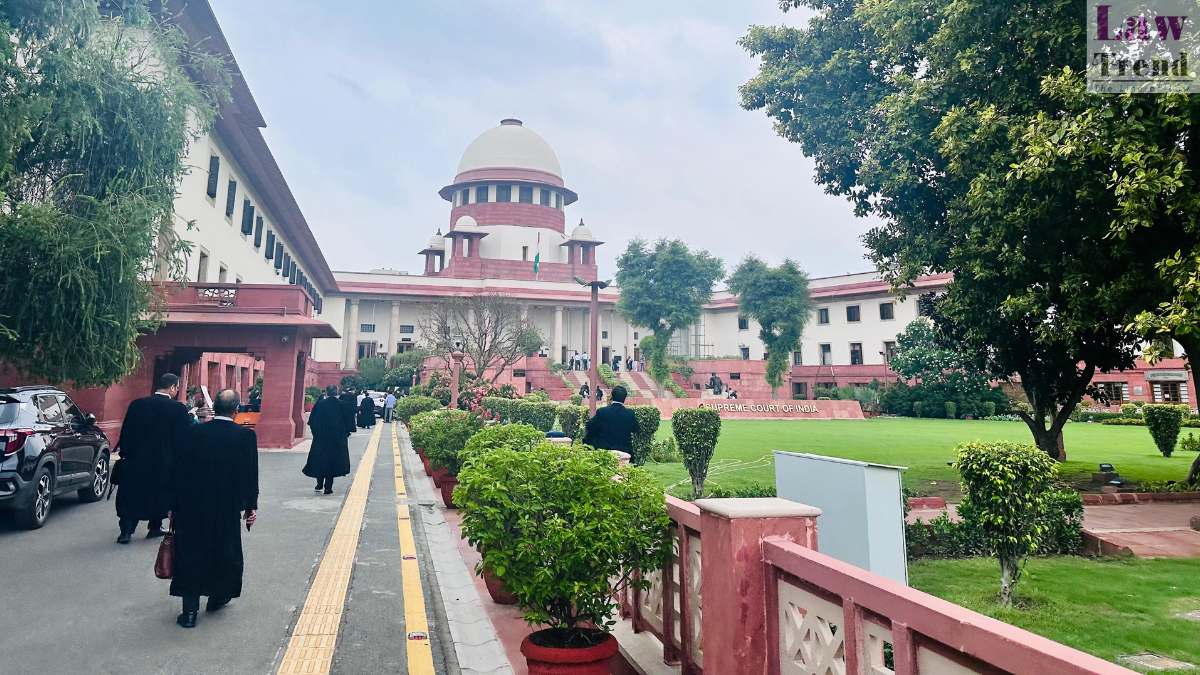
In a significant ruling clarifying the scope of penal provisions under fiscal statutes, the Supreme Court of India, comprising a Bench of Justice J.B. Pardiwala and Justice Ujjal Bhuyan, held that a mere delay in depositing tax cannot be equated with non-payment or “failure to pay” tax to attract harsh statutory penalties. Setting aside the penalty of over Rs 71 lakh imposed on M/s. Saudi Arabian Airlines for delayed remittance of Foreign Travel Tax (FTT), the Court ruled that statutory penalty is not automatic upon a breach of timelines and reaffirmed the foundational principle of no reformatio in peius, holding that a litigant cannot be put in a worse-off position simply for filing an appeal.

Background of the Case

The appellant, M/s. Saudi Arabian Airlines, is an international carrier licensed to operate flights to and from India. Under Chapter V of the Finance Act, 1979 and the Foreign Travel Tax Rules, 1979, the airline was required to collect Foreign Travel Tax from departing international passengers and deposit the same into the Government treasury within 30 days from the end of each month.

In six instances between 1994 and 1997, there were delays in crediting the collected FTT into the treasury. In five instances, the delay ranged from 1 to 11 days (where demand drafts had already been purchased before the due date but could not be submitted in time due to security restrictions), and in one instance, there was a delay of 63 days because the concerned employee was on emergency leave.

Fourteen show cause notices were issued to the airline. In the initial order-in-original dated June 14, 1999, the adjudicating authority confirmed the demand and imposed a penalty of Rs 12,000 for the late payment of FTT under Section 38(3) of the Finance Act, alongside minor penalties for short payment and delayed return filing.

The airline appealed against this order. The appellate authority remanded the matter for de novo consideration. However, on remand, the adjudicating authority on August 8, 2001, escalated the penalty for late payment from Rs 12,000 to a staggering Rs 71,29,140 under Section 38(3) of the Finance Act, holding that Section 38(3) mandated a statutory minimum penalty of one-fifth of the tax amount.

READ ALSO  SC in Doctor Rape-Murder Case: Nation Can't Await Another Rape for Real Changes on Ground 

This drastic enhancement was upheld by the Commissioner of Customs (Appeals), the Revisional Authority (Department of Revenue, Ministry of Finance), and subsequently by the Bombay High Court in its judgment dated August 9, 2010. The airline then appealed to the Supreme Court.

Arguments of the Parties

Appearing for the appellant airline, Senior Counsel Mr. P.V. Dinesh argued that:

  • Section 38(3) of the Finance Act applies solely to cases of absolute non-payment (“failure to pay”) and not to unintentional, technical delays where tax was deposited prior to the issuance of show cause notices.
  • Delayed payment breaches fall under Section 38(4) read with Rules 4 and 9 of the 1979 Rules, where discretionary penalties are prescribed.
  • Under the proviso to Rule 11 of the 1979 Rules, customs officers are not competent to impose penalties exceeding Rs 5,000.
  • Relying on U.S. Technologies International Private Limited v. Commissioner of Income Tax, penal provisions require absolute default and cannot be invoked for mere delay in remittance.
  • An appellant cannot be placed in a worse position merely by exercising its statutory right of appeal.

Countering these submissions, Senior Counsel Mr. Arijit Prasad, appearing for the Revenue, contended that:

  • Section 38(3) is a strict liability clause in a fiscal statute where the phrase “fails to pay” encompasses any failure to deposit within the stipulated timeline, making penalty automatic without requiring proof of mens rea or intentional default.
  • Delay in payment is legally equivalent to non-payment once the prescribed limitation expires, citing Mathuram Agrawal v. State of Madhya Pradesh.
  • Penal proceedings under Rule 12 and Section 38(3) operate independently of recovery limitation under Rule 7, as supported by rulings including J.K. Industries Ltd. v. Chief Inspector of Factories and Boilers, R.S. Joshi v. Ajit Mills Limited, and Gujarat Travancore Agency v. Commissioner of Income Tax.
  • The enhancement of penalty on de novo remand was justified as the initial authority had inadvertently failed to apply the statutory minimum prescribed by Parliament.

Analysis of the Court

The Supreme Court rejected the Revenue’s contentions and identified critical flaws in the reasoning of the lower authorities and the High Court.

READ ALSO  No Monetary Compensation for Suspended Coal Supply; SC Directs SECL to Supply Coal at ‘Current Price’ for Relevant Period

1. “Failure to Pay” vs. “Delay in Payment”

Analyzing the text of Section 38(3) of the Finance Act, 1979, the Bench observed: “Before we enter into an analysis of the above two expressions, we need to keep in mind that this provision contemplates a scenario where FTT is collected from the passengers, but the carrier or the other person fails to pay the same to the credit of the Central Government. In that context, the expression ‘fails to pay the foreign travel tax’ would mean that there is failure on the part of the carrier or the other person in paying the FTT to the credit of the Central Government. ‘Failure to pay’ would mean ‘non-payment’. ‘Failure to pay’ would not mean and cannot be equated with ‘delay in making payment’.”

The Court added that any payment made prior to the issuance of a show cause notice is a case of delayed payment governed under Section 38(4) read with the 1979 Rules, whereas payment deposited after receiving a notice constitutes non-payment.

2. Penalty is Not Automatic

Examining the three-Judge Bench precedent in Hindustan Steel Ltd. v. State of Orissa, the Court reiterated: “Whether penalty should be imposed for failure to perform a statutory obligation is a matter of discretion of the authority to be exercised judicially and on a consideration of all the relevant circumstances. Even if a minimum penalty is prescribed, the authority competent to impose the penalty will be justified in refusing to impose penalty, when there is a technical or venial breach of the provisions of the Act or where the breach flows from a bona fide belief that the offender is not liable to act in the manner prescribed by the statute.”

The Bench underscored that the power to impose a penalty inherently includes the discretion not to impose one: “Where the adjudicatory process prior to imposition of penalty provides for show cause notice, filing of reply or representation against each of the grounds cited for imposition of penalty and hearing, to hold that imposition of penalty is mandatory or automatic or a foregone conclusion would be to render such a provision or adjudicatory process nugatory. After all, the power to impose penalty includes power not to impose penalty.”

3. The Principle of No Reformatio in Peius

Addressing the drastic escalation of the penalty from Rs 12,000 to over Rs 71 lakh upon an appeal filed by the assessee itself, the Court held that authorities committed a grave error. Citing Jyoti Plastic Works Pvt. Ltd. v. Union of India, Jawal Neco Limited v. Commissioner of Customs, and Nagarajan v. State of Tamil Nadu, the Bench stated: “When the above phrase is prefixed by the words ‘no’ or ‘prohibition’, which would render the maxim as no reformatio in peius or prohibition of reformatio in peius, it would denote a principle of procedure as per which using a remedy available in law should not aggravate the situation of the person who avails the remedy. In other words, a person should not be placed in a worse position as a result of filing an appeal. No reformatio in peius or prohibition of reformatio in peius is a part of fair procedure and, thus, by extension can also be construed as part of natural justice. It is not only a procedural guarantee but is also a principle of equity.”

Final Decision

The Supreme Court allowed the appeal and quashed the impugned judgment of the Bombay High Court along with the revisional, appellate, and de novo orders qua the penalty on late deposit of FTT.

READ ALSO  Allahabad HC Takes Suo-Motu Cognizance of Stray Dog Menace in Lucknow

The Court directed that any amount paid by the airline toward the penalty be refunded by the respondents with interest at the rate of 9% per annum within three months, and ordered the discharge of bank guarantees furnished by the airline.

Case Details

Case Title: M/s. Saudi Arabian Airlines v. Union of India & Ors.

Case No.: Civil Appeal No. 1052 of 2013

Bench: Justice J.B. Pardiwala and Justice Ujjal Bhuyan

Date: September 01, 2026

Law Trend
Law Trendhttps://lawtrend.in/
Legal News Website Providing Latest Judgments of Supreme Court and High Court

Related Articles

Latest Articles


