

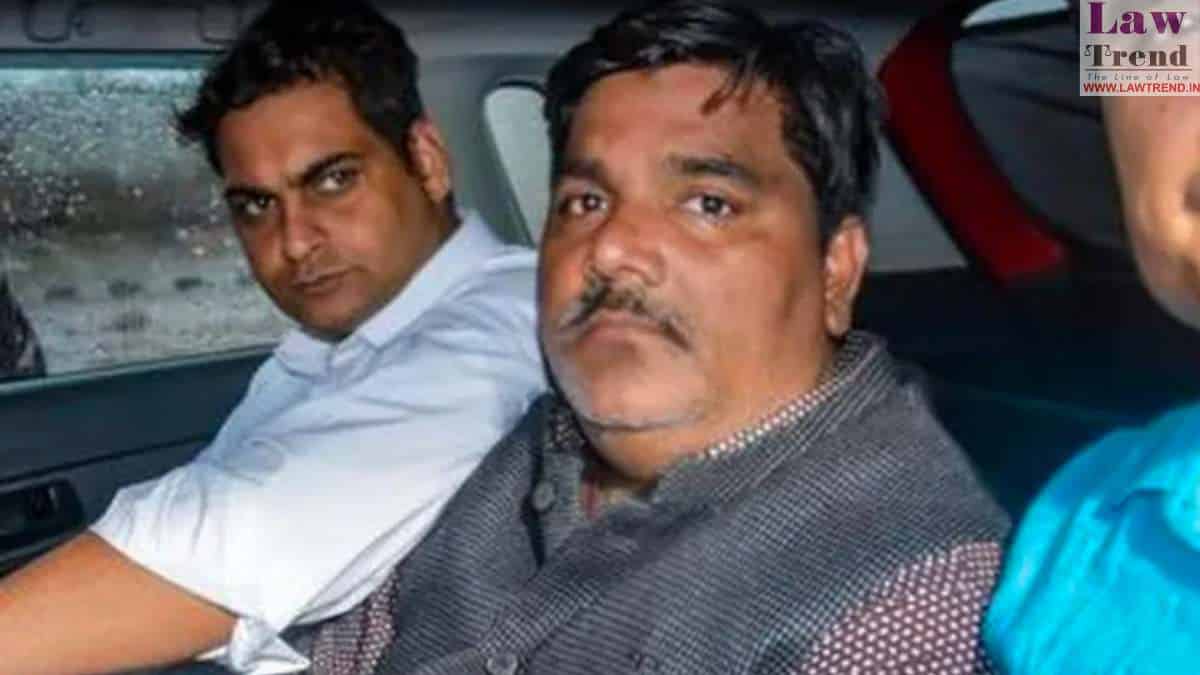
The Delhi High Court on Wednesday sought the response of the Delhi Police on a petition filed by former Aam Aadmi Party councillor Tahir Hussain challenging his conviction and life sentence for the killing of Intelligence Bureau official Ankit Sharma during the February 2020 communal riots.
A division bench comprising Justice Prathiba M. Singh and Justice Vikas Mahajan admitted Hussain’s appeal and scheduled it for hearing on December 2. The bench decided to take up the matter alongside related appeals filed by four co-convicts, observing that while individual roles would be assessed separately, conducting a joint hearing for all challenges arising from the same trial court verdict would conserve judicial time.
Trial Court Records Summoned And Joint Hearing Scheduled
In addition to seeking the police’s stand, the high court ordered prison authorities to submit Hussain’s nominal roll and called for the original case records from the trial court. Counsel appearing for the Delhi Police informed the court that the prosecution would present its arguments on all connected appeals simultaneously.
The proceedings stem from a trial court judgment that held Hussain and four others—identified as Nazim, Qasim, Javed, and Anas—guilty on July 13 for Sharma’s murder. On July 31, the lower court sentenced all five men to life imprisonment after finding they were part of an armed unlawful assembly that assaulted and killed the intelligence staffer.
Appellant Claims Tainted Probe And Fabricated Evidence
Challenging both the conviction and the sentencing orders, Hussain asserted in his petition that the police probe was biased from the beginning and intended to appease public outrage. He claimed that the first information report had been backdated and that authorities conducted no substantial investigation until his arrest in a separate case on March 6, 2020.
Hussain further argued that investigators introduced planted witnesses, altered the testimonies of genuine eyewitnesses, and allowed the real culprits to evade justice. He contended that the trial court erroneously relied on unreliable witnesses who did not see the occurrence, overlooked fabrications in the foundational complaint, and ignored fundamental flaws in the police investigation.
The trial court had convicted Hussain under various provisions of the Indian Penal Code, including Section 302 for murder, Section 365 for kidnapping or abducting with intent to wrongfully confine, Section 147 and 148 for rioting armed with deadly weapons, Section 153A for promoting enmity, and Section 188 for disobeying a public servant’s order, all read with Section 149 for unlawful assembly.
Rejection Of Death Penalty And The 2020 Violence
During the trial proceedings, the prosecution had pressed for capital punishment, arguing that the accused acted with extreme brutality while relentlessly attacking Sharma. The trial court declined the request, ruling that the case did not meet the rarest-of-rare threshold because the state failed to prove the convicts had an incorrigible criminal propensity that would make their continued existence a danger to society.
The incident occurred against the backdrop of communal clashes that erupted in northeast Delhi on February 24, 2020, between supporters and opponents of the citizenship law, resulting in at least 53 deaths and numerous injuries.
According to case records, Sharma went missing on February 25, 2020. His father, Ravinder Kumar, approached the Dayalpur police station the following day, later learning from local residents that an individual had been killed near the Chand Bagh bridge mosque and thrown into the Khajuri Khas drain. Sharma’s body was subsequently recovered from the drain bearing 51 injuries.




