

Recruitment to Public Service Must Strictly Conform to Statutory Rules; Chhattisgarh High Court Quashes Selection Process
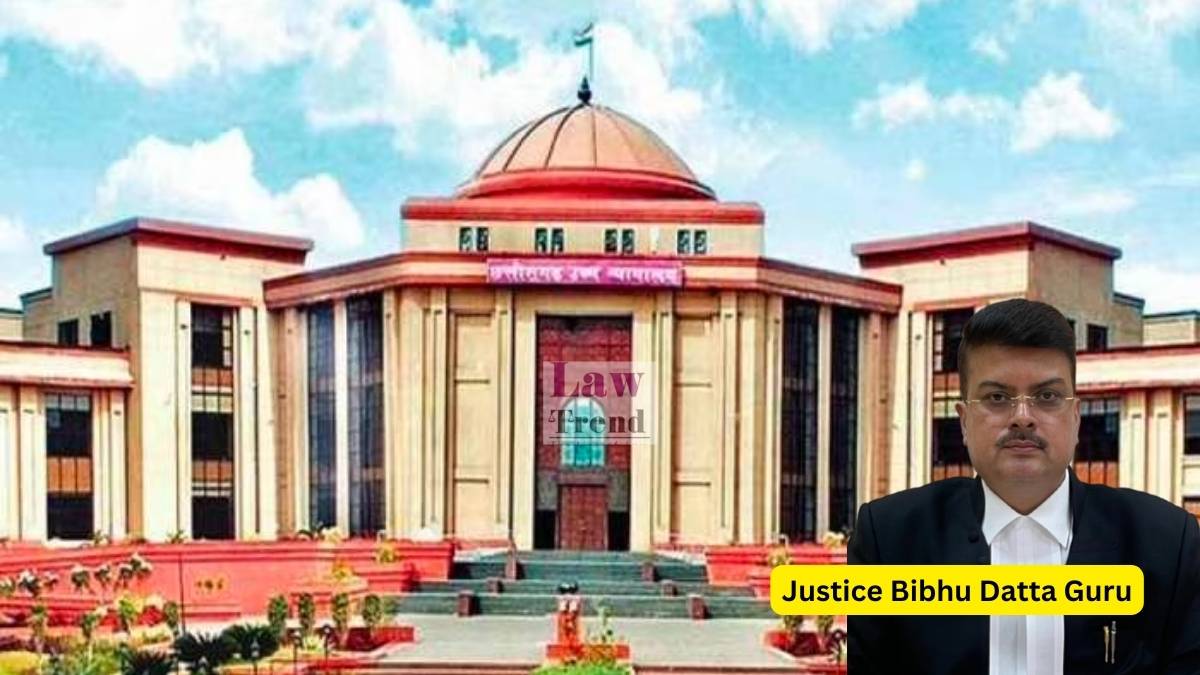

The High Court of Chhattisgarh, in a judgment delivered by Justice Bibhu Datta Guru, has quashed the selection results published on April 30, 2025, and May 19, 2025, for the post of Assistant Fisheries Officer. The Court held that the State authorities failed to comply with earlier Division Bench directions requiring a comprehensive reconsideration of all candidates on their merits, and illegally departed from the statutory composition of the interview committee prescribed under the Chhattisgarh Fisheries Non-Gazetted Class-III (Executive) Service, Recruitment Rules, 2009.

Background of the Case

The dispute stems from a recruitment notification issued on March 3, 2014, by the Director of Fisheries, Chhattisgarh, to fill eight posts of Assistant Fisheries Officer. Although the petitioners applied for the positions, their candidatures were rejected through a letter dated May 30, 2014, declaring them ineligible.

The petitioners initially challenged their rejection before the High Court in WPS No. 2667/2014 and connected matters, which were dismissed by a Single Bench on April 18, 2023. However, in Writ Appeal No. 317/2023, a Division Bench set aside the dismissal on August 16, 2023, and remanded the matter for fresh consideration. Upon remand, a Single Bench allowed the writ petitions on October 19, 2023, ordering the state to appoint the petitioners with retrospective effect from August 7, 2014.

When the authorities delayed compliance, prompting contempt proceedings, the State filed Writ Appeal No. 678/2024. On October 21, 2024, the Division Bench disposed of the appeal in line with its earlier order in Writ Appeal No. 673/2024, setting aside the direction for automatic appointment and instead directing the state authorities “to reconsider the case of the writ petitioners along with all the other persons, on their own merits.”

Pursuant to the directions, the authorities scheduled interviews for April 29, 2025. Following the interviews, the results declared the petitioners ineligible on the grounds that they scored lower marks than a wait-listed candidate, leading to the present round of litigation.

READ ALSO  The Case for Reducing the Tax on Parathas Reached the High Court, Decided to Lower It After Hearing Arguments

Arguments of the Parties

Senior Advocate S.C. Verma, appearing alongside Advocate Ashish Tiwari for the petitioners, argued that the interview process was an eyewash designed to validate earlier appointments made in 2014. They pointed out that the State failed to undertake a collective reconsideration of all candidates as mandated by the Division Bench. Furthermore, the authorities altered the selection procedure midway by expanding the statutory interview panel from three members to five members without prior notice, including an individual who was facing a disciplinary inquiry.

Additional Advocate General Y.S. Thakur, appearing with Deputy Government Advocate Ms. Anuja Sharma for the State, contended that the Division Bench directions were fully complied with through a properly constituted interview panel. The State argued that the inclusion of two additional members was justified to provide subject-specific expertise. They submitted that the petitioners secured lower marks than the wait-listed candidate, Ku. Tajeshwari, and were consequently found unsuitable for appointment.

Advocate C.J.K. Rao, representing caveators appointed in 2018, raised a preliminary objection that any interference with the recruitment process would adversely impact their service rights.

Court’s Analysis and Observations

Justice Bibhu Datta Guru dismissed the preliminary objection raised by the caveators, noting that the validity of their 2018 appointments was not under challenge and that the limited issue before the Court was whether the State had faithfully implemented the Division Bench’s mandate.

Examining the merits, the Court found two fundamental legal infirmities in the State’s action:

First, the Court noted that the Division Bench in Writ Appeal No. 673/2024 had explicitly mandated a comparative assessment of all candidates who participated in the recruitment drive. Emphasizing the directive, the Court held that the phrase “along with all the other persons” required a common assessment of all candidates rather than restricting the review to a comparison with a single wait-listed candidate.

READ ALSO  Limitation Begins from Date Cause of Action First Arose, Not from When Plaintiff Gained Full Knowledge: Supreme Court

Second, the Court scrutinized the constitution of the Interview Committee. Under Schedule IV of the Chhattisgarh Fisheries Non-Gazetted Class-III (Executive) Service, Recruitment Rules, 2009, the selection committee for direct recruitment must consist of three members: the Director of Fisheries (Chairman), Joint Director of Fisheries (Member), and Deputy Director of Fisheries (Member). The State failed to cite any provision authorizing a departure to form a five-member panel.

Underscoring the necessity of strict adherence to rules in public employment, the Court observed:

“Recruitment to public service must strictly conform to the statutory Rules governing the field.”

The Court further held:

“It is a settled principle of law that if the manner of doing a particular act is prescribed under any statutes, the act must be done in that manner or not at all.”

In support of this principle, the Court referred to the decision of the Supreme Court in Meera Sahni v. Lieutenant Governor of Delhi & Others, (2008) 9 SCC 177, which quoted Babu Verghese v. Bar Council of Kerala and the longstanding rule traceable to Taylor v. Taylor and Nazir Ahmad v. King Emperor:

“35. It is by now a certain law that an action to be taken in a particular manner as provided by a statute, must be taken, done or performed in the manner prescribed and in no other manner. In this connection we may appropriately refer to the decision of this Court in Babu Verghese v. Bar Council of Kerala wherein it was held as under: (SCC pp. 432-33, paras 31-32)

’31. It is the basic principle of law long settled that if the manner of doing a particular act is prescribed under any statute, the act must be done in that manner or not at all. The origin of this rule is traceable to the decision in Taylor v. Taylor which was followed by Lord Roche in Nazir Ahmad v. King Emperor who stated as under: (IA pp. 381-82)

“where a power is given to do a certain thing in a certain way, the thing must be done in that way or not at all.”

’32. This rule has since been approved by this Court in Rao Shiv Bahadur Singh v. State of Vindh Pradesh10 and again in Deep Chand v. State of Rajasthan¹1. These cases were considered by a three-Judge Bench of this Court in State of U.P. v. Singhara Singh12 and the rule laid down in Nazir Ahmad case was again upheld. This rule has since been applied to the exercise of jurisdiction by courts and has also been recognised as a salutary principle of administrative law.”‘

Court’s Decision

The High Court held that procedural illegality vitiates the final decision regardless of the marks scored by the petitioners. Consequently, the Court quashed the impugned result dated April 30, 2025, and the publication dated May 19, 2025.

The respondents have been directed to undertake a fresh selection exercise strictly in accordance with the Recruitment Rules, 2009, and the directions issued by the Division Bench in Writ Appeal No. 673/2024. All writ petitions were allowed to this extent.

READ ALSO  No Locus Standi for Writ Petition Without Personal Impact or Violation of Fundamental Rights: Chhattisgarh HC

Case Details:

Case Title: Devendra Kumar Sen v. State of Chhattisgarh and connected matters
Case No.: WPS No. 7976 of 2025 (with WPS No. 7978 of 2025 & WPS No. 8003 of 2025)
Bench: Justice Bibhu Datta Guru
Date: 27/07/2026

Law Trend
Law Trendhttps://lawtrend.in/
Legal News Website Providing Latest Judgments of Supreme Court and High Court

Related Articles

Latest Articles

